
The Science of Early Neurological Stimulation (ENS): Why Our Puppies Are Born to Lead
- Green Acres K-9 Resort
- Mar 8
- 6 min read

If you have ever stepped into our home during the first two weeks of a new litter’s life, you’ll find a very quiet, focused, and incredibly intentional environment. While the world outside is rushing by, we are tucked away with our tiny, newborn Golden Retriever puppies here in Oregon, performing what looks like a very strange little dance. We pick them up, hold them in specific ways, and tickle their toes with Q-tips.
It might look like we’re just being extra attentive, and we are!, but there is a deep, fascinating science behind every movement. This process is called Early Neurological Stimulation (ENS), also known as the "Bio-Sensor" program. As a helper here at Green Acres Nextgen, I’ve had the joy of watching how these tiny interventions transform a fragile newborn into a confident, resilient, and healthy adult.
If you are looking for Golden Retriever puppies Oregon, you aren't just looking for a pet; you’re looking for a companion who can handle the world with grace. Whether you want a hiking partner for the Cascades or a dedicated therapy dog, the foundation of that "born to lead" personality starts in the first 16 days of life.
The Secret Origins: The Bio-Sensor Program
The story of ENS doesn’t start in a kennel; it starts in the United States military. Decades ago, the military developed a program to improve the performance of dogs used for high-stakes work. They realized that while genetics played a massive role, the environment in the very first days of life could actually "unlock" a puppy's potential.
They called it the "Bio-Sensor" program. The goal was to produce dogs that were more than just obedient, they wanted dogs that were biologically superior in their ability to handle stress and stay healthy under pressure. At NextGen Goldens, we’ve adopted these same rigorous standards because we believe our family companions deserve the same biological advantages as the world’s elite working dogs.
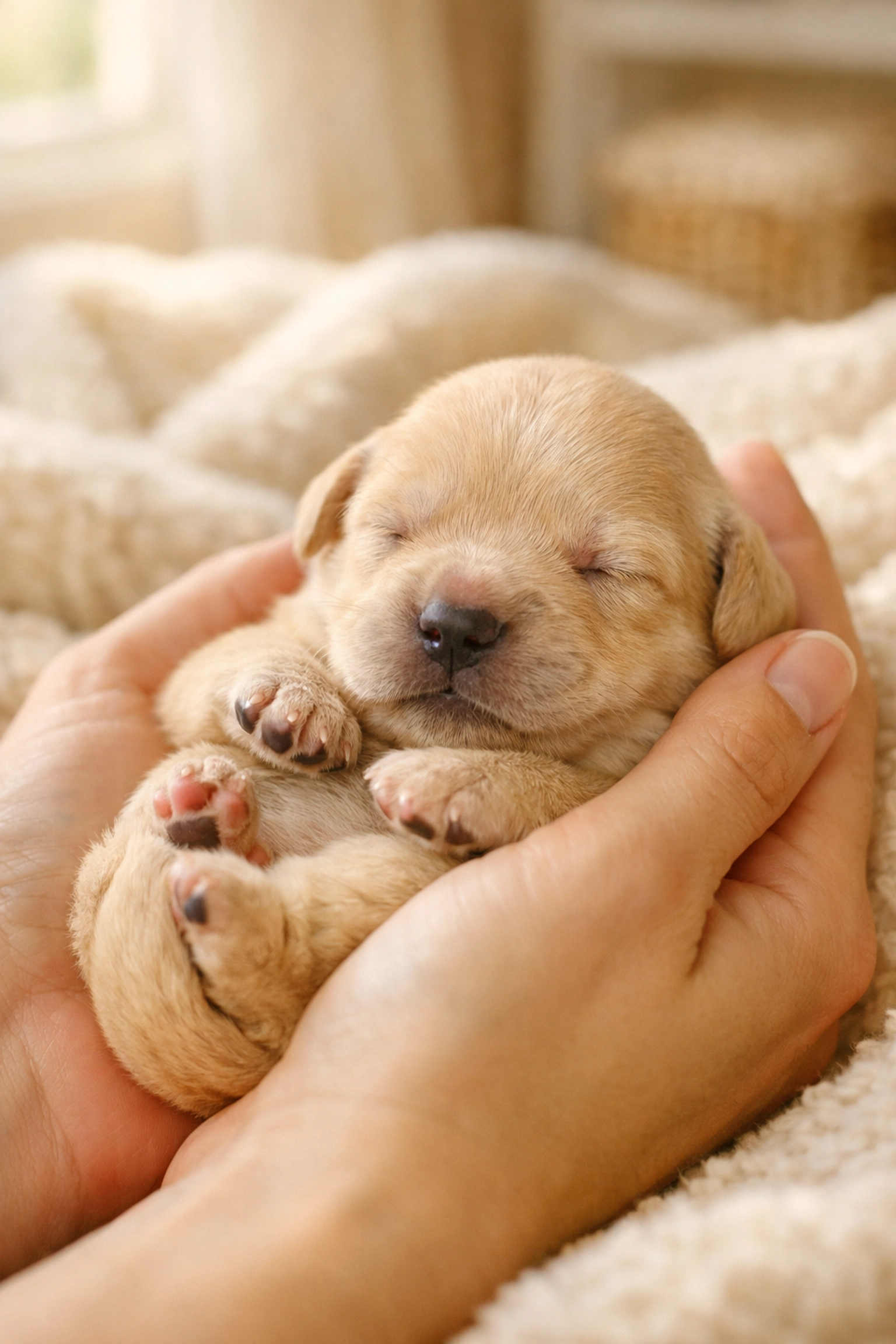
The "Magic Window": Days 3 to 16
Puppies are born in what we call a "neonatal" state. Their eyes are closed, their ears are sealed, and they can’t even regulate their own body temperature. However, their neurological system is growing at an explosive rate.
From day 3 to day 16, there is a specific developmental window where the brain is incredibly plastic. By introducing very mild, controlled amounts of stress during this time, we can actually "kickstart" the neurological system. This is the only time in a dog's life when these specific stimulations will have this level of permanent impact.
As I’m working with the pups, I often think about how incredible it is that these few seconds of daily interaction define their ability to stay calm five years down the road when a firework goes off or they enter a busy hospital as a therapy dog Golden Retriever.
The Five Exercises of ENS
We perform five specific exercises once a day with every single puppy. Each exercise lasts only 3 to 5 seconds. We are very careful not to over-stimulate them, we want "eustress" (good stress), not distress.
Tactile Stimulation: We gently tickle the puppy between the toes using a cotton swab.
Head Up: We hold the puppy securely with both hands, positioned vertically so the head is straight up toward the ceiling.
Head Down: We gently reverse the position, so the head is pointed toward the ground.
Supine Position: We cradle the puppy on its back in the palms of our hands.
Thermal Stimulation: We place the puppy’s paws on a cool, damp towel for a few seconds.
It sounds simple, right? But for a tiny puppy, these movements challenge their equilibrium and internal systems just enough to force their body to adapt and grow stronger.
The Scientific Benefits: Building a "Super Dog"
When we talk about NextGen Goldens puppies, we aren’t just bragging about their cute faces. We are looking at the physiological data. Research has shown that puppies who undergo ENS demonstrate five key life-long benefits:
1. Improved Cardio Performance
ENS helps the heart develop more efficiently. These dogs often have slower resting heart rates and can recover much faster from physical exertion. Whether they are running on the beach or working a long shift as a service animal, their hearts are literally built for the task.
2. Stronger Heartbeats
Beyond just performance, the actual contractions of the heart are more powerful. This leads to better circulation and overall vitality throughout the dog’s life.
3. Stronger Adrenal Glands
The adrenal system is the body’s "command center" for stress. By introducing mild stress early on, we "tune" the adrenal glands to respond appropriately. This is why our puppies grow up to have that signature calm temperament Golden Retrievers are known for, they don't overreact to small changes in their environment.
4. More Tolerance to Stress
Life is full of "scary" things, vacuum cleaners, thunder, car rides, and busy crowds. ENS-stimulated puppies are statistically more curious and less fearful. They tend to explore new environments rather than cowering, which is a hallmark of a well-adjusted companion.
5. Greater Resistance to Disease
Perhaps the most incredible benefit is the boost to the immune system. Studies have shown that these puppies possess a greater resistance to various forms of illness. When you combine this with our commitment to health tested Golden Retriever puppies Oregon, you are looking at a dog that is built for a long, happy life.

From Newborn to Service Hero
You might be wondering, "Does my family pet really need military-grade neurological stimulation?" The answer is a resounding yes!
While ENS was designed for high-performance working dogs, those same traits are exactly what make a puppy excel in a family home. A dog that can tolerate stress and stay calm is safer with children, easier to train, and more enjoyable to take on public outings.
Furthermore, many of our families are looking for therapy dog Golden Retrievers. A therapy dog must be able to walk into a nursing home or school and remain completely unfazed by medical equipment, strange smells, or unpredictable noises. ENS provides the neurological foundation that allows them to do this work effectively. We’ve found that the combination of ENS and our specific socialization protocols creates the "Golden Standard" for therapy-bound pups.
A Personal Note from the Den
As someone who gets to be there for these 13 days of stimulation, I can tell you that it builds a special bond between us and the puppies. They learn from the very beginning that human touch is safe, even when it’s doing something "new" or a little bit different.
I remember one pup from a recent litter: let’s call him "Cooper." During his first few days of ENS, he was a little wiggly and unsure. By day 10, he was completely relaxed, trusting the process. Today, Cooper is a confident young dog living in Portland, completely unfazed by the city's hustle and bustle. That didn't happen by accident; it was a choice we made when he was just three days old.

Why We Do It
At Green Acres Nextgen, our mission is to improve the breed we love so much. We aren't just "producing" puppies; we are nurturing future family members. That means looking at the genetics of gentle and backing it up with the best scientific rearing practices available today.
ENS is just the beginning of our journey with each litter. It’s the "launchpad" that sets them up for success during their developmental stages. When you bring home a puppy that has been through the Bio-Sensor program, you are bringing home a dog that was quite literally "born to lead" a healthy, stable life.
If you’re ready to start your journey with a pup that has had the best possible start in life, we would love to chat with you. Building these "super dogs" is our passion, and we can’t wait to share that joy with your family.
Bibliography & Scientific Sources
Battaglia, C. L. (2009).Periods of Early Development and the Effects of Early Experience. Journal of Veterinary Behavior.
Battaglia, C. L. (1994).Loneliness and the Bio-Sensor Program. Canine Chronicle.
Gazzano, A., et al. (2008).The effects of early gentling and early isolation on the development of puppies' behavior. Journal of Veterinary Behavior: Clinical Applications and Research.
Scott, J.P. & Fuller, J.L. (1965).Dog Behavior: The Genetic Basis. University of Chicago Press.
U.S. Military (Department of the Army).The Bio-Sensor Program (Military Dog Program). Technical Manuals on Canine Development and Training.