
The Genetics of Gentle: Why Health Testing Matters for Therapy Puppies
- Green Acres K-9 Resort
- Feb 2
- 6 min read

When you picture the perfect therapy dog, you probably see those soft, gentle eyes, the kind that can calm a worried child or brighten a senior's day. But here's what most people don't realize: that remarkable temperament doesn't just happen by chance. It's written in their DNA, and at NextGen Goldens, we believe responsible breeding starts with understanding exactly what's coded in those genes.
As someone deeply committed to breeding therapy-quality Golden Retrievers here in Boring, Oregon, I can tell you that health testing isn't just a checkbox on our breeding program, it's the foundation of everything we do. Because when families in Portland and throughout the Pacific Northwest choose one of our puppies, they're not just getting a pet. They're welcoming a future companion who might one day provide comfort to hospital patients, support children with special needs, or simply be the steadiest, most reliable family member they've ever known.
The Science Behind Gentle Temperaments
Let me share something fascinating: temperament is actually heritable. Scott and Fuller's groundbreaking research in "Genetics and the Social Behavior of the Dog" demonstrated that behavioral traits pass from parents to offspring just like physical characteristics do. This isn't some vague notion, it's established science that's been validated repeatedly over decades of canine behavioral studies.
What does this mean for breeding therapy dogs? Everything. When we select our breeding pairs, we're not just looking at hip scores and heart clearances (though those are absolutely critical). We're evaluating how each dog responds to stress, how they interact with strangers, whether they show resilience in new situations, and how naturally they tune into human emotions.

Here's the beautiful part: genetic testing now allows us to peek behind the curtain and understand behavioral predispositions before they manifest. Modern genetic panels can identify tendencies toward anxiety, compulsive behaviors, or reactivity, all traits that would disqualify a dog from therapy work. By screening our breeding dogs, we're stacking the deck in favor of puppies who have the genetic foundation for that remarkable calm, gentle temperament therapy work demands.
Why a Healthy Body Creates a Stable Mind
I'll never forget the moment this really clicked for me. I was watching one of our retired breeding dogs, Maple, work as a therapy dog at a local Portland hospital. A patient who'd been anxious and withdrawn completely relaxed when Maple settled beside their bed. But Maple could only provide that steady, calming presence because she felt good in her own body. No hip pain distracting her. No vision problems making her uncertain. No hidden heart condition causing fatigue.
That's the connection people often miss: physical health and behavioral stability are intimately linked. A dog dealing with chronic pain, cardiovascular issues, or progressive vision loss simply can't maintain the even temperament required for therapy work. They might start strong, but genetic conditions have a way of surfacing at the worst possible times, often when someone vulnerable is depending on them most.
This is why comprehensive health testing isn't optional in our breeding program. Every one of our breeding dogs undergoes extensive screening because we understand that creating therapy-quality puppies means starting with parents who are sound in both body and mind.
The Gold Standard: OFA and Genetic Health Panels
Let's talk specifics, because "health testing" can mean different things to different breeders. At NextGen Goldens, we follow what's considered the gold standard for Golden Retriever health screening.
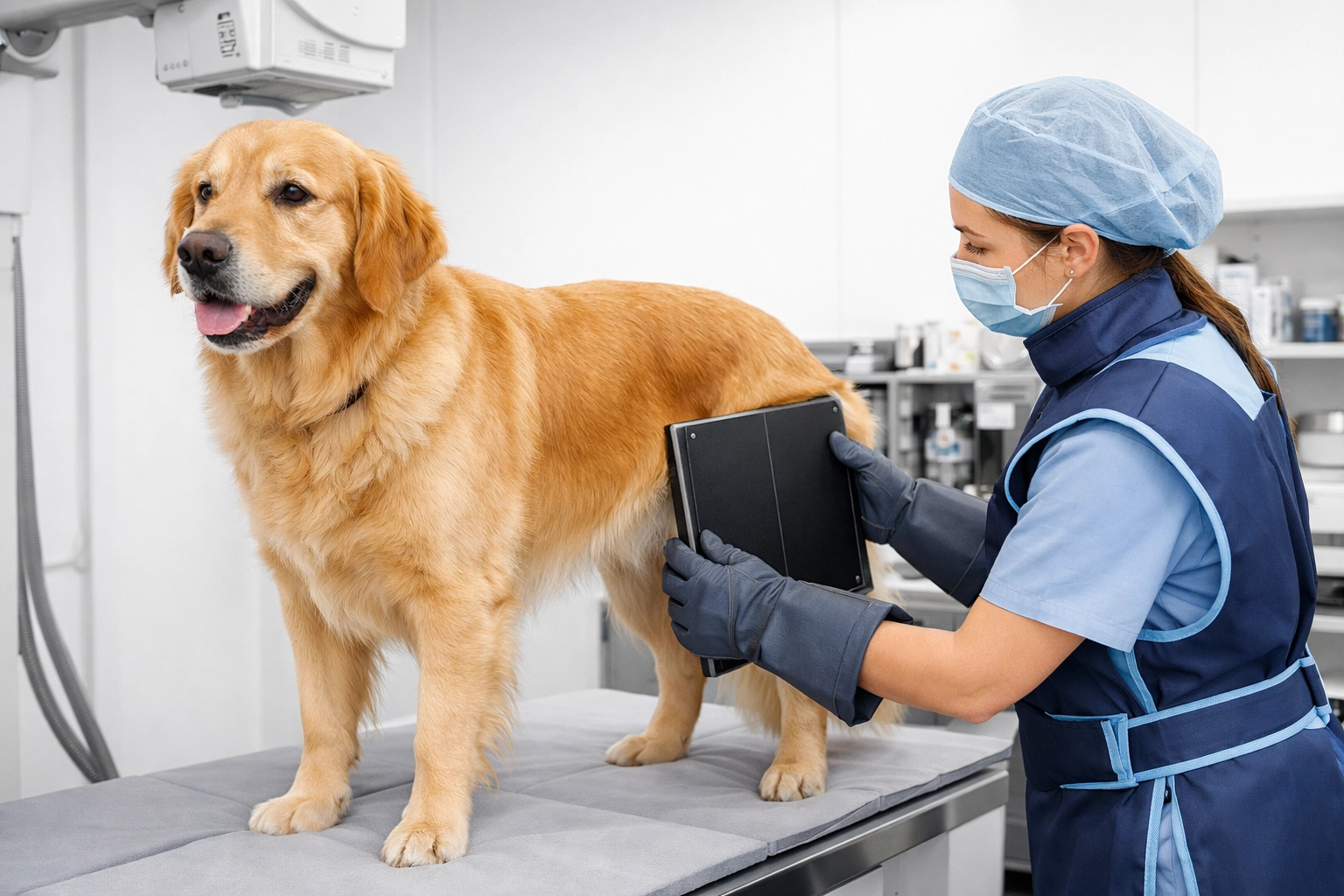
Orthopedic Foundation for Animals (OFA) Evaluations are non-negotiable. Both hips and elbows get examined and rated by board-certified radiologists. Why does this matter? Hip dysplasia and elbow dysplasia are heritable conditions that cause progressive pain and mobility issues. A therapy dog who develops severe hip dysplasia at age three can't continue working, and worse, they've passed those genes to their offspring. By breeding only dogs with excellent or good OFA ratings, we dramatically reduce the likelihood of these painful conditions appearing in our puppies.
Cardiac clearances are equally critical. Golden Retrievers can be predisposed to subvalvular aortic stenosis (SAS) and dilated cardiomyopathy. Advanced cardiac screening, including echocardiograms performed by veterinary cardiologists, helps us identify dogs carrying these genetic predispositions before they ever enter our breeding program.
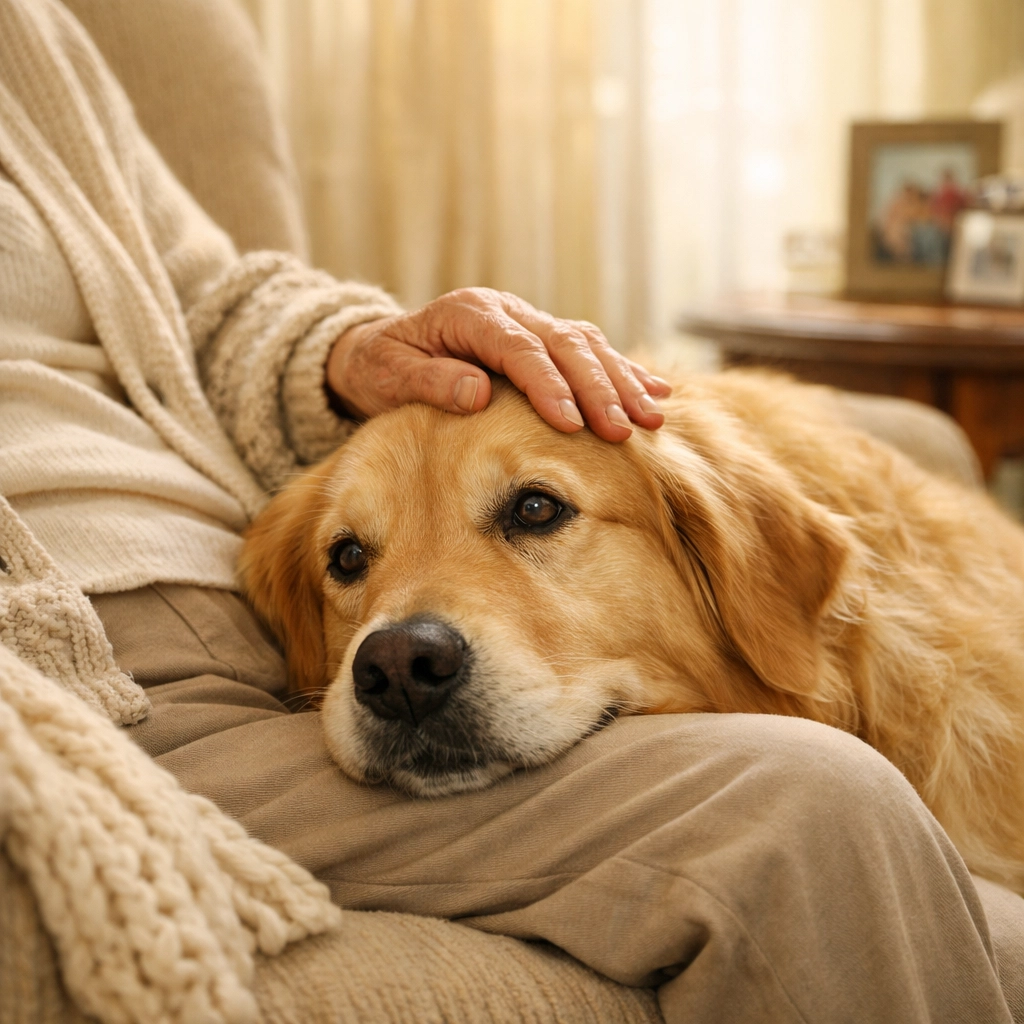
Eye examinations by board-certified veterinary ophthalmologists check for hereditary conditions like progressive retinal atrophy, cataracts, and retinal dysplasia. Vision problems don't just affect a dog's ability to navigate therapy environments safely, they can also cause behavioral changes as the dog becomes uncertain or anxious about their surroundings.
But we don't stop there. Modern genetic health panels screen for dozens of inherited conditions simultaneously. These tests can identify mutations linked to muscular dystrophy, degenerative myelopathy, ichthyosis, and numerous other conditions. Some of these diseases won't show symptoms until middle age or later, but genetic testing reveals carriers today, allowing us to make informed breeding decisions that protect future generations.
The research is clear: early detection through genetic screening enables management strategies that can significantly improve outcomes and extend quality of life. For families choosing a therapy-prospect puppy, this proactive approach means peace of mind, knowing their puppy has been bred from parents carefully selected for genetic health.
NextGen Goldens' Commitment to Oregon Families
Here in Boring, Oregon, we're not just breeding Golden Retrievers, we're breeding the next generation of therapy dogs, service animals, and exceptional family companions for Portland-area families who deserve nothing less than the best.
Every breeding decision we make starts with this question: "Will this pairing produce puppies with the genetic foundation for outstanding health and temperament?" If the answer isn't an enthusiastic yes, we don't proceed. It's that simple and that important.
We share complete health testing results with every family who chooses one of our puppies. You'll see OFA certifications, cardiac clearances, eye examination results, and genetic panel reports for both parents. This transparency isn't just about accountability: it's about giving you confidence that your puppy has been set up for success from the very beginning.
What This Means for Your Future Therapy Dog
If you're considering a Golden Retriever puppy for therapy work: whether for formal therapy dog certification or simply as an emotional support animal for your family: the breeding matters more than you might realize.
A puppy from health-tested, temperament-evaluated parents has:
Dramatically reduced risk of developing painful orthopedic conditions
Lower likelihood of cardiac disease that could shorten their working life
Better odds of maintaining excellent vision throughout their career
Genetic predisposition toward the calm, stable temperament therapy work demands
Parents who demonstrated resilience, gentleness, and emotional sensitivity
These aren't just nice-to-haves. They're the difference between a therapy dog who can work reliably for a decade and one whose career ends prematurely due to preventable genetic conditions.
The science backs this up completely. Research shows that selective breeding based on comprehensive health screening can significantly reduce the frequency of hereditary diseases within breeds. We've seen this work with polycystic kidney disease in cats, progressive retinal atrophy in multiple dog breeds, and hip dysplasia in large-breed dogs. The same principles apply to breeding therapy-quality Golden Retrievers.
Looking Forward: The Future of Genetic Health
As genetic research advances, we're gaining even more tools to ensure the puppies we breed have every advantage. Whole-genome sequencing, improved behavioral genetic markers, and enhanced understanding of the complex interplay between genetics and environment are revolutionizing responsible breeding practices.
At NextGen Goldens, we're committed to staying at the forefront of these developments. Because families throughout Portland, Boring, and the greater Pacific Northwest deserve Golden Retriever puppies bred with both cutting-edge science and old-fashioned dedication to excellence.
When you bring home one of our puppies, you're not just getting a dog with impressive pedigree papers. You're welcoming a companion whose genetic health has been carefully considered, whose parents were selected for proven temperament stability, and whose future has been safeguarded through comprehensive health testing.
That gentle, knowing look in your Golden's eyes? It starts with genetics. And genetics start with responsible breeding practices that honor both the science and the soul of these remarkable dogs.
Bibliography
Scott, J.P., & Fuller, J.L. (1965). Genetics and the Social Behavior of the Dog. University of Chicago Press.
Goddard, M.E., & Beilharz, R.G. (1982). Genetics of traits which determine the suitability of dogs as guide-dogs for the blind. Applied Animal Ethology, 9(3-4), 299-315.
Famula, T.R., Siemens, L.M., Davidson, A.P., & Packard, M. (2003). Evaluation of the genetic basis of tricuspid valve dysplasia in Labrador Retrievers. American Journal of Veterinary Research, 64(11), 1651-1654.
Leroy, G., & Baumung, R. (2011). Mating practices and the dissemination of genetic disorders in domestic animals, based on the example of dog breeding. Animal Genetics, 42(1), 66-74.
Overall, K.L. (2000). Natural animal models of human psychiatric conditions: assessment of mechanism and validity. Progress in Neuro-Psychopharmacology and Biological Psychiatry, 24(5), 727-776.
Orthopedic Foundation for Animals. (2024). OFA Statistics and Research. Retrieved from https://www.ofa.org
American College of Veterinary Ophthalmologists. (2024). Genetic Eye Disease in Dogs. ACVO Genetics Committee Reports.