
The Science of Socialization: Building a Confident Therapy-Ready Golden Retriever
- Green Acres K-9 Resort
- Feb 27
- 6 min read

Hey there! I’m Mark Griffin, and as a helper here at Green Acres Nextgen, I’ve had the absolute joy of watching hundreds of Golden Retriever puppies take their first wobbly steps toward becoming confident, loving companions. If you’re looking for Golden Retriever puppies in Oregon, you already know how special this breed is. But have you ever wondered why some Goldens seem naturally "bulletproof": unfazed by a crashing tray in a hospital or a crying toddler: while others are a bit more hesitant?
The secret isn't just "good genes" (though as health tested Golden Retriever puppies Oregon specialists, we know those are vital!). The real magic happens in the brain during a very specific timeframe. Today, I want to pull back the curtain on the science of socialization and show you how we prepare our pups for the big, wide world of therapy work and family life.
The "Golden Window": Understanding the Critical Period
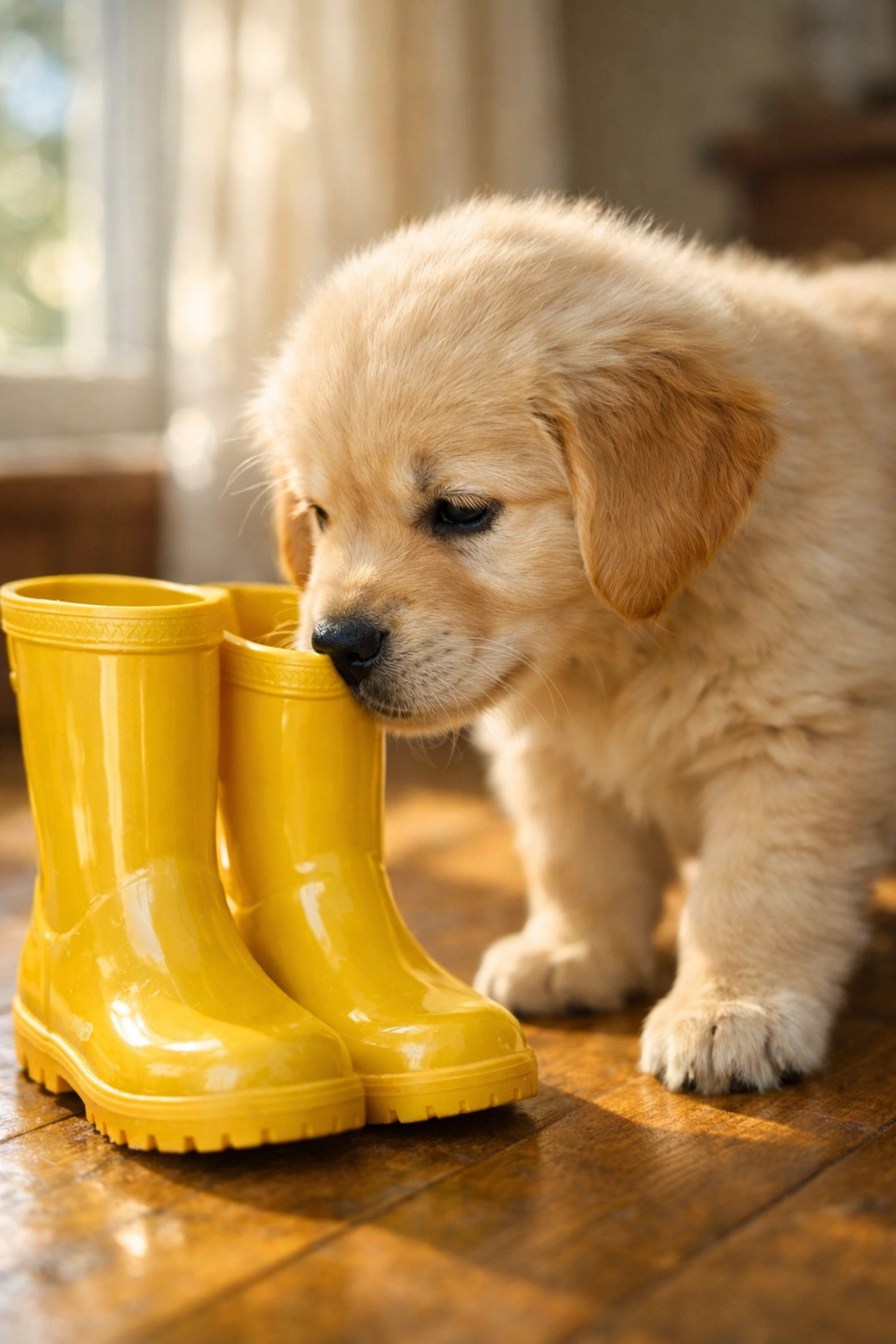
In the world of canine biology, there is a magical "critical window" for socialization that typically spans from 3 to 16 weeks of age. During this time, a puppy’s brain is like a sponge: or more accurately, like wet cement. Every person they meet, every sound they hear, and every surface they walk on leaves a permanent impression.
Biologically, this is a survival mechanism. In the wild, a puppy needs to quickly learn what is "safe" in their immediate environment before their natural fear response kicks in. Once that window starts to close around the 4-month mark, the brain shifts from "curious exploration" to "cautious avoidance."
At NextGen Goldens, we take this window very seriously. We aren't just raising puppies; we are architects of their nervous systems. By providing positive, controlled exposure to various stimuli during this timeframe, we help develop the neural pathways that lead to a resilient, less reactive adult dog. This is especially crucial for those looking for therapy dog breeders in Oregon, as a therapy dog must remain calm and collected in unpredictable environments.
It Starts Early: The Magic of ENS (Early Neurological Stimulation)
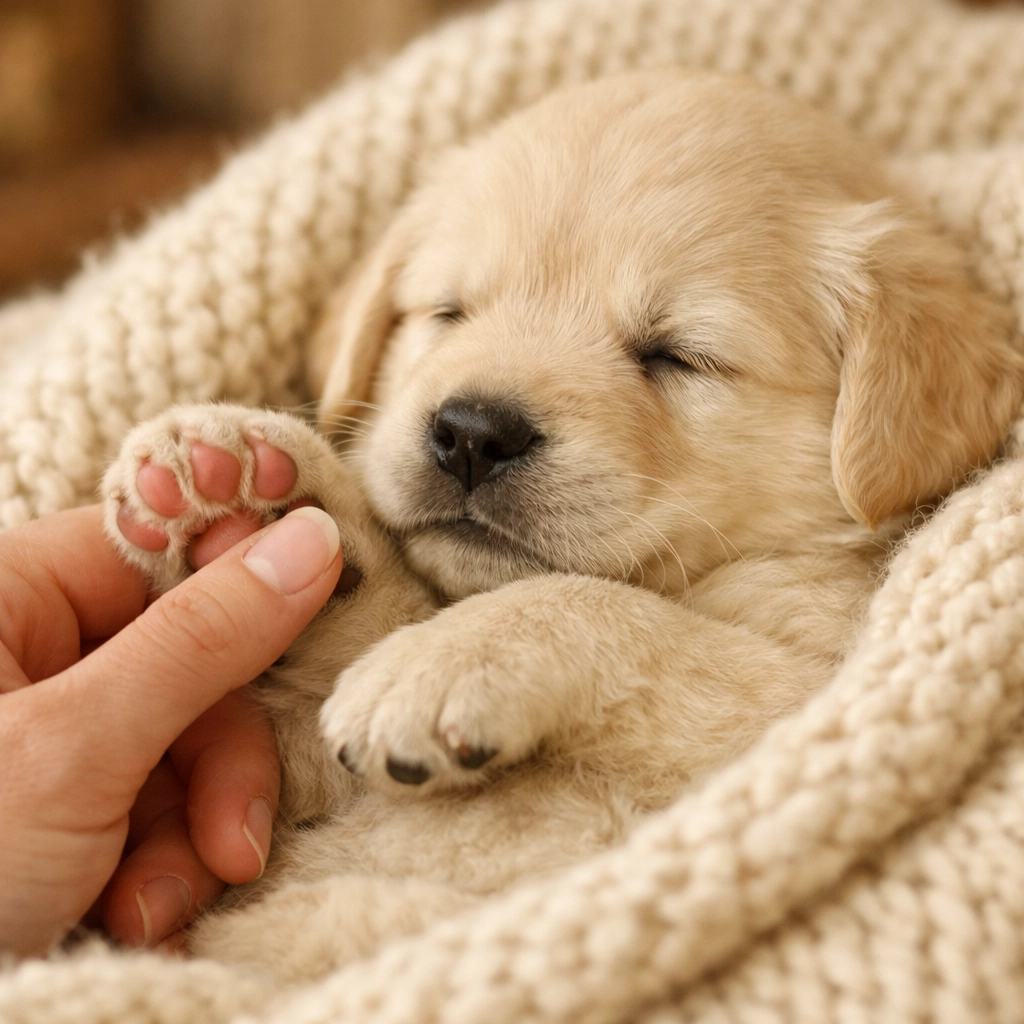
You might think socialization starts when a puppy can walk, but we actually begin when they are just three days old! We utilize a program called Early Neurological Stimulation (ENS), often referred to as the "Super Dog" program, developed by the U.S. Military.
From day 3 to day 16, we perform five specific, gentle exercises with each puppy once a day. These include:
Tactile stimulation (tickling between the toes)
Holding the head erect
Holding the head pointed down
Supine position (resting on their back)
Thermal stimulation (placed on a cool, damp towel)
It only takes a few minutes, but the science behind it is incredible. These tiny "stresses" stimulate the puppy's neurological system, leading to improved cardiovascular performance, stronger heartbeats, more efficient adrenal glands, and a higher tolerance to stress later in life. When you pick up one of our socialized Golden Retriever puppies, you’re getting a dog whose brain was literally "boosted" from the very start.
Shaping a Resilient Nervous System
When we talk about socialization, we’re really talking about habituation. This is the process where a dog learns to ignore neutral stimuli. Think about how you don't "hear" the hum of your refrigerator after a while. We want our puppies to feel that way about vacuum cleaners, sirens, and umbrellas.
However, there is a fine line between socialization and "flooding." Flooding happens when a puppy is overwhelmed by too much intensity, which can actually cause more fear. That’s why our approach at NextGen Goldens is always purposeful and positive. We use high-value treats, lots of praise, and we always watch for stress signals like lip licking or yawning.
For those interested in early socialization and the science behind the perfect therapy dog, it's all about building "environmental confidence." We want our pups to believe that "new" equals "exciting and rewarding."
The Rule of 7: Our Purposeful Practice
To ensure our puppies are ready for anything, we follow a variation of the "Rule of 7." By the time a NextGen puppy is 8 weeks old and ready to go to their forever home in the Pacific Northwest, they should have:
Been on 7 different types of surfaces (grass, carpet, tile, wood, concrete, etc.)
Played with 7 different types of objects (big balls, squeaky toys, metal bowls, etc.)
Been in 7 different locations (the yard, the kitchen, the car, the grooming table)
Met 7 new people (including someone with a hat, someone with a beard, and children)
Exposed to 7 different challenges (climbing over a low obstacle, walking through a tunnel)
This variety ensures that their developing brain creates a broad definition of "normal." If you’re looking for how to find the best Golden Retriever puppies in Oregon, this level of intentionality is what sets a premium breeder apart.
Preparing for the Call of Duty: Therapy Dog Foundations
A therapy dog needs a very specific temperament. They need to be "pro-social": meaning they actively seek out human interaction: but they also need to be incredibly calm. A therapy dog that jumps up to say hi isn't doing their job!
In our socialization program, we emphasize "calm greetings." We teach our puppies that four-on-the-floor is what earns them affection. We also introduce them to mobility aids like walkers and wheelchairs early on, so these large, clanking objects are just a normal part of life.
Our goal is to produce socialized Golden Retriever puppies that can walk into a nursing home or a school and immediately lower the cortisol levels of everyone in the room. This doesn't happen by accident; it's the result of breeding for therapy and family life and following up with rigorous, science-based socialization.
Taking the Torch: Socialization at Home
When you bring your puppy home, the socialization window is still open for another 8 weeks or so. This is such an exciting time! But I always tell our families to be patient and move at the puppy's pace.
Here are a few tips for your first few weeks in Oregon:
Keep it Positive: Always carry treats. If your puppy sees something new (like a neighbor on a bicycle), give them a treat before they have a chance to get worried.
Diverse Environments: Take your puppy to local parks (keep them off the ground until fully vaccinated: use a stroller or a blanket!), or visit a pet-friendly store like a hardware shop.
Body Language: Learn to read your pup. If their tail is tucked, they are telling you they need more space. It’s okay to back up!
If you're looking for more specific advice on those early days, check out our training tips for Golden Retriever puppies.
Why We Do What We Do
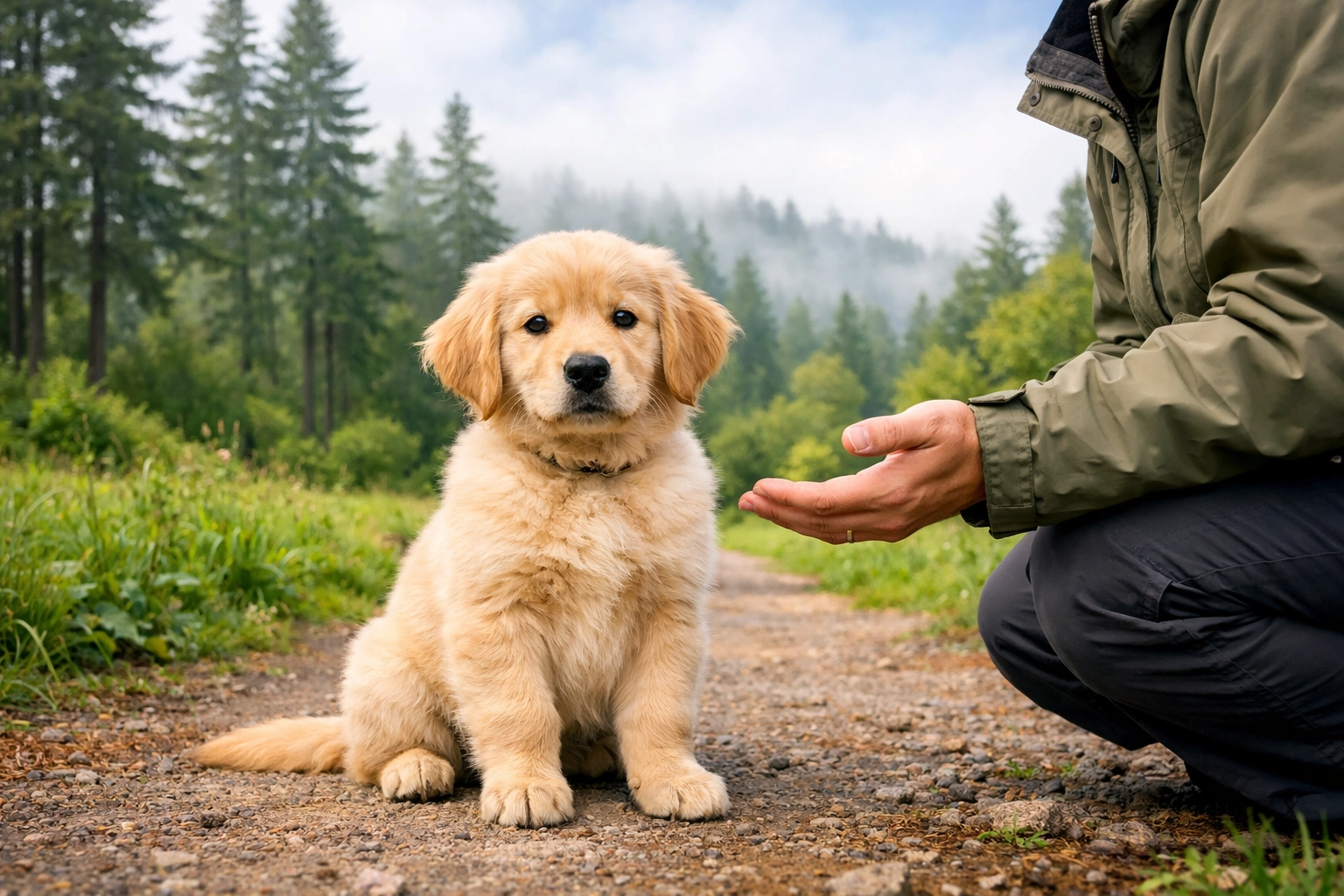
At Green Acres Nextgen, we aren't just selling dogs. We are providing companions that will be there for your children’s first steps, your quiet moments of grief, and your outdoor Oregon adventures. By grounding our socialization in science, we ensure that your Golden has the best possible start to a long, happy life.
We believe that every puppy deserves a nervous system that is prepared for the world. Whether they become a certified therapy dog or the "therapist" for your own family at home, that foundation of confidence is a gift that lasts a lifetime.
If you’re ready to add a confident, healthy, and beautifully socialized member to your family, we’d love to help you find your next Golden Retriever companion.
Stay wagging, Oregon!
Bibliography & Scientific References
Battaglia, C. L. (2009).Periods of Early Development and the Effects of Early Experience. Journal of Veterinary Behavior. (Discussion on ENS and its effects on the canine adrenal system).
Dietz, L., et al. (2018).The importance of early life experiences for the development of behavioural disorders in domestic dogs. Behavioural Processes.
Freedman, D. G., King, J. A., & Elliot, O. (1961).Critical Period in the Social Development of Dogs. Science. (The foundational study defining the 3-16 week window).
Howell, T. J., King, T., & Bennett, P. C. (2015).Puppy parties and beyond: the role of early age socialization practices on adult dog behavior. Veterinary Medicine: Research and Reports.
Scott, J. P., & Fuller, J. L. (2012).Genetics and the Social Behavior of the Dog. University of Chicago Press. (Comprehensive look at breed-specific behavioral traits and development).
Serpell, J. A., & Duffy, D. L. (2014).Dog Breeds and Their Behavior. In Domestic Dog Cognition and Behavior. Springer, Berlin, Heidelberg.