
The Science of a Gentle Soul: Breeding for Therapy and Family Life
- Green Acres K-9 Resort
- Jan 28
- 5 min read

There's something truly magical about watching a Golden Retriever gently rest their head on a child's lap or calmly comfort someone having a difficult day. As someone who works with these incredible dogs every single day, I can tell you that this "gentle soul" quality isn't just luck, it's the beautiful result of careful breeding, early development, and a deep understanding of canine science.
If you're searching for Golden Retriever puppies in Portland, Oregon, or considering a therapy dog Golden Retriever for your family, understanding the science behind temperament can help you make the best decision. Let's dive into what truly shapes these remarkable companions.
Nature vs. Nurture: The Great Temperament Debate
You've probably heard the age-old question: Is behavior determined by genetics or environment? When it comes to calm temperament Golden Retrievers, the honest answer is both, and the way these factors intertwine is fascinating.
Research has consistently shown that while many temperament qualities can be shaped through training and socialization, genetics and early life experiences significantly influence behavioral development. This means the parents of your puppy matter tremendously, but so does everything that happens during those crucial first weeks of life.
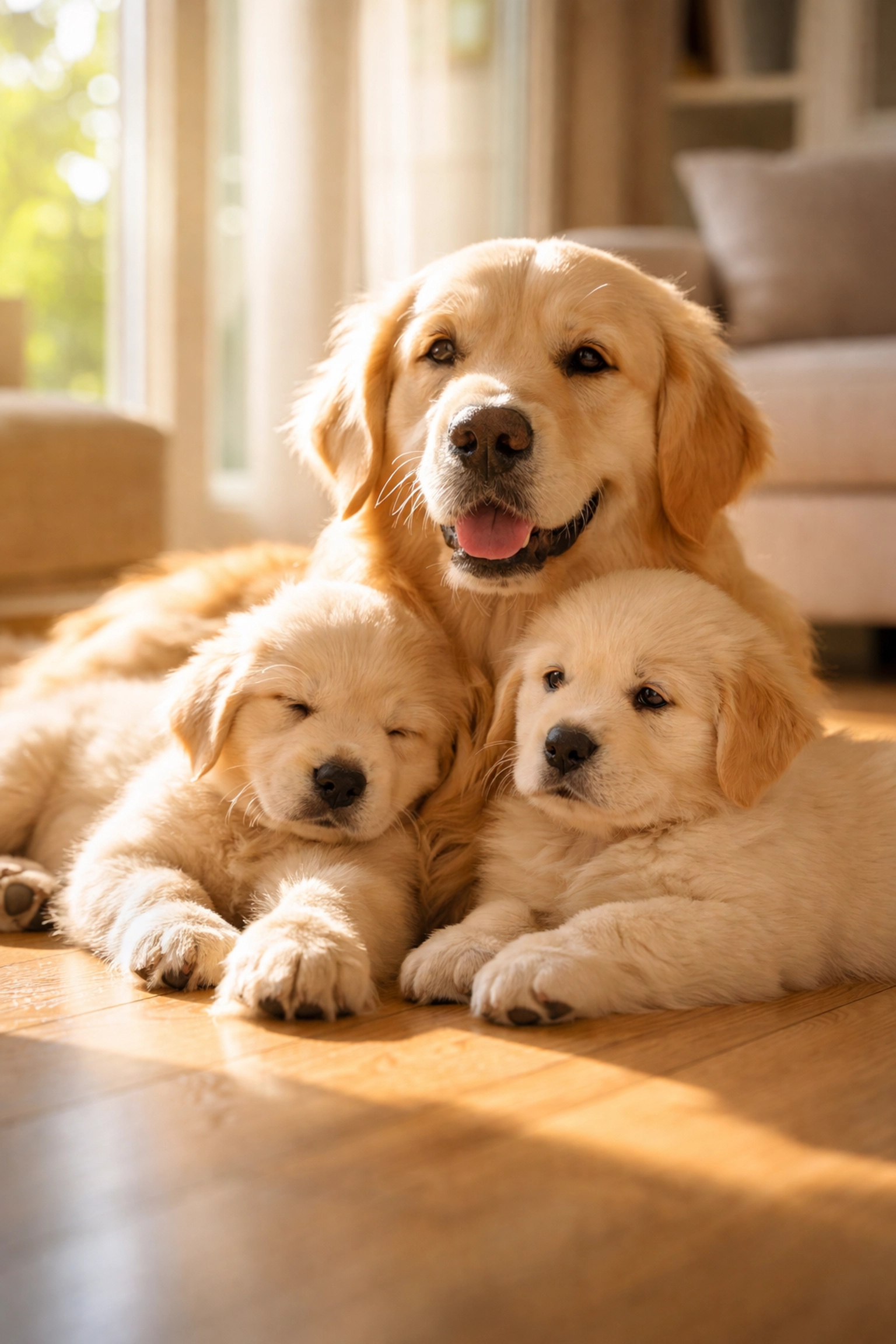
At NextGen Goldens, we take this science seriously. We don't just breed for beautiful coats and healthy hips (though those matter too!). We specifically select breeding pairs based on their temperament profiles, looking for dogs that demonstrate natural calmness, low reactivity, and high empathy. These aren't just nice-to-have traits; they're the foundation of a family friendly Golden Retriever.
The Genetics Behind a Gentle Disposition
Let me get a little nerdy with you for a moment, because this stuff is genuinely exciting!
Studies using the Canine Behavior Assessment and Research Questionnaire (C-BARQ) have identified specific traits that make dogs excellent for therapy work and family life. The research shows that ideal candidates score highly on trainability and obedience while scoring low on excitability, separation anxiety, aggression toward people, fear of strangers, and hyperactivity.
Here's what's remarkable: Golden Retrievers and Labrador Retrievers consistently demonstrate low aggression toward people and other dogs, combined with high trainability. This isn't coincidence, it's the result of generations of thoughtful breeding.
When we select our breeding dogs here in Boring, Oregon, we evaluate:
Stress response: How does the dog react to unexpected situations?
Social confidence: Can they approach new people without fear or excessive excitement?
Emotional sensitivity: Do they naturally tune into human emotions?
Recovery time: After a startling event, how quickly do they return to calm?
These genetic tendencies create what I like to call the "therapy dog foundation", qualities that can be enhanced through training but can't be entirely taught from scratch.
The Critical First Eight Weeks: Where Magic Happens
Now, here's where nurture enters the picture in a powerful way. Even the best genetics need the right environment to flourish.
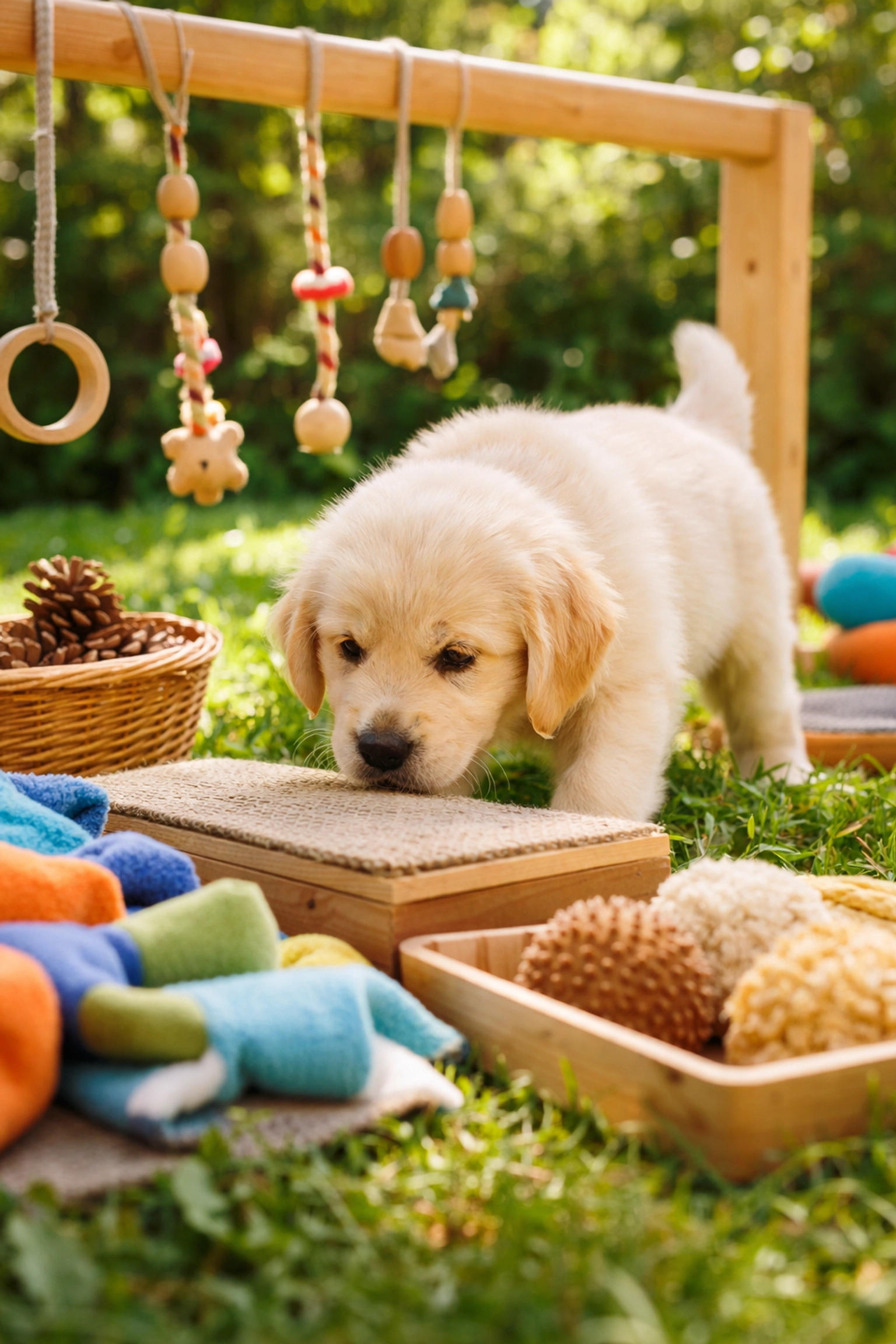
Early neurological stimulation and social exposure during the first eight weeks of life make a noticeable, measurable difference in puppy development. This period is what scientists call the "critical socialization window," and it's when puppies' brains are most receptive to learning about the world around them.
During this window, we expose our puppies to:
Varied textures and surfaces (carpet, tile, grass, wood chips)
Different sounds (household appliances, children laughing, traffic noise)
Gentle handling by multiple people of different ages
Novel objects and mild challenges that build confidence
Positive interactions with other dogs of various sizes
This isn't just playtime, it's building neural pathways that will serve these dogs for their entire lives. A puppy who learns during this period that new experiences are opportunities rather than threats becomes an adult dog who can accompany a child to a noisy soccer game or remain calm in a busy hospital corridor.
What Makes a Truly Exceptional Therapy Dog?
If you're specifically interested in therapy dog Golden Retrievers, understanding the full picture of what makes them successful is essential.
Research has identified that successful therapy dogs demonstrate:
Calmness in varied environments
Gentleness with vulnerable populations
Affection that's warm but not overwhelming
Confidence without pushiness
Adaptability to unfamiliar situations
They must never show aggressive behavior, remain calm around other dogs, and avoid compulsive or instinctual behaviors that could disrupt interactions in care settings.
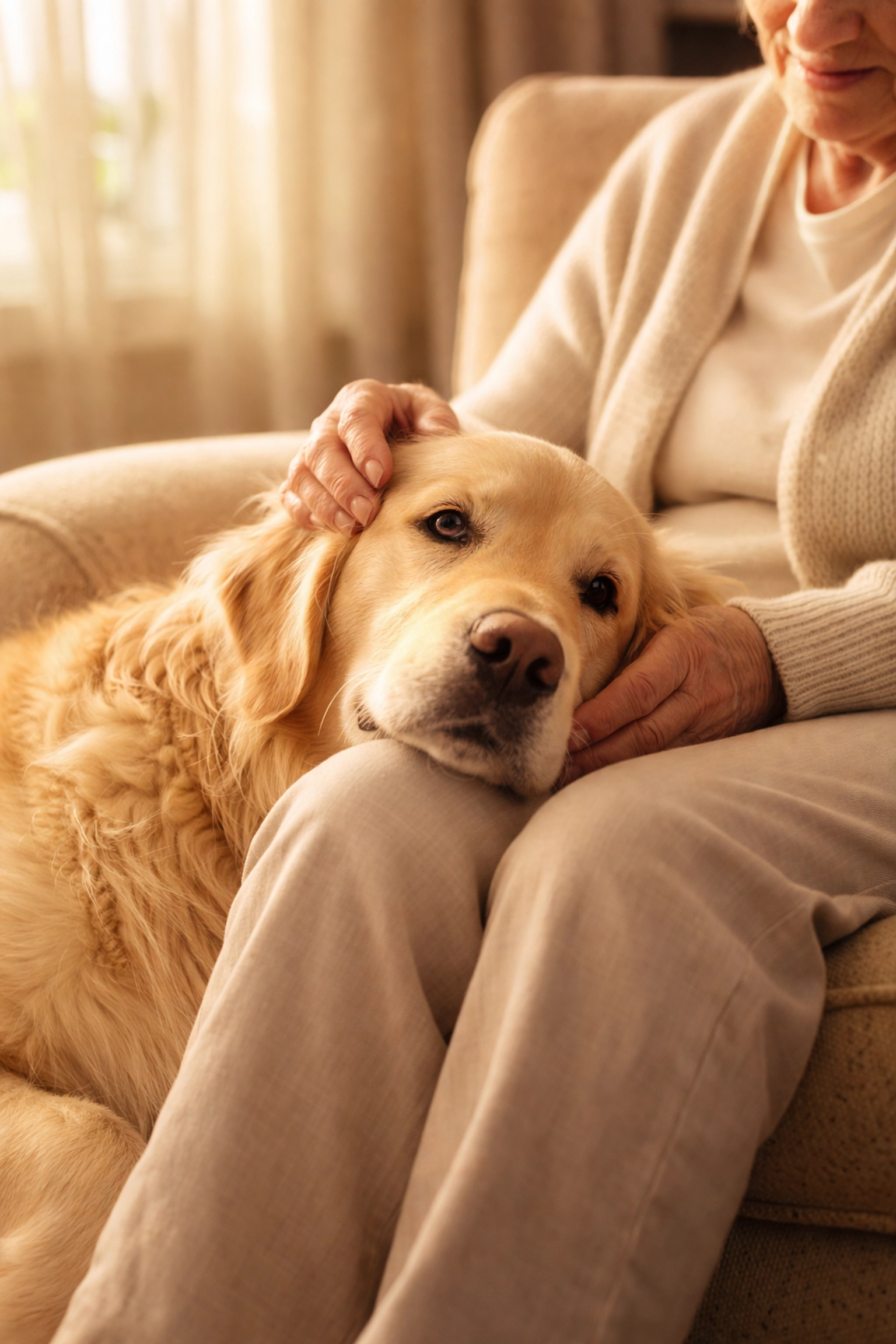
Here's something that might surprise you: while breed tendencies matter, studies show that temperament matters more than breed when it comes to therapy work. Dogs of many breeds and age groups have aptitude for therapy work. However, Golden Retrievers consistently rise to the top because their breed characteristics align so beautifully with these requirements.
When you're looking at therapy dog puppies, you want to find a breeder who understands these nuances and can provide detailed information about parent temperaments and early puppy raising practices.
Why This Matters for Busy Families
You might be thinking, "I'm not planning to do formal therapy work, I just want a great family dog." Here's the wonderful news: the same qualities that make an excellent therapy dog make an exceptional family companion.
Think about what a busy household needs:
A dog who doesn't panic when the doorbell rings during dinner prep
A companion who can handle the unpredictability of children
A pet who recovers quickly from the chaos of a birthday party
A friend who senses when someone needs extra comfort
Family friendly Golden Retrievers thrive in these environments because they possess the same low-reactivity and emotional intelligence that therapy dogs need. When you invest in a well-bred, properly socialized puppy, you're not just getting a pet, you're gaining a family member who can genuinely enhance your daily life.
Our Approach at NextGen Goldens
I believe that breeding is both an art and a science. Here in Boring, Oregon, we've built our program around three core principles that align with current genetic research:
First, we identify genetically superior litters as our breeding pools. This means looking beyond just physical health (though that's crucial too) to evaluate behavioral traits across generations.
Second, we screen individuals for both common breed diseases AND validated behavior assessments. Health testing like OFA certifications matter, but so does understanding each dog's temperament profile.
Third, we maintain genetic diversity by keeping superior dogs from diverse litters rather than selecting only "perfect" specimens. This approach strengthens our entire program over time.
When you're searching for Golden Retriever puppies in Portland, Oregon, I encourage you to ask breeders about their approach to temperament. A reputable breeder should be able to tell you specifically about the personalities of both parent dogs and explain their socialization protocols.
Bringing It All Together
The gentle soul of a Golden Retriever isn't an accident, it's the beautiful result of understanding both nature and nurture. Genetics provide the foundation, laying down the neural architecture for calmness, trainability, and emotional sensitivity. Early experiences then build upon that foundation, teaching puppies that the world is a safe, interesting place worth exploring with confidence.
Whether you're dreaming of a therapy dog who can bring comfort to those in need, or simply want a wonderful family companion who'll be your children's best friend, understanding this science helps you make an informed choice.
At NextGen Goldens, we're passionate about producing calm temperament Golden Retrievers who are ready to become beloved family members. Every breeding decision, every socialization exercise, every moment of early puppy care is guided by our commitment to raising dogs with truly gentle souls.
If you have questions about our approach or want to learn more about our available puppies, we'd love to hear from you. After all, finding the right match between family and puppy is one of the most rewarding parts of what we do!
Scientific Bibliography