
The Science of Temperament: Why Our Golden Retrievers are Born for Therapy and Family Life
- Green Acres K-9 Resort
- 5 days ago
- 6 min read

As a helper here at Green Acres Nextgen, I get the incredible privilege of watching our puppies grow from tiny, wobbling fluffballs into confident, intuitive companions. People often ask us, "How are your dogs so calm?" or "What makes them so good with kids?" While a lot of it comes down to the love we pour into them, there is a fascinating world of science happening behind the scenes.
When you are looking for Golden Retriever puppies Oregon, you aren’t just looking for a pet; you’re looking for a new family member who can navigate the complexities of your home life. Whether you need a dog that can sit quietly during a movie night or one with the potential to become a certified therapy dog, temperament is everything. Today, I want to pull back the curtain on how we use selective breeding and behavioral science at NextGen Goldens to ensure our pups are truly "born for this."
It All Starts with the Blueprint: Genetics and Temperament
You’ve probably heard the saying "it's all in the genes," and when it comes to dog behavior, that’s more than just a cliché. Temperament: the way a dog reacts to its environment and interacts with humans: is highly heritable. As a dedicated Golden Retriever breeder Oregon, our goal is to stack the deck in favor of gentleness and intelligence.
Science tells us that traits like "sociability" and "fearlessness" are passed down through generations. According to studies on canine genetics, specific markers are associated with the friendly, non-aggressive nature that Golden Retrievers are famous for. By selecting parents who exhibit a naturally calm temperament Golden Retrievers are known for, we are essentially "locking in" those traits for the next generation.
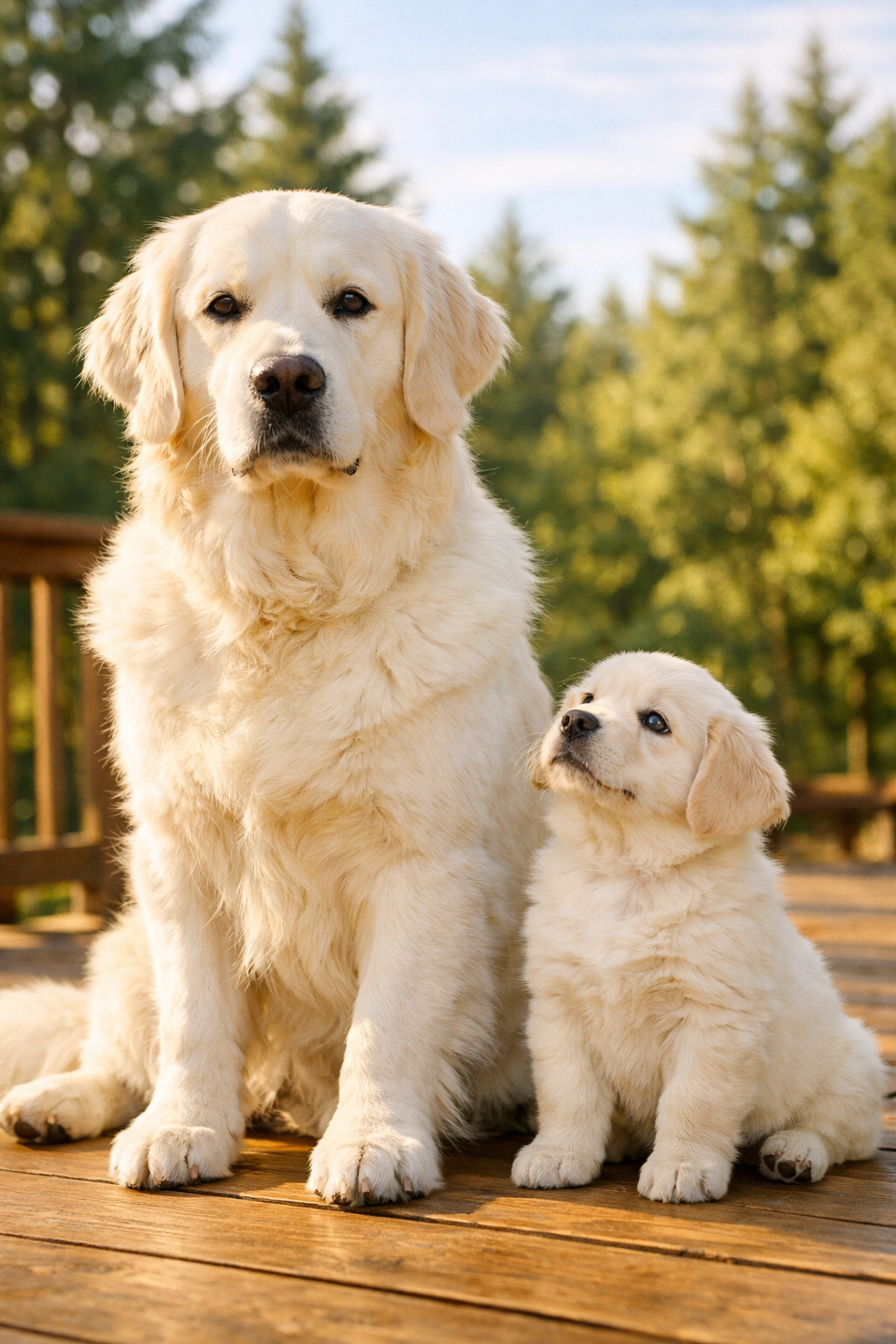
But it’s not just about picking "nice" dogs. We look for the "off switch." A great family dog needs to be able to go from an afternoon of fetch to a quiet evening at your feet without skipping a beat. This adaptability is a hallmark of our English Cream Golden Retriever Oregon lines, which are often praised for their mellow, steady dispositions.
The "Therapy Dog" Factor: Beyond Just Being Nice
There is a big difference between a friendly dog and a dog suited for therapy work. Therapy dog Golden Retrievers must possess a high level of emotional intelligence. They need to be able to read human micro-expressions and stay calm in high-stress environments like hospitals or schools.
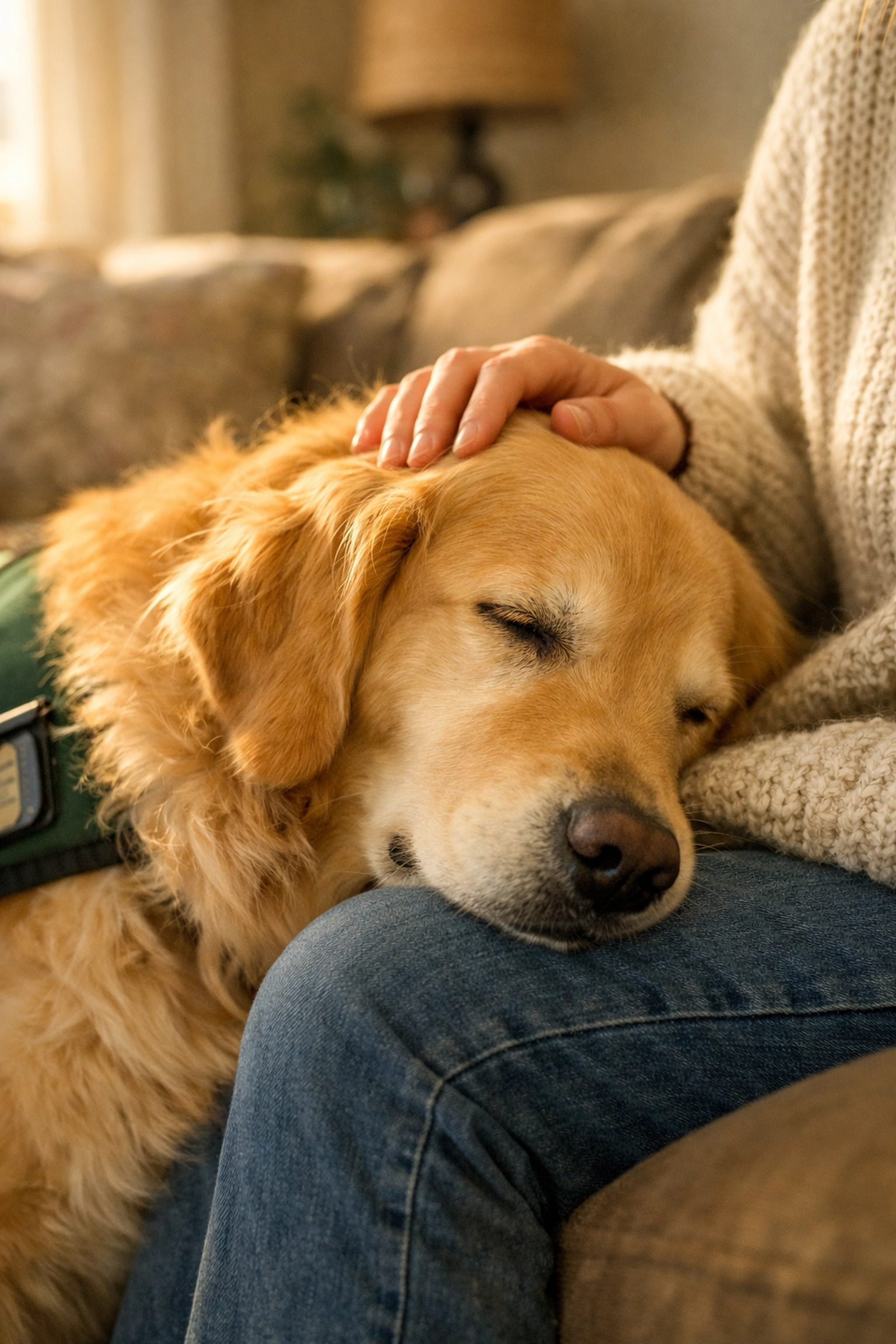
Research into the human-animal bond shows that Golden Retrievers have a unique ability to lower cortisol (stress hormone) levels in humans simply through their presence. But to do this effectively, the dog itself must be unflappable. At our facility in Boring, Oregon, we focus on breeding for "low arousal" thresholds. This means our puppies don't overreact to loud noises or sudden movements, making them the perfect candidates for therapy dog puppies.
I’ve seen it firsthand: a puppy that intuitively leans its weight against a crying child or sits perfectly still while being hugged. This isn't just a happy accident; it’s the result of generations of selecting for "softness": the physical and emotional gentleness that allows a dog to be a source of comfort rather than a source of chaos.
Why We Choose English Cream Lines
If you’ve been searching for an English Cream Golden Retriever Oregon, you likely already know they are stunning dogs. But for us at NextGen Goldens, the "cream" isn't just about the coat color. Historically, European lines (often referred to as English Creams) have been bred with a heavy emphasis on health and a very specific, blocky build that often coincides with a more laid-back personality.
These dogs tend to be incredibly sturdy and patient, which is exactly what you want if you have toddlers running around or if you are training a dog for service work. Being a Boring Oregon Golden Retriever breeder allows us the space and environment to let these dogs develop naturally, surrounded by the sights and sounds of a working resort, which further cements their confident nature.
Health Testing: The Foundation of a Good Mind
You might wonder what hips and hearts have to do with temperament. The answer is: everything! A dog in pain is a dog that cannot be its best self. This is why we insist on providing health tested Golden Retriever puppies Oregon families can rely on.
When a dog is physically sound: with clear OFA certifications for hips, elbows, heart, and eyes: they are more likely to remain patient and active throughout their lives. Chronic pain can lead to irritability or "fear-biting," which is why health testing is a non-negotiable part of our breeding program. We want your companion puppy to be happy and healthy for a long, long time.

Selective Breeding in Boring, Oregon: Our Unique Process
Living and working in Boring, Oregon, gives us a unique perspective. We aren’t a high-volume kennel; we are a specialized breeder focused on quality over quantity. Our selective breeding process involves more than just matching two dogs. We look at the "Pedigree of Personality."
Early Neurological Stimulation (ENS): We start working with our pups almost immediately. Scientific research suggests that mild "stress" in the first few days of life: like holding a pup in different positions: actually strengthens their immune system and makes them more resilient to stress later in life.
Socialization Windows: We take advantage of the critical socialization period (between 3 and 16 weeks) to introduce our pups to everything from vacuum cleaners to different floor textures. This creates a confident, therapy-ready Golden Retriever.
The Environment: Our puppies are raised in a way that encourages them to be part of a community. This makes them highly adaptable and trainable when they eventually move to their "forever" homes.
Trainability: The Eager-to-Please Gene
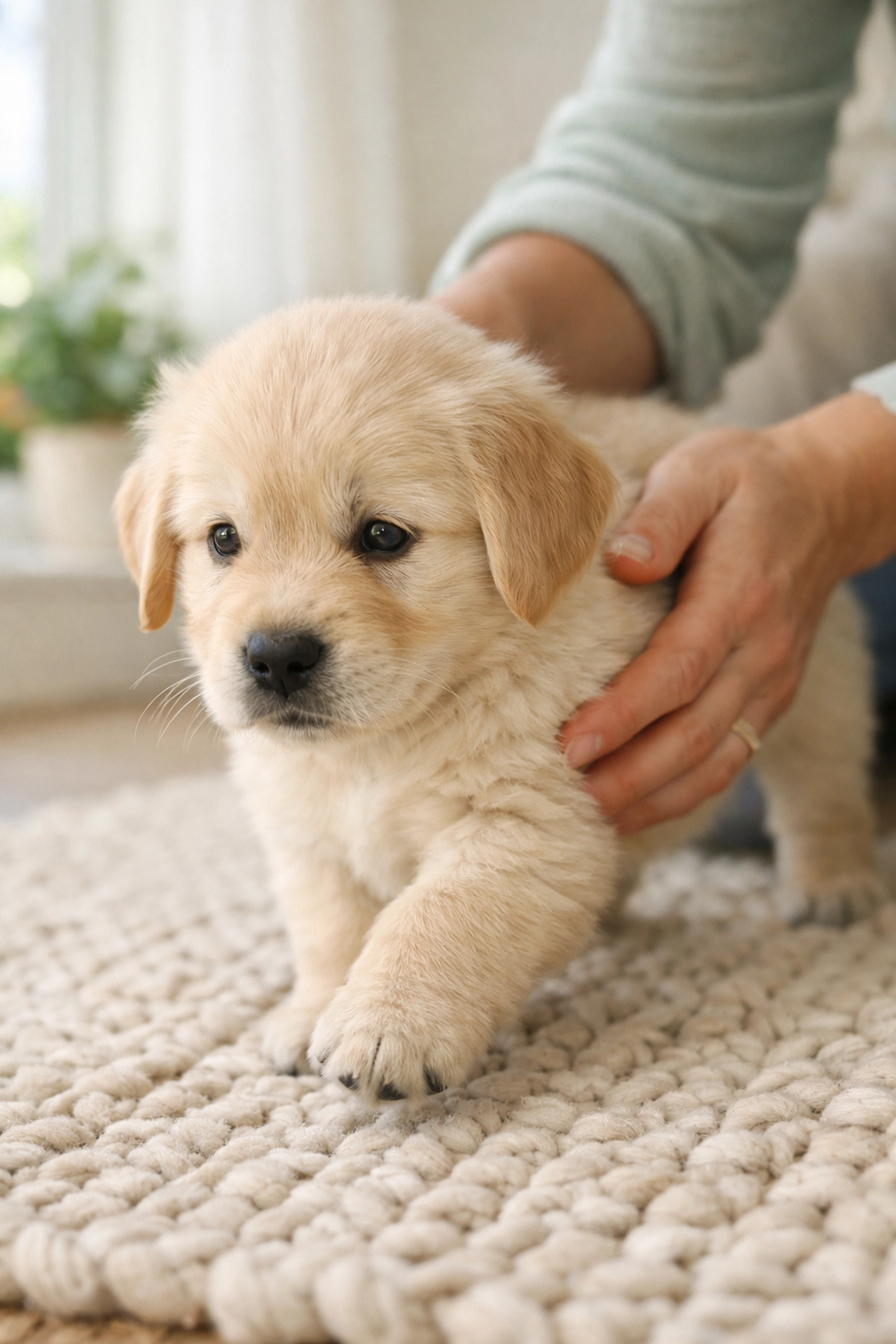
One of the traits I love most about our Goldens is their "will to please." In the scientific community, this is often linked to their history as gundogs. They were bred to work in partnership with humans, not independently. This genetic legacy means that when you bring home one of our pups, you’re starting with a dog that wants to understand you.
Whether you are looking for basic training guides or planning on advanced obedience, our Goldens are built to succeed. They are highly motivated by both food and affection, which makes them one of the easiest breeds to train. I always tell new owners that half the battle is already won because of the pup's natural inclination to cooperate.
Choosing the Right Fit for Your Lifestyle
We know that every family is different. Some need a high-energy hiking partner, while others need a quiet companion for a retired parent. Because we spend so much time with our puppies, we can help you identify which pup in a litter has the specific temperament you need.
If you're still in the research phase, I highly recommend checking out our post on choosing the right Golden Retriever puppy. It’s a great deep dive into making sure the puppy you choose matches your energy levels and home dynamic.
Final Thoughts: A Companion for Life
At the end of the day, the science is just a tool we use to reach a beautiful goal: creating a bond between a human and a dog that is built on trust, calm, and mutual understanding. Whether you are looking for a therapy-ready pup or just a best friend for your children, we are here to help you find that perfect match.
Our doors in Boring, Oregon, are always open for those looking for a high-quality, scientifically-bred companion. We take our jobs as breeders seriously because we know we aren't just selling dogs: we are providing the heartbeat of your home.
Bibliography and Scientific Sources
Hare, B., & Woods, V. (2013).The Genius of Dogs: How Dogs Are Smarter Than You Think. (Discusses the evolution of canine social intelligence and cooperation with humans).
Liinamo, A. E., et al. (2007). "Genetic variation in aggression-related traits in Golden Retrievers." Applied Animal Behaviour Science. (Explores the heritability of temperament traits in the breed).
Spady, T. C., & Ostrander, E. A. (2008). "Canine Behavioral Genetics: Pointing Out the Phenotypes and Herding up the Genes." American Journal of Human Genetics. (A look at how specific behaviors are linked to canine DNA).
Serpell, J. A. (2017).The Domestic Dog: Its Evolution, Behavior and Interactions with People. (Comprehensive resource on how breeding impacts dog-human relationships).
Gácsi, M., et al. (2009). "Explaining Dog Wolf Differences in Utilizing Human Pointing Cues: Selection for Synergistic Collaboration with Humans." PLoS ONE. (Research on why breeds like Goldens are so attuned to human communication).