
The Science of Sleep: Why Rest is Critical for Your Golden Retriever Puppy's Brain
- Green Acres K-9 Resort
- 2 days ago
- 5 min read

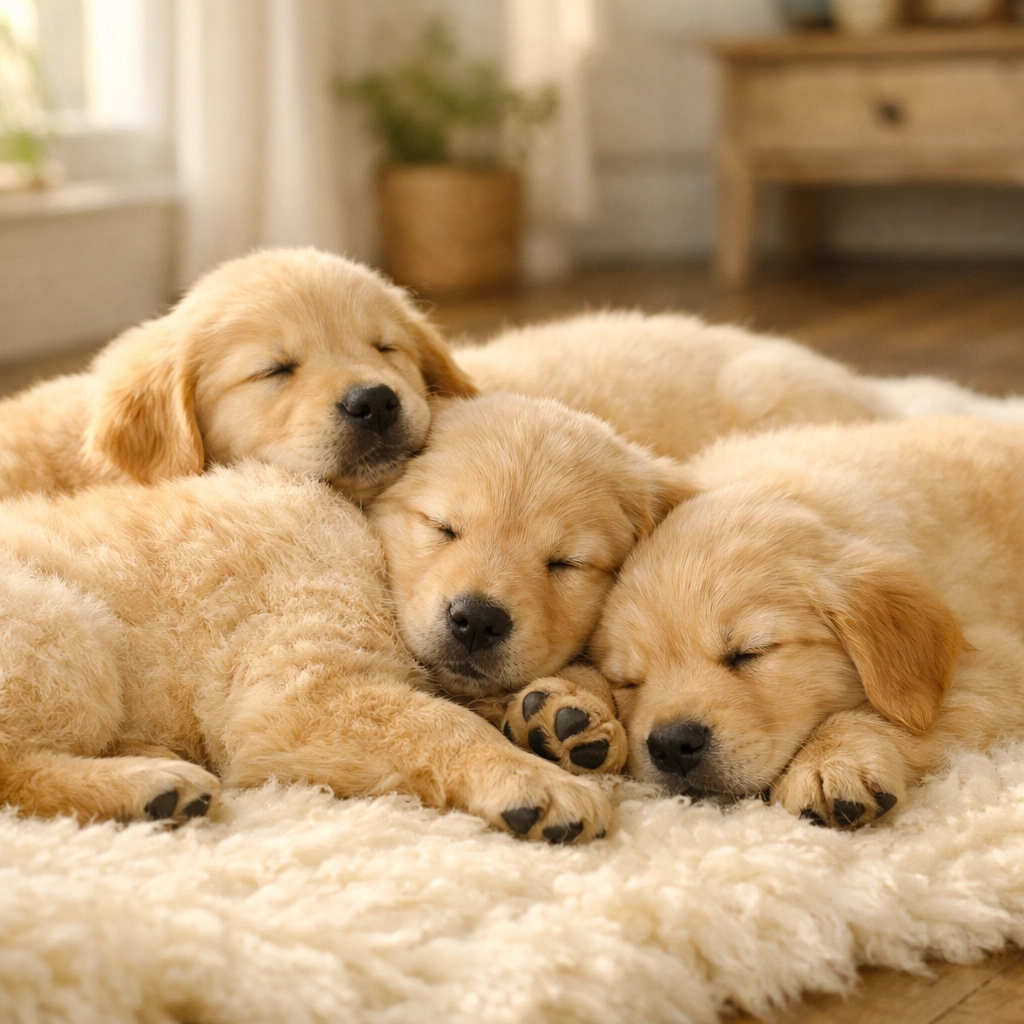
As a helper here at NextGen Goldens, I spend a lot of my time watching our little ones grow. One of the most common things I see: and honestly, one of my favorite sights: is a "puppy pile" in deep, twitchy-nosed sleep. You might look at a sprawling eight-week-old and think they’re just being lazy, but there is actually a fascinating biological powerhouse at work under those floppy ears.
When you’re looking for Golden Retriever puppies Oregon, you’re often looking for that perfect, goofy, and loving companion. But to get to that well-adjusted adult stage, these puppies need an incredible amount of shut-eye. We’re talking 18 to 20 hours a day. It sounds like a lot, right? But as a Boring Oregon Golden Retriever breeder, I’ve learned that these hours of rest are just as important as the food they eat and the training they receive.
In this post, I want to share the science behind why we prioritize quiet time so heavily here in Boring, Oregon, and why your future puppy’s brain depends on it.
The 20-Hour Rule: Why So Much Sleep?
If you’ve ever brought home a new puppy, you know they have two speeds: "Full Throttle" and "Off." One minute they are chasing a ball with Olympic intensity, and the next, they’ve fallen asleep mid-stride. This is because their bodies are doing an enormous amount of heavy lifting.
While your puppy is snoozing, their brain is working overtime. For Golden Retriever puppies Oregon, the first few months of life are a period of rapid neural expansion. They are learning how to navigate the world, understand human cues, and socialize with their littermates. All that information is processed during sleep. Scientific research shows that sleep is the primary time when the brain consolidates memory. If a puppy doesn't sleep enough, they literally can't remember the "sit" command you practiced earlier that afternoon.
Brain Plasticity and Memory Consolidation
One of the most incredible things I’ve discovered while working with our health tested Golden Retriever puppies Oregon is how much their personalities develop during their "down time." This comes down to a concept called brain plasticity. This is the brain's ability to adapt, change, and form new neural connections.
During REM (Rapid Eye Movement) sleep: that stage where you see their paws twitching and hear those tiny muffled "woofs": the brain is replaying the day's events. It’s during this stage that the brain decides what information is important to keep and what can be discarded. For a dog destined to be one of our therapy dog Golden Retrievers, this processing time is vital. They need to categorize "scary" noises as "normal" and "new people" as "friends." Without enough REM sleep, their brains can become "cluttered," leading to a puppy that is easily overwhelmed or anxious.
Emotional Regulation: Preventing the "Puppy Zoomies"
We’ve all seen it: the 7:00 PM crazy hour. The puppy starts sprinting in circles, nipping at ankles, and barking at nothing. Most owners think their puppy has too much energy and needs more exercise. In reality, it’s usually the exact opposite: they are overtired.
Just like a human toddler who missed a nap, an overtired puppy loses the ability to regulate their emotions. At NextGen Goldens, we emphasize producing calm temperament Golden Retrievers. While genetics play a huge role in this, environmental structure is the other half of the puzzle. When a puppy doesn't get those 18-20 hours of rest, their cortisol (stress hormone) levels rise. This leads to:
Increased mouthiness and biting
Difficulty focusing during training
Hyperactivity or "the zoomies"
Anxiety and clinginess
By ensuring our puppies have a quiet, structured environment here in Boring, we help them learn how to "switch off." This foundational skill is what makes them such amazing family and therapy dogs later in life.
Physical Growth and the Immune System
It’s not just the brain that’s developing; it’s the entire body. Golden Retrievers are a large breed, and they grow at an astonishing rate. During deep sleep, the pituitary gland releases growth hormones. These hormones are responsible for building strong muscles, sturdy bones, and healthy internal organs.
As a responsible Golden Retriever breeder Oregon, we ensure all our parents are health tested, but the environment we provide for the puppies is what allows those good genetics to thrive. Sleep also bolsters the immune system. A well-rested puppy is better equipped to handle the stresses of vaccinations and the physical toll of teething.

The Green Acres Approach: Quiet in Boring, Oregon
You might wonder how we actually get a dozen puppies to sleep for 20 hours a day. It isn't always easy, but it is necessary! Our facility in Boring, Oregon, is designed specifically to support this need. Unlike high-volume kennels that can be loud and chaotic, we maintain a very quiet, structured environment.
We follow a strict "Active/Rest" cycle. For every hour of play, socialization, or training, our puppies get two hours of quiet nap time in a darkened, temperature-controlled space. This prevents overstimulation and teaches the puppies that being calm is a rewarded state of being.
When you look for a Boring Oregon Golden Retriever breeder, you want someone who understands that the "work" of raising a dog happens just as much during the quiet moments as it does during the active ones. This structure is why our puppies are known for their "off switch": a trait that is highly coveted by families and therapy dog handlers alike.
How You Can Support Your Puppy’s Sleep at Home
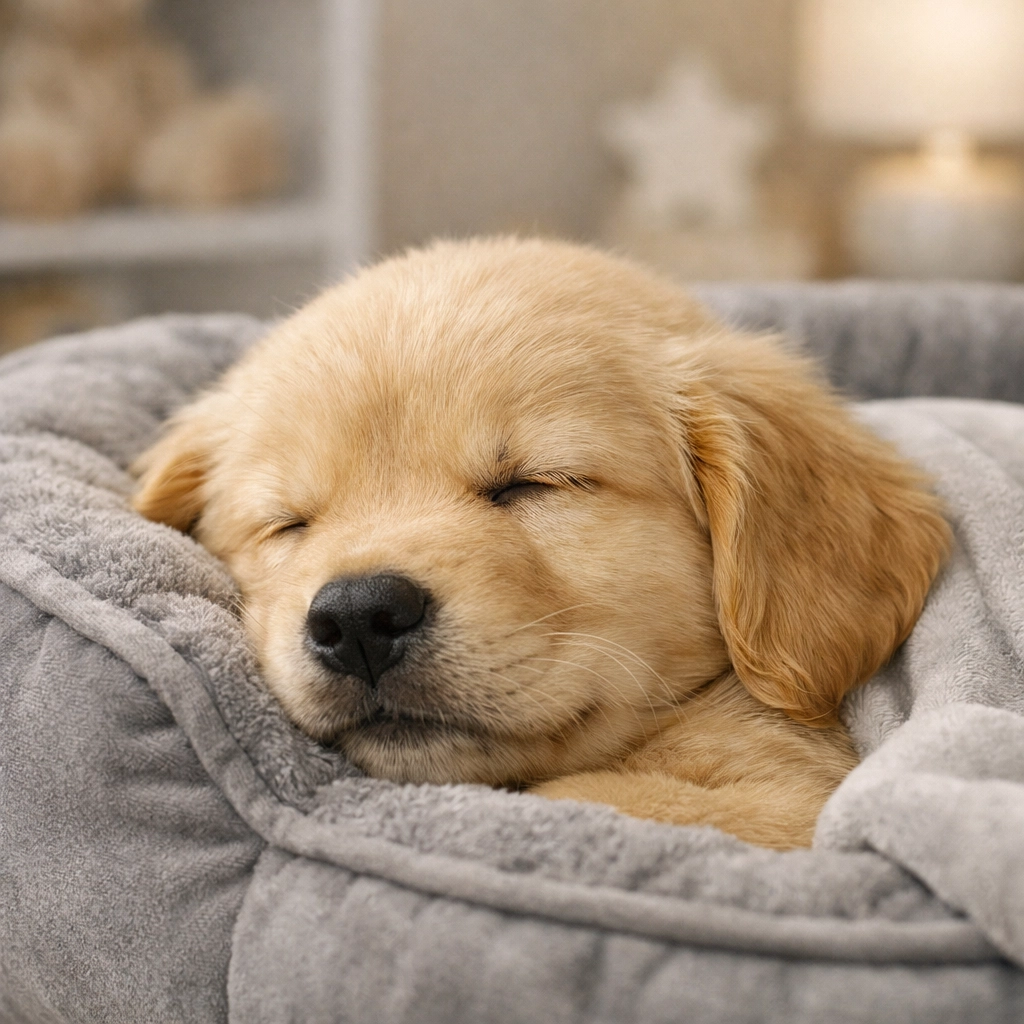
When you finally pick up your puppy from us, the transition can be a lot for them. Here are a few things I always recommend to our new families to ensure their puppy keeps getting the rest they need:
Respect the Nap: It’s tempting to want to show off your new puppy to everyone, but if they are sleeping, let them be. Remind children that a sleeping puppy is a growing puppy.
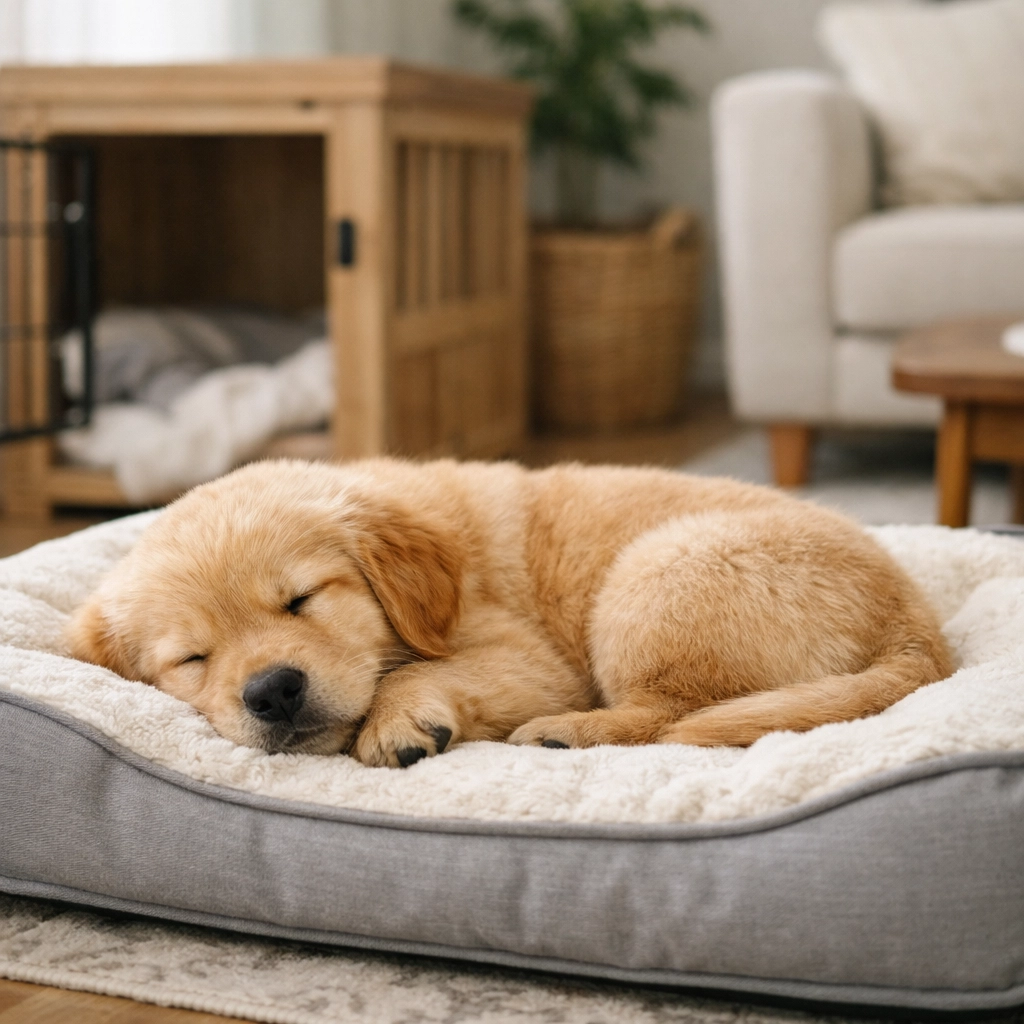
Create a Sanctuary: Use a crate or a designated "puppy room" that is away from the main hustle and bustle of the house. Use a white noise machine if your house is particularly loud.
Stick to a Schedule: Dogs thrive on predictability. Try to feed, play, and nap at the same times every day. You can learn more about choosing the right puppy and preparing for their arrival here.
Watch for the Signs: If your puppy starts getting "mouthy" or stops listening to commands they usually know, don't reach for a toy: reach for the crate. They probably just need a nap.
Conclusion: A Lifetime of Benefits
It’s easy to focus on the training, the cute photos, and the walks, but never underestimate the power of a good nap. By prioritizing 18-20 hours of sleep, we are giving these Golden Retriever puppies Oregon the best possible start. We are protecting their developing brains, ensuring their bodies grow strong, and helping them develop the emotional stability required for a lifetime of companionship.
Whether your dog is destined for a life of service as a therapy dog Golden Retriever or simply the role of a beloved family pet, sleep is the foundation upon which everything else is built.
If you’re interested in learning more about our available puppies or our philosophy here at NextGen Goldens, feel free to check out our puppies page or reach out to us! We love talking about our dogs and helping you find the perfect addition to your family.
Bibliography & Scientific Sources
Walker, M. (2017).Why We Sleep: Unlocking the Power of Sleep and Dreams. (Discusses the role of REM sleep in memory consolidation and brain plasticity across species).
Tiffani, J. H., et al. (2020). "Sleep and its relationship to learning and memory in dogs (Canis lupus familiaris)." Journal of Veterinary Behavior.
Dogs and Sleep Research: Studies from the Eötvös Loránd University (Hungary) Family Dog Project regarding REM sleep and learning retention in domestic dogs.
American Kennel Club (AKC): "Puppy Sleep: How Much Do Puppies Sleep?" (Clinical guidelines on the 18-20 hour requirement for developmental health).
Sleep Foundation: "How Much Do Dogs Sleep?" (Overview of growth hormone release and immune function during canine rest).