
The Science of Sleep: Why Rest is Vital for Your Golden Retriever Puppy’s Development
- Green Acres K-9 Resort
- Feb 26
- 6 min read

If you’ve recently welcomed one of our Golden Retriever puppies Oregon into your home, you’ve likely noticed something both adorable and slightly surprising: they sleep a lot. You might have prepared yourself for endless games of fetch and long hikes through the Pacific Northwest trails, only to find your new furry friend sprawled out in a sunbeam for the better part of the day.
As a Vice President here at Green Acres Nextgen, I’ve had the joy of watching hundreds of puppies grow, and I can tell you from experience: those naps are where the magic happens. It’s tempting to want to keep them awake to play just a little longer, but understanding the biological "why" behind their slumber will help you raise a healthier, happier, and more well-adjusted companion.
In this post, we’re going to dive into the fascinating science of puppy sleep. We’ll look at how rest fuels physical growth, how it turns a "land shark" into a focused student during Golden Retriever puppy training Oregon, and why the calm temperament Golden Retrievers we breed for at NextGen Goldens are particularly good at catching those much-needed Zs.
The 18-to-20 Hour Rule: It’s Not Laziness, It’s Biology
When you first bring home a puppy, you might expect them to have the energy of a toddler on a sugar rush. While they certainly have their "zoomie" moments, the reality is that healthy Golden Retriever puppies Oregon need between 18 and 20 hours of sleep per day.
This can feel like a lot to a new owner. You might worry, "Are they okay? Is this normal?" Rest assured, it’s more than normal: it’s vital. Unlike adult dogs, puppies are doing the equivalent of a full-body construction project every single day.
Growth Hormones and Physical Development
The most significant reason for this heavy sleep schedule is physical growth. In dogs, the vast majority of growth hormone is released during sleep. These hormones are produced by the pituitary gland and are responsible for developing bones, muscles, and tissues.
Golden Retrievers are a large breed, and they grow incredibly fast during their first six months. If a puppy doesn't get enough restorative rest, their body can't keep up with the demands of their DNA. Providing a comfortable dog bed isn't just about luxury; it’s about providing the sanctuary their body needs to build those strong, healthy frames we love in the breed.
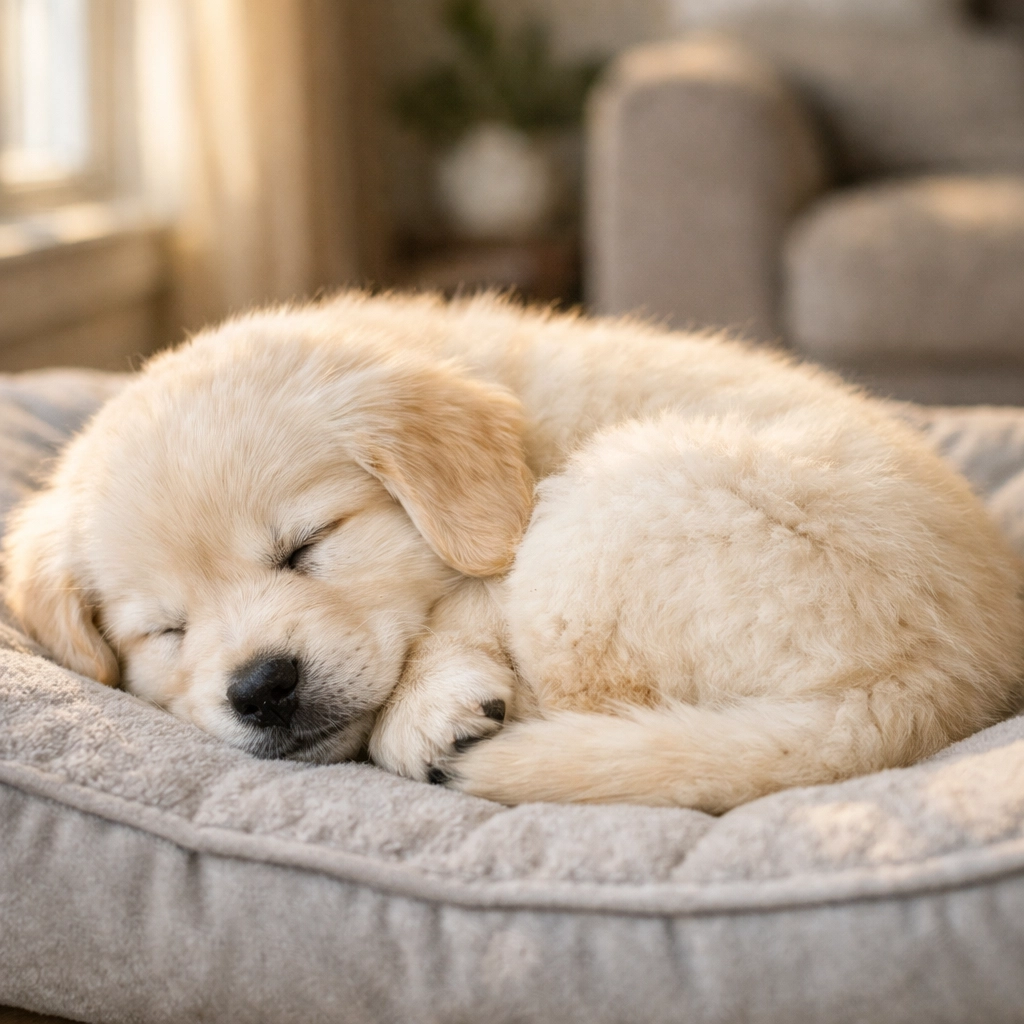
A peaceful English Cream Golden Retriever puppy curled up and sleeping soundly on a soft dog bed.
The Brain at Work: Memory and Training Consolidation
Have you ever spent an afternoon working on "sit" or "stay," only to have your puppy look at you like you're speaking a foreign language? Then, after a long nap, they suddenly perform the trick perfectly? That’s not a coincidence.
During sleep: specifically REM (Rapid Eye Movement) sleep: the brain is incredibly active. This is the stage where "memory consolidation" happens. The puppy’s brain takes everything it learned during the day: the scent of a new neighbor, the sound of the rain against the window, and those vital commands from your basic training guide: and files them away into long-term memory.
Sleep: The Secret Ingredient to Training
At NextGen Goldens, we emphasize that training doesn't just happen while you're holding a treat. It happens while your puppy is dreaming. Research shows that sleep-deprived puppies have a much harder time focusing and retaining new information. If you're enrolled in puppy training classes, you'll find that a well-rested puppy is a much faster learner.
Think of sleep as the "Save" button on a computer document. Without it, all that hard work you put into training could just vanish when the puppy gets overstimulated.
Temperament and the "Overtired Toddler" Syndrome
One of the most common questions I get from new owners in Oregon is about sudden bursts of "naughtiness." If your puppy starts nipping more than usual, barking at nothing, or racing around the house like a maniac (the "zoomies"), your first instinct might be to think they need more exercise.
Actually, it’s often the opposite. Just like human toddlers, puppies become cranky and hyperactive when they are overtired. They lose the ability to regulate their emotions. This is where the calm temperament Golden Retrievers we specialize in really shine.
We breed specifically for a stable, gentle disposition. This inherent calmness makes it easier for our puppies to "self-settle." However, even a puppy with the best genetics needs a push in the right direction. By enforcing nap times, you help your puppy maintain that sweet, steady temperament that makes Goldens such wonderful family pets and therapy dog puppies.

Designing the Perfect Rest Environment
Knowing that sleep is important is one thing; making it happen in a busy household is another! To ensure your puppy gets high-quality, deep sleep, you need to create a dedicated "Rest Zone."
Consistency is Key: Try to have your puppy nap in the same spot every time. Whether it’s a crate or a specific corner of the living room, consistency signals to their brain that it’s time to wind down.
Control the Environment: Puppies are sensitive to noise and light. If you live in a bustling part of Portland or have a loud household, consider a white noise machine or a crate cover to help them stay in a deep sleep state longer.
The "Off-Switch" Routine: Before nap time, engage in a low-intensity activity. Maybe a gentle chew on an interactive dog toy or a few minutes of quiet petting.
I found that placing a ticking clock or a heartbeat sheep toy near a new puppy can mimic the feeling of sleeping with their littermates, which helps them settle into a deeper, more restorative sleep much faster.
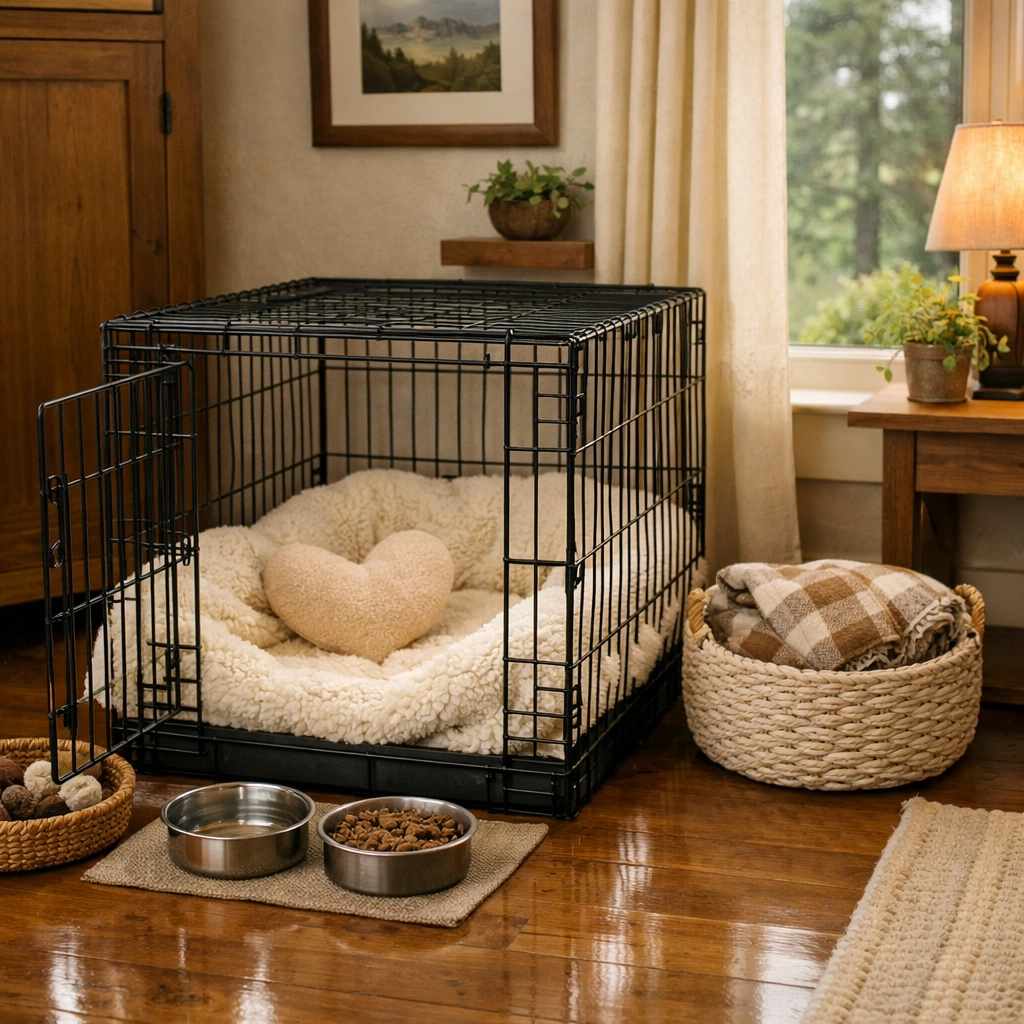
An illustration or photo showing a quiet, darkened puppy crate setup with a soft blanket and a safe chew toy.
Sleep and Emotional Health
Beyond physical growth and training, sleep is the foundation of emotional resilience. A puppy that sleeps well is a puppy that is less likely to develop anxiety or fear-based behaviors later in life.
During sleep, the brain processes social interactions. If your puppy had a slightly scary encounter with a loud truck or a grumpy cat, a good nap helps them "process" that stress so it doesn't turn into a lifelong phobia. This is a critical part of the socialization window, as it allows the puppy to reset their nervous system.
At Green Acres Nextgen, we take great pride in our bloodlines. We are constantly seeking health, temperament, and type to ensure your puppy has the best possible start. But once they leave our home and join yours, protecting their sleep is one of the best ways you can honor those genetics.
A Note for the New Puppy Parent
I know it can be frustrating when you've cleared your Saturday to play with your new pup, only for them to sleep through your entire window of free time. But remember: every minute they spend snoozing is an investment in their future.
When they wake up, they’ll be more alert, more affectionate, and more ready to learn. You aren't losing time with them; you're ensuring that the time you do spend together is high-quality.
If you’re ever unsure about your puppy’s sleeping habits or need advice on how to help them settle, don't hesitate to reach out to us at NextGen Goldens. We’re not just here to provide you with a puppy; we’re here to support you through the entire journey of raising a healthy, happy Golden Retriever.
Happy napping!
Scientific Bibliography & References
Zanghi, B. M., & Kerr, W. W. (2020).Sleep patterns in domestic dogs (Canis lupus familiaris): A review of the influences of age, breed, and environment. Journal of Veterinary Behavior.
Tóth, K., et al. (2017).The effects of sleep deprivation on learning and memory consolidation in juvenile canines. Animal Cognition Journal.
National Sleep Foundation.How Much Do Puppies Sleep? The Biological Necessity of Rest for Canine Development.
Walker, M. (2017).Why We Sleep: Unlocking the Power of Sleep and Dreams. (Principles applied to mammalian neurobiology and memory consolidation).
Adams, G. J., & Johnson, K. G. (1993).Sleep-wake cycles and other night-time behaviours of the domestic dog. Applied Animal Behaviour Science.