
The Golden Window: Why Early Socialization Shapes the Perfect Therapy Dog
- Green Acres K-9 Resort
- Jan 24
- 5 min read

There's a magical window of time in every puppy's life that quite literally shapes who they'll become as an adult dog. As someone who has witnessed hundreds of Golden Retriever puppies grow into confident, calm therapy dogs, I can tell you that what happens during those first few weeks of life makes all the difference in the world.
If you've ever wondered why some dogs seem naturally at ease in hospitals, schools, and nursing homes while others struggle with new environments, the answer often traces back to a brief but powerful period called the "sensitive period" of development. Here at NextGen Goldens in Boring, Oregon, we've built our entire puppy-raising philosophy around this science: and the results speak for themselves.
Understanding the Sensitive Period: A Brief Window with Lifelong Impact
Between 3 and 16 weeks of age, your Golden Retriever puppy's brain is essentially a sponge, absorbing every experience and using that information to build a mental map of what's "normal" and "safe" in the world. Scientists call this the critical socialization period, and it's when the foundation for your dog's entire temperament is laid.
Research has shown that positive, controlled exposure during this golden window can reduce the risk of significant behavioral problems by more than 60%. That's not just a nice-to-have: it's a game-changer for anyone hoping to raise calm temperament Golden Retrievers who thrive in therapy work or simply become wonderful family companions.

What makes this period so special? During these weeks, puppies are naturally curious and relatively fearless. They're biologically programmed to explore and learn. After this window begins to close around 16 weeks, puppies become naturally more cautious of new things: a survival mechanism that served their wild ancestors well but can make socialization more challenging for our domestic friends.
The Two Pillars: Socialization and Habituation
When we talk about raising socialized Golden Retriever puppies, we're really talking about two complementary processes working together.
Socialization is all about teaching puppies to communicate and interact appropriately with other living beings. This means meeting people of all ages, sizes, and appearances. It means learning how to play politely with other dogs. It means understanding that the toddler who moves unpredictably and the elderly person with a walker are both friendly, safe beings to be around.
Habituation is the equally important process of getting puppies comfortable with environmental stimuli: sounds, textures, sights, and experiences that they'll encounter throughout their lives. A well-habituated puppy learns that the vacuum cleaner isn't a threat, that slippery floors are just another surface to walk on, and that the sounds of a bustling hospital or school cafeteria are nothing to worry about.
At NextGen Goldens, our Golden Retriever puppies Portland Oregon families take home have experienced both processes extensively before they ever leave our care.
What Early Socialization Looks Like in Practice
I want to give you a peek behind the curtain at what we do here because I believe transparency matters when you're choosing where your future family member comes from.
From the moment our puppies' eyes and ears open, we begin gentle exposure to the world. Here's what a typical week might include for our therapy dog Golden Retrievers in training:
Weeks 3-5: Foundation Building
Gentle handling by multiple people daily
Introduction to various textures (carpet, tile, grass, wood chips)
Soft sounds played at low volumes (household noises, children laughing, traffic)
Brief separations from littermates to build independence
Weeks 5-8: Expanding Horizons
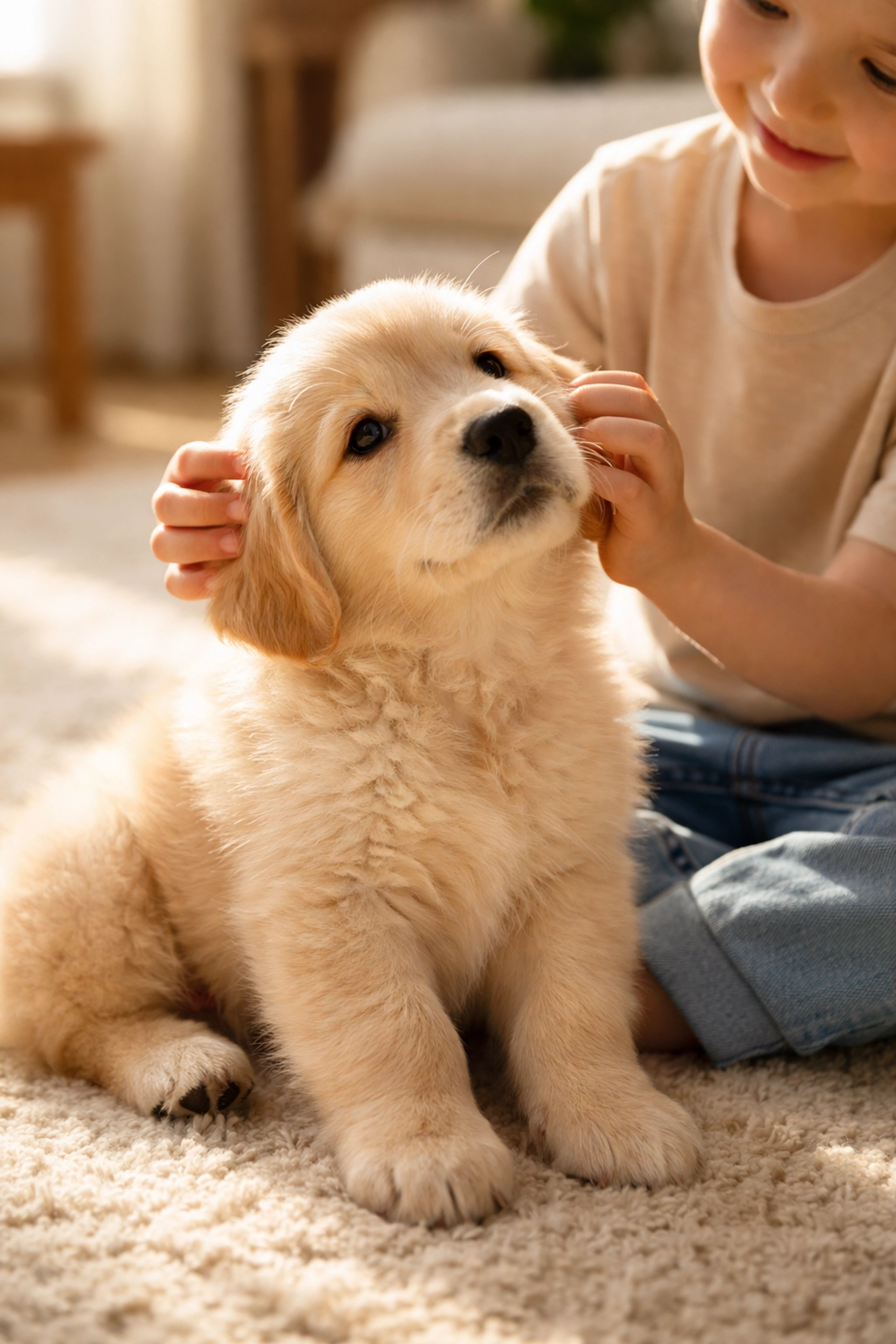
Meeting children of various ages (always supervised and positive!)
Exposure to wheelchairs, walkers, and crutches
Introduction to grooming tools and nail handling
Car rides and crate training
Novel objects like umbrellas, hats, and balloons
Weeks 8-12: Building Confidence
Visits to different environments
Meeting people in uniforms
Exposure to medical equipment sounds
Structured play sessions teaching bite inhibition
Basic handling that mimics therapy dog evaluations
Every single experience is designed to be positive. We never flood puppies with overwhelming stimuli. Instead, we introduce new things gradually, always pairing novelty with treats, praise, and play.
The Science Behind the Magic
You might be wondering: what's actually happening in a puppy's brain during this period? The research is fascinating.
Studies by Scott and Fuller in their landmark work on canine behavior established that puppies who miss out on socialization during the critical period often develop lasting fearfulness and anxiety. Their research, conducted over decades, demonstrated that the experiences (or lack thereof) during these early weeks literally shape the neural pathways that govern a dog's emotional responses.
More recent research from veterinary behaviorists has confirmed and expanded these findings. Puppies enrolled in structured socialization programs show fewer signs of fear, less problematic behavior, and greater responsiveness to positive reinforcement training as adults. The difference isn't subtle: it's dramatic and measurable.
For therapy dog Golden Retrievers specifically, this early foundation is absolutely essential. A therapy dog must remain calm when a child hugs them unexpectedly, when medical equipment beeps nearby, or when someone in a wheelchair approaches. Dogs who've been properly socialized during the sensitive period handle these situations with ease because their brains have already categorized these experiences as "normal."
Why This Matters for Your Future Therapy Dog
If you're searching for Golden Retriever puppies Portland Oregon families can trust for therapy work, understanding socialization should be at the top of your priority list. Here's what to look for:
Ask breeders about their socialization protocols. A reputable breeder should be able to describe in detail what experiences their puppies receive. Vague answers like "they're raised in our home" aren't enough: you want specifics.
Look for puppies raised with intention. At NextGen Goldens, every puppy receives individualized attention. We track each puppy's responses to new experiences and adjust our approach accordingly.
Consider the puppy's parents. Temperament has both genetic and environmental components. Our health-tested Golden Retriever puppies come from parents selected not just for physical health but for the calm, confident temperament that makes Golden Retrievers such exceptional therapy dogs.

Continuing the Work at Home
Here's the exciting part: when you bring home a well-started puppy, you get to continue this beautiful work! The sensitive period extends to about 16 weeks, which means you have several crucial weeks to build on the foundation we've established.
I always tell our families to think of socialization as a daily practice, not a checklist to complete. Every positive experience counts. A friendly stranger offering a treat, a successful trip to a pet-friendly store, a calm response to a passing skateboard: these moments accumulate into a confident, resilient adult dog.
For those interested in formal therapy dog training, our puppy training classes provide structured guidance to help you maximize this critical period while building the skills your future therapy dog will need.
The NextGen Difference
What sets NextGen Goldens apart isn't just that we understand the science: it's that we live it every single day. Every puppy born here receives intentional, documented socialization experiences designed to produce calm temperament Golden Retrievers who excel in therapy work and family life alike.
When you choose a socialized Golden Retriever puppy from our program, you're not just getting a pet. You're getting a head start on a lifetime of partnership with a dog whose brain has been shaped for confidence, resilience, and connection.
The golden window is brief, but its effects last forever. And that's exactly why we take it so seriously.
Scientific Bibliography