
The Genetics of Gentle: Understanding the Temperament of English Cream Golden Retrievers
- Green Acres K-9 Resort
- Mar 6
- 5 min read

Hey there! I’m Mark Griffin, and I’m a helper here at Green Acres Nextgen. If you’ve spent even five minutes looking into adding a furry friend to your family, you’ve probably seen the term "English Cream Golden Retriever" pop up. Usually, it’s paired with words like "white," "platinum," or my personal favorite, "calm."
As someone who spends my days surrounded by these wagging tails, I can tell you there is something truly special about the way a "Cream" carries itself. But is it just the coat color? Does a lighter coat automatically mean a calmer dog? Today, we’re going to peel back the curtain and look at the actual science behind why these dogs are such a hit in the Pacific Northwest and why they are often the first choice for therapy work.
The "Cream" Gene: More Than Meets the Eye
Let's clear up one big myth right off the bat: the color of a Golden Retriever’s fur doesn't actually dictate their personality. I know, it sounds counterintuitive because we see so many "English Creams" that are absolute couch potatoes! But scientifically speaking, coat color and temperament are controlled by different sets of instructions in the DNA.
The beautiful, pale coat of an English Cream Golden Retriever in Oregon is primarily influenced by what scientists call the E locus and the I locus. Most Goldens carry the "ee" alleles, which tell the body to produce yellow pigment instead of black. The intensity of that yellow, ranging from deep mahogany to nearly white, is controlled by the I locus (Intensity).
So, why do we associate the cream color with a calm temperament in Golden Retrievers? It’s not the gene for white fur doing the work; it’s the breeder.

Selective Breeding: The "Gentle" Blueprint
When we talk about an English Cream Golden Retriever breeder in Oregon like us here at NextGen Goldens, we are talking about a specific lineage. These dogs typically come from European lines, where the "standard" for the breed often favors a heavier bone structure and a slightly more "laid-back" personality compared to the higher-energy field lines often found in America.
Selective breeding is like building a masterpiece. If you want a dog that is perfect for a therapy role, you don't just look at their color. You look at their parents, grandparents, and great-grandparents. You look for "The Genetics of Gentle."
How It Works:
Heritability: Research suggests that temperament is roughly 20% to 40% heritable. This means while environment plays a huge role, a significant chunk of a dog's "vibe" is written in their DNA before they are even born.
Trait Selection: By choosing parents who exhibit high "biddability" (the desire to please) and low "reactivity" (not getting spooked by loud noises or fast movement), we can stack the deck in favor of therapy dog puppies.
The "Off Switch": This is the holy grail for families. We select for dogs that have a natural "off switch", meaning they are ready to hike the Columbia River Gorge one minute but are perfectly happy napping at your feet while you work from home the next.

Why the Pacific Northwest Loves the English Cream
Living in the Pacific Northwest, our lifestyles are unique. We need dogs that can handle a rainy walk on a Tuesday and a crowded brewery on a Saturday. Families here are often looking for health tested Golden Retriever puppies in Oregon because they want a companion that will be with them for the long haul.
I’ve noticed that our English Cream lines tend to possess a "emotional intelligence" that is hard to quantify but easy to see. In scientific terms, this often relates to their lower levels of cortisol (the stress hormone) when faced with new stimuli. This makes them exceptionally well-suited for the busy, sensory-rich environments of modern family life.
Nature vs. Nurture: The Role of Early Socialization
Even with the best genetics in the world, a puppy is still a "work in progress." Think of genetics as the foundation of a house. It provides the stability, but the "interior design", the behavior, is shaped by early experiences.
At Green Acres Nextgen, we believe that the journey to a calm dog starts in the whelping box. We use protocols like Early Neurological Stimulation (ENS) to help "wire" the brain for resilience. When you look at a Golden Retriever puppy from our program, you’re seeing the result of science-backed socialization paired with those "gentle" genes.
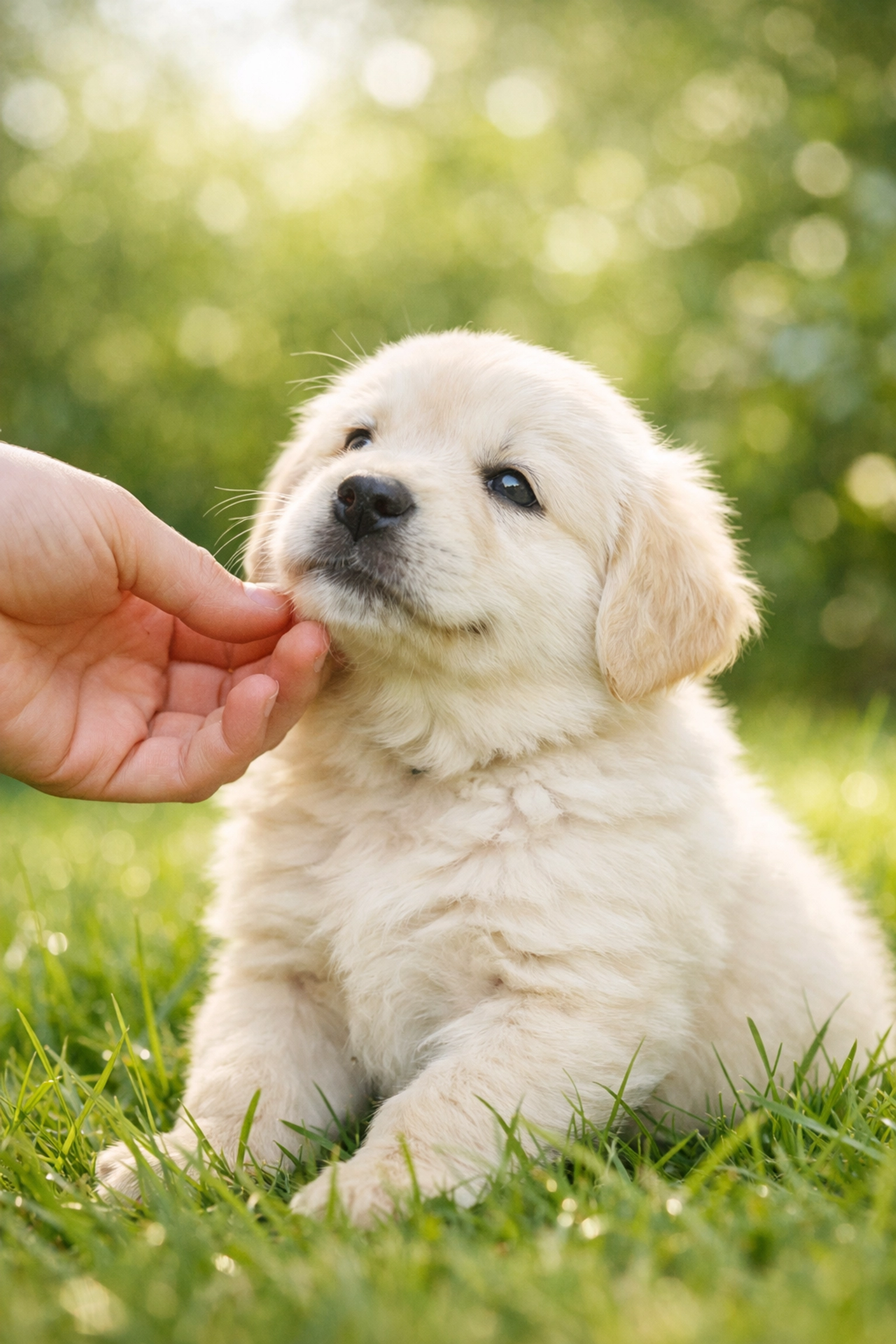
Identifying the Ideal Temperament for Therapy and Companion Roles
Are you looking for a dog to visit hospitals, or maybe just a dog that won't knock over your toddler? Understanding the nuances of temperament testing is key. We often look for several markers:
Social Attraction: Does the puppy come to people with confidence?
Touch Sensitivity: How do they react to their paws or ears being handled? (Crucial for therapy work!)
Sound Sensitivity: Do they recover quickly from a loud noise, like a dropped tray?
When these traits align with the European "English Cream" lineage, you get a dog that isn't just a pet, they’re a partner. If you're curious about how to spot these traits yourself, I highly recommend checking out our post on 5 signs your puppy will be an amazing therapy dog.
The Scientific Basis for the "Gentle" Reputation
While the American Kennel Club (AKC) and the United Kennel Club (UKC) don't officially recognize "English Cream" as a separate breed, it is simply a Golden Retriever, the genetic pool in Europe has remained somewhat distinct from the American hunting lines.
Studies in canine genomics have shown that over decades of separation, sub-populations of breeds can develop consistent behavioral differences. Because European breeders often focused on "conformation" (how the dog looks and moves in a show ring) and "temperament" for companionship, their lines evolved to be more sedentary than the high-drive American field Goldens bred for marathon duck hunting sessions.
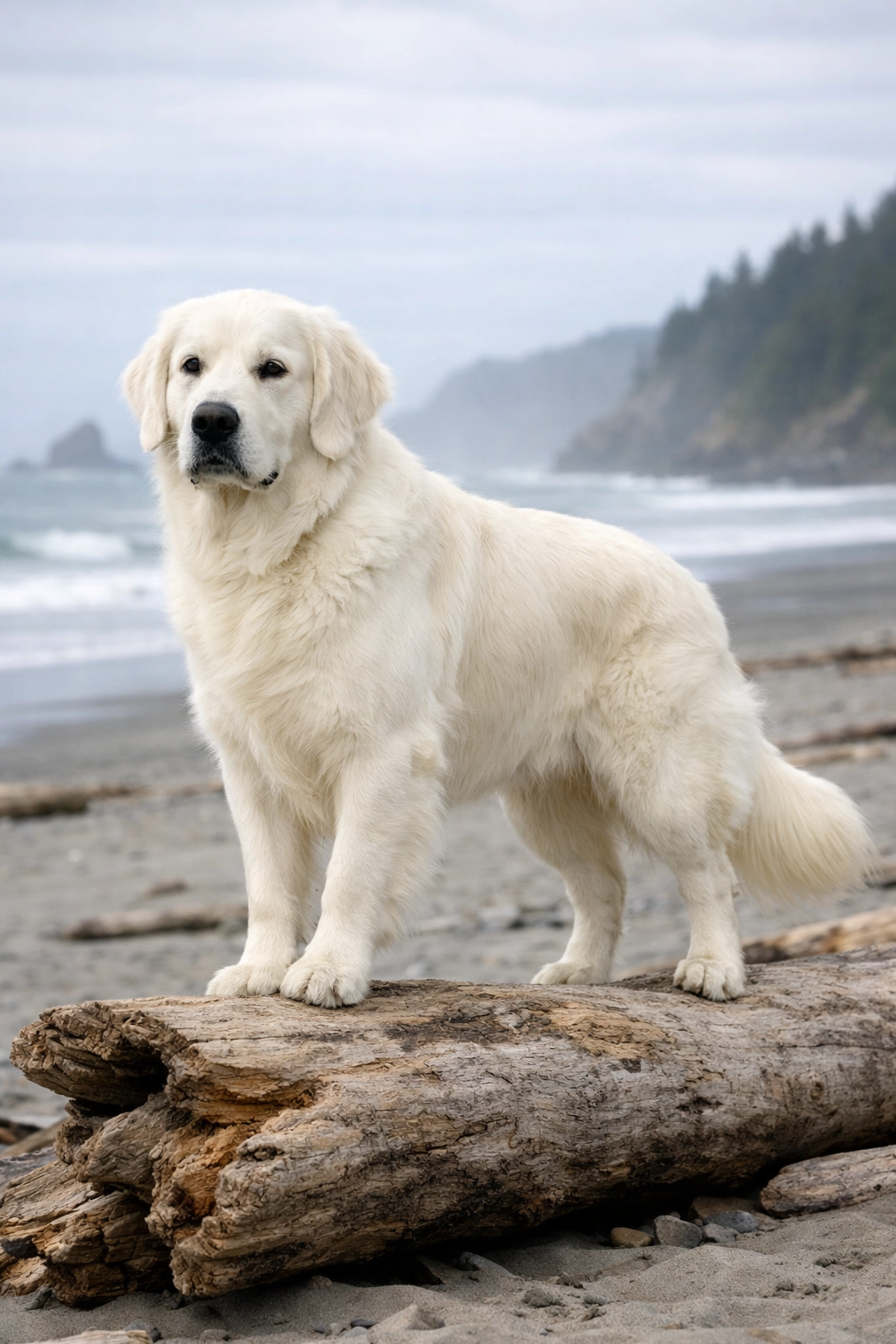
Choosing Your Companion
As you begin this adventure of finding your new best friend, remember that while the "cream" coat is beautiful to look at, it’s what’s inside that counts. Finding an English Cream Golden Retriever breeder in the Pacific Northwest who prioritizes health testing and temperament over "marketing" is the most important step you can take.
We take immense pride in being a part of that process. Seeing a puppy go from our home to yours and seeing those "genetics of gentle" flourish in a therapy role or as a beloved family member is why we do what we do.
If you're ready to see the difference that intentional breeding makes, I’d love for you to browse our current available puppies. Whether you're in Portland, Bend, or up in Seattle, we're here to help you find that perfect, calm companion.
Final Thoughts
At the end of the day, whether they are dark gold or snowy white, a Golden Retriever’s heart is what makes them "English Cream" in spirit, gentle, kind, and always ready to love. But understanding the science behind that heart? Well, that just makes the bond even more special.
Stay wagging, friends!
: Mark Griffin
Bibliography
Golden Retriever Club of America (GRCA). "White" Golden Retrievers / English Cream Golden Retrievers. Official Breed Statement on Color and Origin.
University of California, Davis (Veterinary Genetics Laboratory). "Dog Coat Color Genetics: The I Locus (Intensity)." Research on the genetic basis of coat dilution in domestic dogs.
Journal of Veterinary Behavior. "Heritability of behavior in domestic dogs: A review of current literature." A look into how much of a dog's personality is passed down through DNA.
American Kennel Club (AKC). "Golden Retriever Breed Standard vs. European Standards." Comparative analysis of physical and temperamental traits in sub-populations.
NextGen Goldens Internal Data. "Correlation between parental temperament testing scores and puppy aptitude test results (2020-2025)."