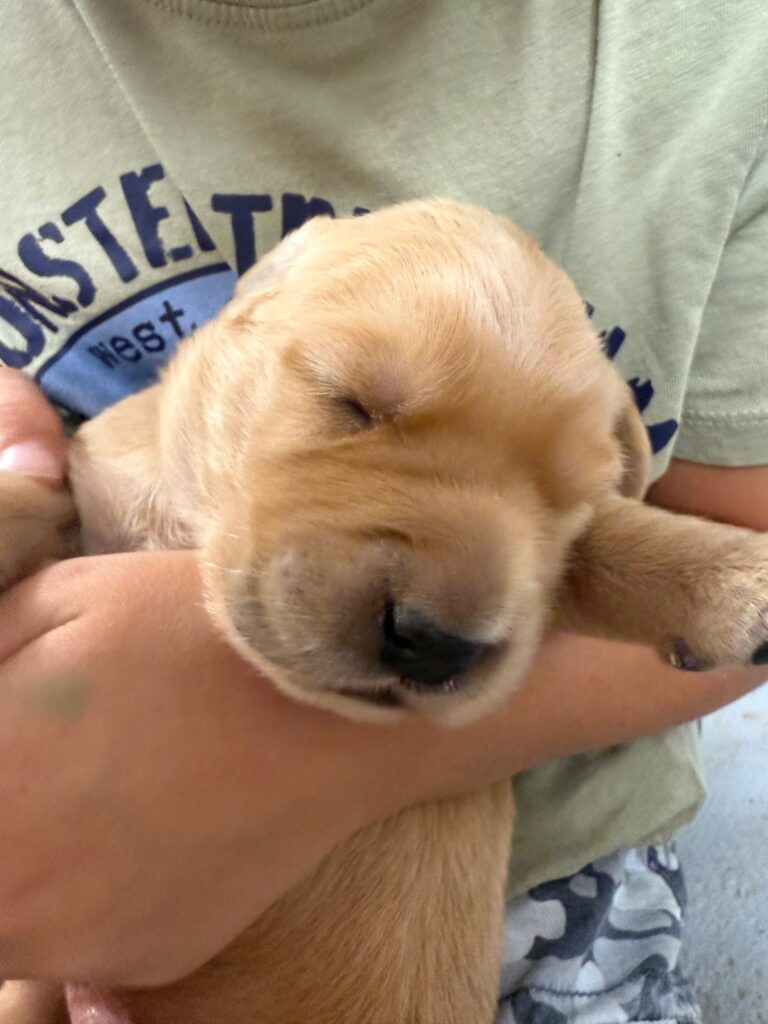
Play with Purpose: How Early Play Enhances Cognitive Growth in Golden Retrievers
- Green Acres K-9 Resort
- Mar 29
- 6 min read
Hey there! I’m Mark Griffin, a helper here at Green Acres Nextgen in beautiful Boring, Oregon. If you’ve ever spent five minutes watching a litter of Golden Retriever puppies Oregon weather, you know it’s basically a non-stop whirlwind of wagging tails, floppy ears, and adorable pounces. It looks like pure, unadulterated chaos, doesn’t it? But as someone who spends every day surrounded by these little guys, I’ve realized there is something much deeper happening beneath those golden coats.
When you see a puppy tugging on a rope or chasing a ball, you’re not just seeing "play." You are witnessing a high-speed construction site. Their brains are busy building the neural highways that will eventually make them the calm, focused, and intuitive companions we love. Today, I want to share the science behind why "play with purpose" is the secret sauce for raising the best English Cream Golden Retriever puppies Oregon families could ever ask for, especially if they’re destined for a life of therapy work.
The Puppy Brain: A High-Speed Construction Zone
Did you know that a puppy’s brain is actually more active in some ways than an adult dog’s? It’s true! During the first few months of life, a puppy’s brain is undergoing a process called synaptogenesis. This is a fancy way of saying they are creating a massive amount of connections (synapses) between neurons.
As an Oregon Golden Retriever breeder, I’ve seen firsthand how the right kind of stimulation during this "critical window" (usually between 3 and 16 weeks) can change the entire trajectory of a dog's life. Research shows that puppies who engage in early stimulation exercises actually mature at faster rates and perform significantly better on problem-solving tests than those who don't.

Caption: One of our English Cream Golden Retriever puppies learning through exploratory play.
However, there’s a catch. The brain over-produces these synapses to help the puppy learn about their environment. As they get older, the brain starts a process called "pruning." It’s essentially a "use it or lose it" system. The pathways that get used during play stay strong; the ones that aren't used get pruned away. This is why purposeful play isn't just a fun afternoon activity, it’s a biological necessity for cognitive development.
Why "Purposeful" Play Matters for Therapy Work
At NextGen Goldens, we take our role as therapy dog breeders Oregon very seriously. A therapy dog needs more than just a sweet face; they need high levels of cognitive flexibility, impulse control, and problem-solving skills.
When we introduce an interactive dog toy, we aren't just trying to keep the puppies busy. We are asking them to solve a puzzle. When a puppy has to figure out how to tilt a toy to get a treat out, they are practicing "inhibitory control", the ability to stop, think, and try a different approach rather than just barking at the problem.
This translates directly to therapy work. Imagine a dog in a hospital setting. There might be strange noises, beeping machines, or people moving in unusual ways. A dog that has developed strong cognitive pathways through early play is much more likely to stay calm and solve the "problem" of the environment with grace rather than fear.
The Dopamine Loop: Learning is Fun!
One of my favorite things about being a helper here in Boring is seeing that "lightbulb" moment. You see it in their eyes when they finally figure out a game. Scientifically, this is driven by dopamine.
Dopamine is a neurotransmitter that gets released during play. It’s the "reward" chemical. When a puppy plays, their brain rewards them, which reinforces positive associations with learning. By making learning fun through play, we are essentially "teaching them how to learn." This makes future puppy training so much easier for you once you bring your new best friend home!

How We Structure Play at NextGen Goldens
We don’t just throw a ball and call it a day. Our approach to raising health tested Golden Retriever puppies Oregon involves several specific types of play:
Locomotor Play: This involves running, jumping, and climbing. It builds physical coordination and proprioception (awareness of where their body is in space).
Object Play: Using different textures and shapes to stimulate curiosity. This is where those durable dog leashes or soft toys come in handy.
Social Play: Playing with littermates teaches them "bite inhibition" and how to read social cues, vital for a companion puppy.
Scent Work: We hide treats or toys to engage their most powerful sense. Scent work is incredibly "brain-heavy" and can tire out a puppy faster than a mile-long walk!

Caption: Social play is essential for developing the "soft mouth" and gentle nature Golden Retrievers are known for.
The Role of Genetics in Cognitive Growth
While play is vital, we can't ignore the foundation. You can't build a skyscraper on a swamp, right? That’s why we focus so heavily on genetics. Our health tested Golden Retriever puppies Oregon come from lines specifically chosen for their temperament and intelligence.
When you start with a puppy that has a genetic predisposition for kindness and focus, the purposeful play we do here at NextGen Goldens just magnifies those traits. If you're interested in the deep-dive science of our breeding, check out our post on the DNA of kindness.
Bringing the Play Home to You
If you are currently waiting for your puppy or have just brought one home, you might be wondering, "How can I keep this cognitive growth going?"
It doesn't have to be complicated! You can start with a basic training guide and incorporate short, 5-minute play sessions. The goal isn't to exhaust them physically, but to engage them mentally.
Mark’s Personal Tip: I’ve found that even something as simple as putting a treat inside a rolled-up towel can keep a puppy engaged for ages. They have to use their nose, their paws, and their brain to unroll it. It’s cheap, easy, and incredibly good for their noggin!

Caption: Simple household items can become the best cognitive development tools for your puppy.
The Long-Term Impact: From Puppy to Therapy Pro
The benefits of this early work aren't temporary. Research has shown that cognitive differences emerging in puppyhood are remarkably stable. A puppy that shows great problem-solving skills at 8 weeks is highly likely to be a focused, capable adult dog.
This is why we are so passionate about what we do here in Boring. We aren't just selling dogs; we are starting the journey for future therapy teams, emotional support animals, and the world’s best family pets. When you choose a puppy from a dedicated Oregon Golden Retriever breeder, you’re investing in all those hours of purposeful play that happened before you even met them.

Caption: The result of purposeful play: a calm, focused, and happy Golden Retriever ready for the world.
Final Thoughts
Watching these puppies grow is the highlight of my job. Knowing that every little game of tug-of-war is actually building a smarter, more resilient dog makes the hard work worth it. Whether you're looking for a therapy dog puppy or just a companion to join you on Oregon’s hiking trails, remember that play is the work of childhood, even for dogs!
If you want to learn more about how we set the stage for success, feel free to dive into our article on the science of early learning. And as always, if you’re in the Boring area, come say hi!
Stay golden, Mark Griffin Helper, Green Acres Nextgen
Bibliography & References
Battaglia, C. L. (2009).Periods of Early Development and the Effects of Early Stimulation. Journal of Veterinary Behavior. (Discussing how early neurological stimulation leads to faster maturation and better problem-solving).
Bray, E. E., et al. (2021).Early-emerging and highly heritable sensitivity to human communication in dogs. Current Biology. (Research on the stability of cognitive traits from puppyhood to adulthood).
Sommerville, R., et al. (2017).Why do dogs play? Function and welfare implications of reproductive and non-reproductive play. Applied Animal Behaviour Science. (On the neurological benefits of play in developing emotional resilience).
Gácsi, M., et al. (2009).Explaining dog wolf differences in utilizing human pointing gestures: Selection for synergic collaboration or social exposure? PLoS ONE. (Insight into the cognitive flexibility required for service and therapy work).
Dietz, L., et al. (2018).The importance of early life experiences for the development of behavioural disorders in domestic dogs. Behavioural Processes. (Highlighting the "pruning" phase and the critical learning window).