
Nature's Therapy: The Science Behind the Golden Retriever's Gentle Soul
- Green Acres K-9 Resort
- Jan 22
- 5 min read

There's something almost magical about the way a Golden Retriever looks at you, that soft gaze, the gentle tail wag, the way they seem to know when you need comfort. If you've ever been around therapy dog Golden Retrievers, you've likely felt it: a calm that washes over you, an instant connection that feels almost too good to be accidental.
Well, here's the exciting part: it's not accidental at all. Science is now revealing that the calm temperament Golden Retrievers are famous for is actually woven into their very DNA. And as someone who has spent countless hours watching these incredible dogs work their magic, I can tell you that understanding the science makes their gentle souls even more remarkable.
The "Soft Mouth" : More Than Just a Hunting Trait
You've probably heard that Golden Retrievers have a "soft mouth": the ability to carry objects (historically, game birds) without damaging them. But this trait goes far beyond their hunting heritage. It's actually a window into their entire behavioral makeup.
The soft mouth reflects a broader pattern of impulse control and gentleness that's hardwired into the breed. When you watch a Golden Retriever gently take a treat from a child's hand or carefully carry a favorite toy, you're witnessing generations of selective breeding for self-regulation and awareness.

This natural gentleness is one of the key reasons Golden Retrievers have become the gold standard for therapy and emotional support work. They don't just learn to be gentle: they're born with an inclination toward it.
The Genetics of Gentleness: What Science Tells Us
Recent research has uncovered something truly fascinating about our Golden friends. A groundbreaking University of Cambridge study analyzed the genetics of over 1,300 Golden Retrievers and identified 21 genetic locations (called loci) linked to specific behavioral traits. Twelve of these reached what scientists call "genome-wide significance" for characteristics like:
Trainability
Energy levels
Fear responses
Aggression (or lack thereof)
Touch sensitivity
But here's where it gets really interesting: 12 of these dog genes also underlie human behavioral and emotional traits. That's right: we share some of the same genetic foundations for emotional regulation with our Golden companions!
For example, the gene ROMO1, which is tied to trainability in Golden Retrievers, is connected to intelligence, emotional sensitivity, and even depression in humans. Similarly, ASCC3, associated with fearfulness in dogs, influences neuroticism and anxiety in people.
What does this mean for emotional support Golden Retrievers? It suggests that their ability to connect with us emotionally isn't just trained behavior: it's a genuine, genetically-influenced capacity for emotional attunement. They may literally be wired to understand and respond to human emotional states.
Why Golden Retrievers Excel as Therapy Dogs
When I talk to families looking for therapy dog Golden Retrievers here in Oregon, I often explain that it's not just about finding a calm dog: it's about finding a dog whose entire nervous system is calibrated for connection and comfort.
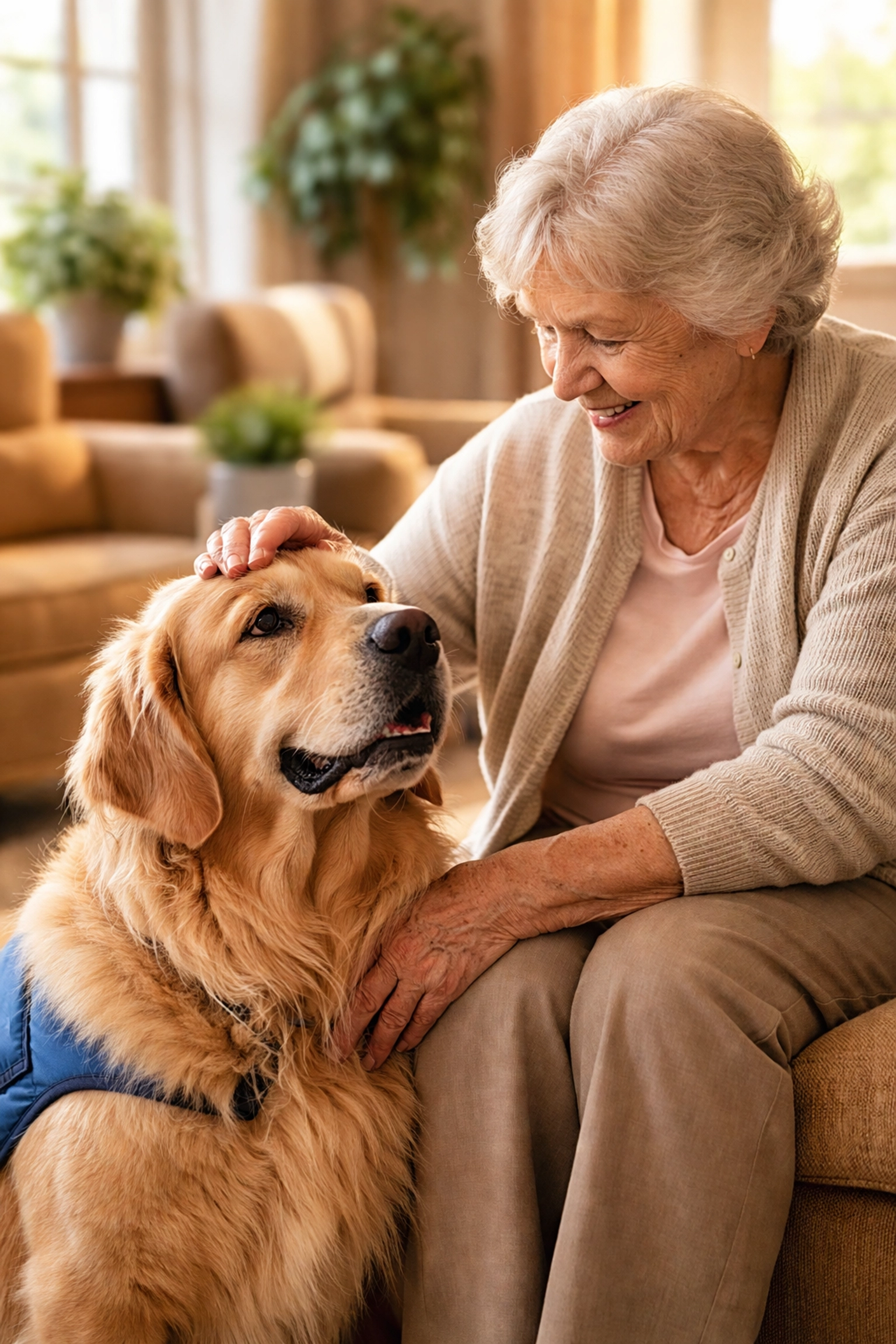
Here's what makes them exceptional:
Natural empathy: Their genetic makeup predisposes them to be sensitive to emotional cues
Stable temperament: Unlike breeds prone to reactive behavior, Goldens tend to maintain emotional equilibrium even in stressful environments
Touch-positive nature: Many Goldens actively seek physical contact, which is essential for therapeutic work with seniors, children, or individuals experiencing anxiety
Trainability: Their eagerness to please and capacity for learning makes them responsive to the specialized training therapy work requires
Research published in the Journal of Veterinary Behavior has consistently shown that breed-specific temperament traits significantly impact a dog's suitability for therapy roles. Golden Retrievers consistently rank among the top breeds for the combination of trainability, low aggression, and social confidence that therapy work demands.
How We Nurture Nature at NextGen Goldens
At NextGen Goldens in Boring, Oregon, we understand that genetics are just the starting point. While our Golden Retriever puppies Oregon families love are born with incredible potential, it's our early socialization program that helps these innate traits flourish.
Our approach focuses on three key areas:
1. Early Neurological Stimulation
Beginning at just three days old, our puppies experience gentle handling exercises designed to enhance their stress tolerance and emotional resilience. This isn't about creating stress: it's about building a nervous system that can stay calm when life gets unpredictable.
2. Diverse Socialization Experiences
Our puppies are exposed to various sounds, surfaces, people of different ages, and gentle handling from multiple caregivers. For future therapy dogs, this early exposure is critical. A dog who has only known one environment may struggle with the varied settings therapy work requires: hospitals, schools, nursing homes, and private homes all present unique challenges.

3. Temperament-Matched Placements
Not every puppy is suited for therapy work, and that's perfectly okay! We carefully assess each puppy's individual temperament and help match them with families whose needs align with their personalities. If you're specifically looking for a therapy dog puppy, we'll work with you to identify puppies showing the calm, people-focused traits that therapy work demands.
Understanding Your Golden's Emotional World
One of the most exciting implications of this genetic research is what it tells us about how to support our dogs emotionally. The Cambridge study suggests that dogs showing fear or anxiety may be experiencing genuine emotional states similar to human anxiety: not just "misbehaving."
This reframes how we should think about training and care. A Golden Retriever who seems nervous isn't being stubborn or difficult; they may be experiencing something like what we feel when we're anxious. This insight encourages us to approach these dogs with patience and compassion, much like we would support a friend going through a difficult time.
For therapy dog breeders Oregon families trust, this understanding is essential. We're not just breeding for physical health (though that's crucial too!): we're breeding for emotional wellness and stability.
Choosing Your Future Therapy Companion
If you're considering adding an emotional support Golden Retriever or therapy dog to your family, here are some things to keep in mind:
Ask about breeding priorities: Reputable breeders should be selecting for temperament, not just appearance. At NextGen Goldens, temperament evaluation is a core part of our breeding program.
Inquire about early socialization: Puppies who receive diverse, positive experiences in their first weeks are better prepared for the varied demands of therapy work.
Consider professional training: While Goldens have natural gifts, formal therapy dog training helps channel those instincts productively. Check out our puppy training classes for a great foundation.
Be patient with the process: Therapy dog certification typically requires dogs to be at least one year old. Use that time to build your bond and reinforce the calm, gentle behaviors that therapy work requires.
The Science of Connection
What I find most beautiful about this research is how it validates what Golden Retriever lovers have always known: these dogs truly are special. Their gentle souls aren't just the result of good training or happy accidents: they're the product of genetics, generations of thoughtful breeding, and the incredible capacity dogs have for emotional connection.
When a therapy dog Golden Retriever rests their head on a hospital patient's lap or sits quietly beside a child learning to read, they're not just following commands. They're expressing something fundamental to who they are: a genetically-influenced, carefully nurtured capacity for comfort and connection.
And that, to me, is nature's therapy at its finest.
Ready to welcome a gentle soul into your family? Browse our available Golden Retriever puppies or learn more about our therapy dog puppy program. We'd love to help you find your perfect match.
Scientific Bibliography