
From Puppyhood to Service: The Science of Early Socialization for Therapy Dogs
- Green Acres K-9 Resort
- Jan 26
- 5 min read

There's something truly magical about watching a Golden Retriever puppy grow into a calm, confident therapy dog who brings comfort to someone in a hospital bed or helps a child overcome reading anxiety. But that transformation doesn't happen by accident: it's built on a foundation of intentional, science-backed early socialization that begins in the very first weeks of life.
As breeders of therapy dog Golden Retrievers here at NextGen Goldens in Boring, Oregon, I can tell you that the work we do during those precious early weeks shapes everything that comes after. And the science backs us up in ways that still amaze me every single day.
The Critical Window: Why Weeks 3-16 Matter So Much
If there's one thing I want every future puppy parent to understand, it's this: there is a critical socialization period in Golden Retriever puppies that quite literally shapes who they'll become as adults. This window runs roughly from 3 to 16 weeks of age, with the sweet spot being between 4 and 14 weeks.
Research dating back to 1961 demonstrated something remarkable: puppies who weren't exposed to humans before 14 weeks of age struggled to form normal bonds with people later in life. Their brains simply weren't wired for it anymore. During this developmental stage, your puppy's brain is essentially a sponge, optimized for learning and forming lasting associations with new experiences.
This isn't just breeder folklore. It's established canine behavioral science, and it's why we take socialization so seriously for our socialized Golden Retriever puppies here in Portland, Oregon and the surrounding areas.
Why Therapy Dogs Need More Than Basic Socialization
Here's where things get really interesting. A family companion needs good socialization, absolutely. But therapy dog Golden Retrievers? They need something more specialized.
Think about where therapy dogs work: hospitals with beeping machines and antiseptic smells, schools filled with unpredictable children, nursing homes with wheelchairs and walkers, even disaster relief settings with chaos and distress. These environments demand more than just a "friendly dog": they require a dog who is calm under pressure, adaptable to change, and genuinely empathic.
Research confirms that dogs with adequate early socialization show positive correlations with sociability and negative correlations with fear and aggression. Even more fascinating? Studies show that properly socialized puppies develop what researchers call empathic responsiveness: they can actually read and respond to human emotional cues intuitively.
That's the difference between a nice pet and a true emotional support Golden Retriever who can sense when someone needs comfort before they even ask for it.
How We Build Therapy-Ready Temperaments at NextGen Goldens
So what does intentional therapy dog socialization actually look like? Let me walk you through what we do with our therapy dog puppies from the moment they're born.
Gentle Handling From Day One
From birth, our puppies experience gentle human touch. We practice Early Neurological Stimulation (ENS) protocols during the first weeks, which research shows helps build stress resilience and emotional stability. These tiny exercises: brief handling, temperature variations, and position changes, literally strengthen the neurological pathways that help dogs cope with novelty later in life.
Gradual Novelty Exposure
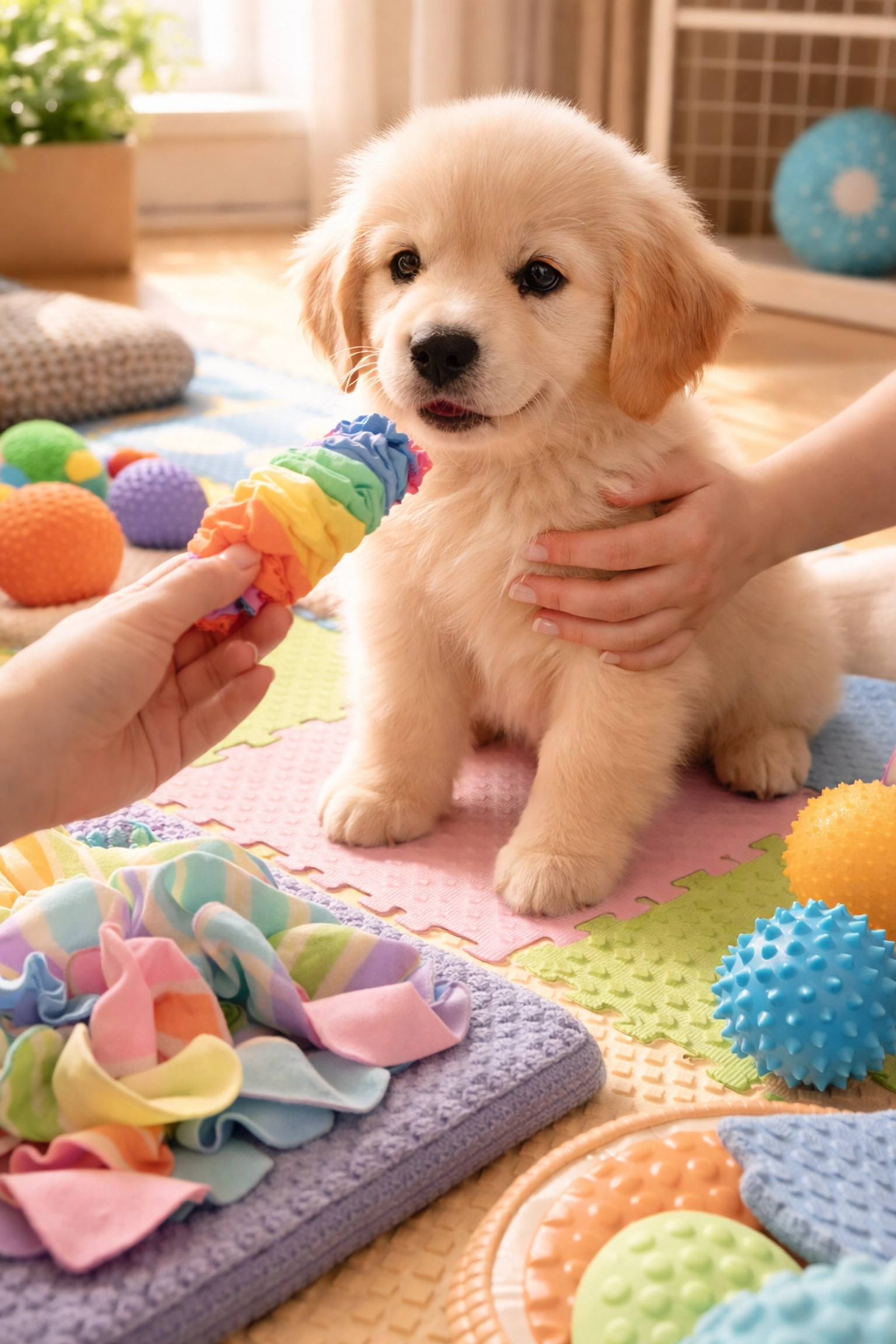
Starting around weeks 4-5, we introduce new textures, sounds, and environments incrementally. The key word here is gradual. We want to spark curiosity without overwhelming them. This might mean:
Walking on different surfaces (tile, carpet, grass, rubber mats)
Hearing household sounds (vacuum cleaners, doorbells, dropped pans)
Experiencing gentle music and eventually louder, more chaotic sounds
Encountering novel objects like umbrellas, balloons, and medical equipment sounds
Each new experience is paired with positive reinforcement: treats, praise, and play: so puppies learn that new equals good.
Diverse Human Interaction
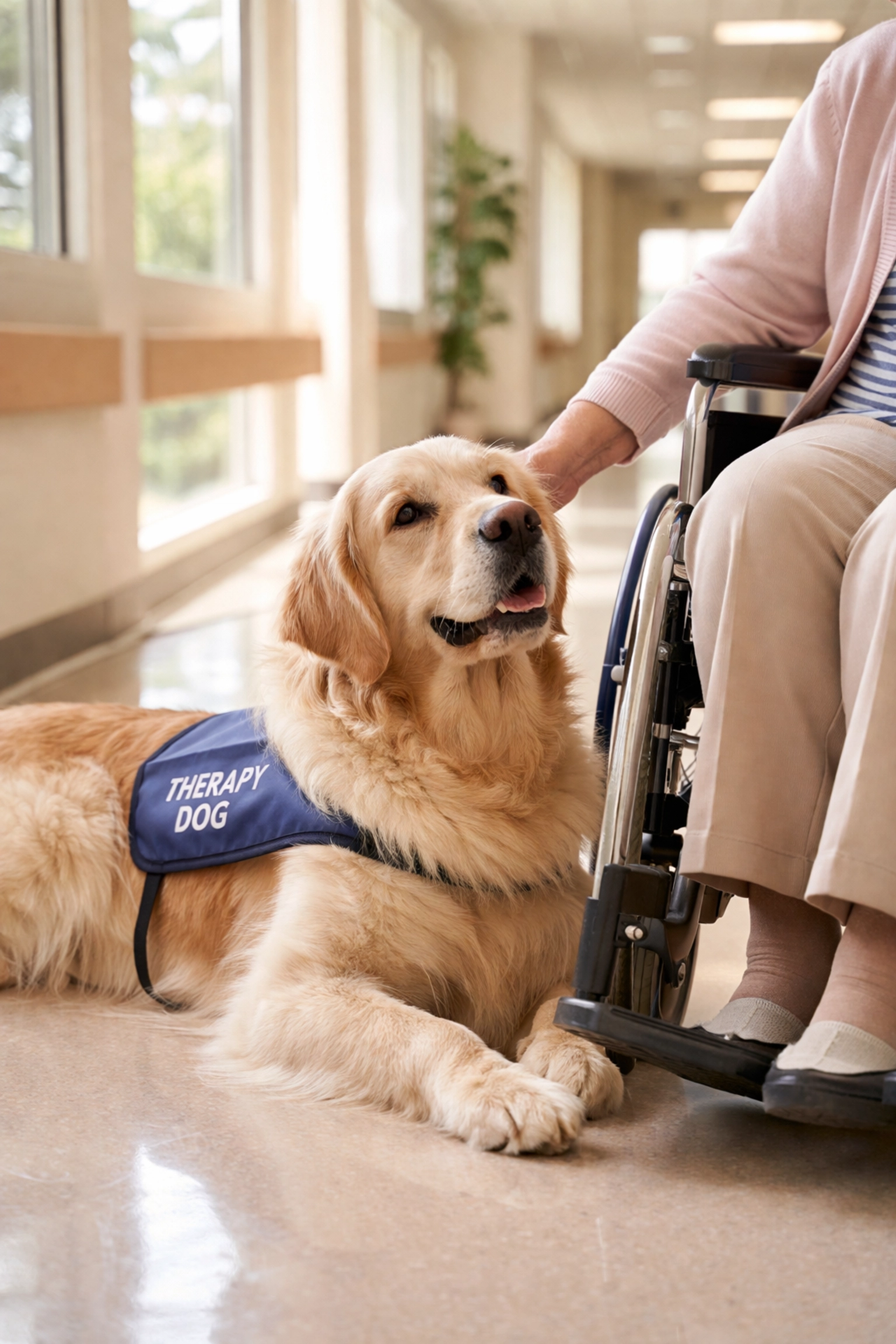
This is absolutely critical for therapy work. Our puppies meet people of all ages, heights, appearances, and abilities during that crucial socialization window. They encounter:
Children (calm, supervised interactions only)
Elderly visitors
People using wheelchairs, walkers, and crutches
Individuals wearing hats, sunglasses, or uniforms
Mail carriers, delivery people, and neighbors
By the time our Golden Retriever puppies in Portland, Oregon go to their new homes, they've been wired to view humans: all kinds of humans: as safe, trustworthy partners.
Supervised Puppy Play
Interaction with littermates and other dogs teaches crucial social skills too. Studies have shown that puppies exposed to other animals during socialization show reduced inappropriate predatory behavior and better canine communication skills. We carefully supervise play sessions to ensure positive experiences while preventing any bullying or overwhelming interactions.
The Science of Stress Inoculation
Here's something that might surprise you: we actually want our puppies to experience small, manageable stressors during development. This isn't about being harsh: it's about building resilience.
The mechanism behind this is called stress inoculation. When puppies encounter mild challenges and successfully navigate them with our support, they learn that they can handle unexpected situations. Their nervous systems become more flexible and recovery-oriented rather than reactive.
One fascinating study found that puppies who wore Dog Appeasing Pheromone (DAP) collars during socialization classes were less fearful and showed longer, more positive interactions with peers: effects that persisted a full 12 months after the classes ended! This tells us that creating positive emotional states during socialization has lasting impacts on temperament.

Building Empathy: The Heart of Therapy Work
Beyond preventing behavioral problems, our socialization protocols are designed to nurture the empathic responsiveness that makes therapy dogs so special.
Puppies who experience security, love, and play-based learning: rather than pressure-based training: develop stronger emotional resilience and human-dog trust. This directly translates to therapeutic effectiveness. When your Golden Retriever instinctively moves closer to comfort someone who's sad, or remains perfectly calm when a child accidentally pulls their ear, that's not luck. That's the result of thousands of positive early experiences building a foundation of confidence and connection.
At NextGen Goldens, we believe that emotional support Golden Retrievers aren't just trained: they're raised with intention from their very first breath.
Temperament Evaluation and Setting You Up for Success
Starting around weeks 6-7, we begin comprehensive aptitude evaluations to assess each puppy's emerging temperament. These evaluations help us understand:
Confidence levels in new situations
Recovery time after mild startle
Social attraction to humans
Response to gentle restraint
Sensitivity to touch and sound
This information guides us in matching puppies with the right families and identifying which puppies have the strongest potential for therapy or emotional support work. It also helps us tailor the remaining weeks of socialization to each individual puppy's needs.
Many of our puppy families go on to pursue the American Kennel Club's Canine Good Citizen (CGC) certification, which evaluates calm behavior, polite greetings, obedience, and composure around distractions: all skills that build naturally from proper early socialization. Our puppy training classes can help you continue this important work after your puppy comes home.
Your Role in Continuing the Journey
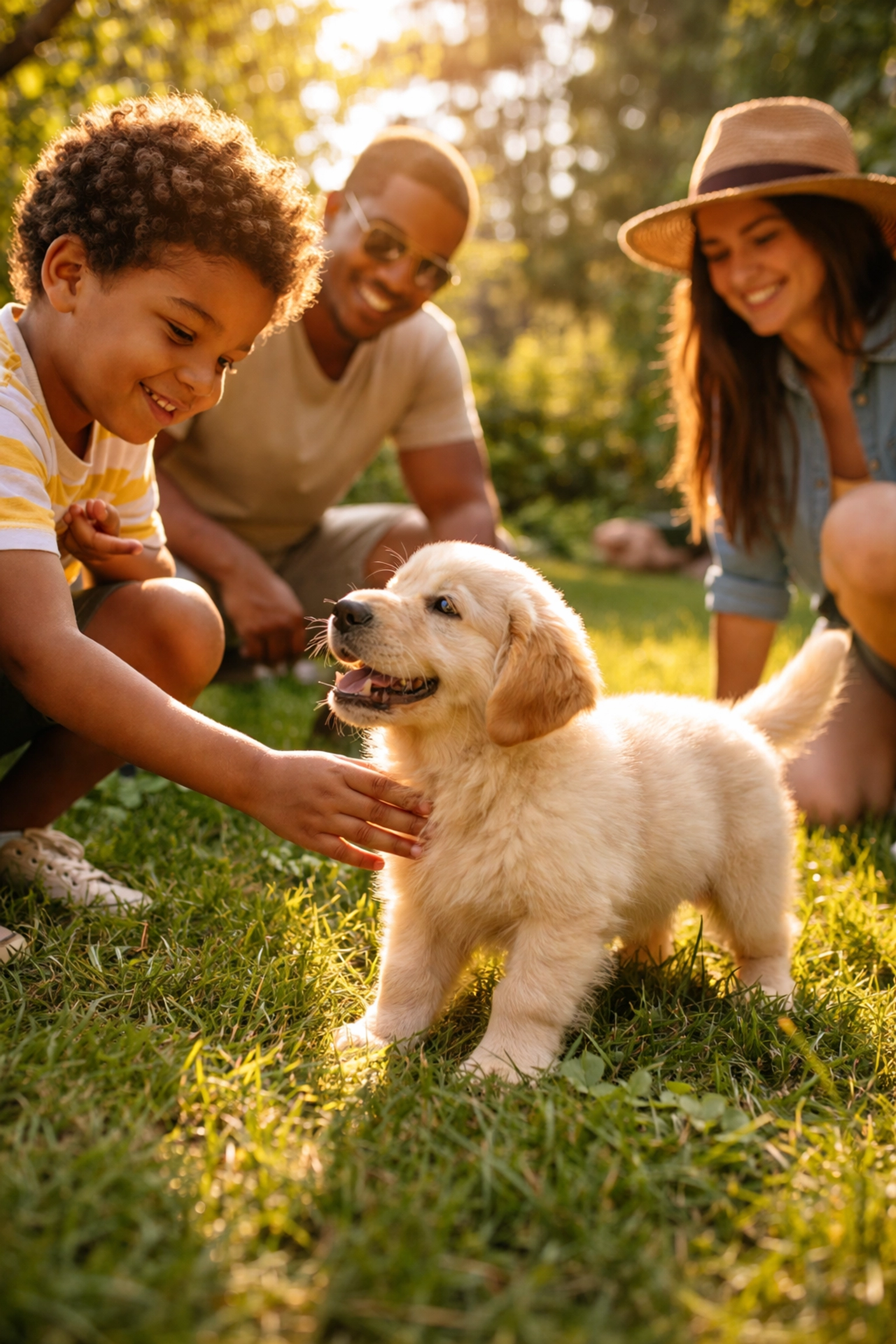
When you bring home a socialized Golden Retriever puppy from a dedicated Golden Retriever breeder in Oregon like NextGen Goldens, you're not starting from scratch: you're continuing a process that's already well underway. Your job is to keep building on that foundation during the remaining weeks of the socialization window.
This means continuing to introduce new experiences, maintaining positive associations with novelty, and enrolling in quality puppy kindergarten classes. The investment you make during these early months pays dividends for the next 12-15 years of your life together.
Whether you're looking for a future therapy dog, an emotional support companion, or simply a well-adjusted family pet, early socialization is the gift that keeps on giving.
References