
Building a Better Brain: The Science of Puppy Socialization at Green Acres Nextgen
- Green Acres K-9 Resort
- Mar 16
- 5 min read

If you’ve ever walked through our gates here in Boring, Oregon, you’ve likely noticed something special. It’s not just the crisp air or the rolling green hills of the Pacific Northwest, it’s the vibe of our puppies. As a helper here at Green Acres Nextgen, I get the incredible front-row seat to one of nature’s most fascinating transformations: the development of a Golden Retriever’s brain.
When people look for Golden Retriever puppies Oregon, they are often looking for that classic, "calm" dog. But that calm temperament isn’t just luck; it is a carefully crafted neurological outcome. At NextGen Goldens, we don’t just "raise" puppies; we build better brains through a scientific approach to socialization.
In this post, I want to take you behind the scenes of how we use the critical socialization window to shape our health tested Golden Retriever puppies Oregon into the perfect family companions and resilient therapy dogs.
The Magic Window: 3 to 14 Weeks
Science tells us that puppies have a "critical period" for socialization that roughly spans from 3 to 14 weeks of age. During this time, a puppy’s brain is like a sponge, it is physically forming the neural pathways that will dictate how it responds to the world for the rest of its life.
As a Boring Oregon Golden Retriever breeder, I’ve seen firsthand how high the stakes are. Experiences during this window are "hard-wired." If a puppy is exposed to a variety of positive stimuli now, they grow up to be confident and adaptable. If they miss out, they may struggle with anxiety or fear-based behaviors later. This is why we are so obsessed with what happens in our nursery and play yards every single day.
Early Neurological Stimulation (ENS): The "Super Dog" Program
Our commitment to science starts even before the puppies can see or hear. From day 3 to day 16, we perform Early Neurological Stimulation (ENS). This involves five specific, gentle exercises, like holding the puppy vertically or touching their paws with a cold cloth, that "stress" the nervous system just enough to trigger a response.
I’ve noticed that puppies who go through this program (often called the "Bio-Sensor" program) tend to have more resilient heart rates and a stronger immune system. They handle the "shocks" of life, like a loud thunderstorm or a trip to the vet, with a much cooler head. This is the foundation for creating calm temperament Golden Retrievers that thrive in busy households.
You can read more about this specific process in our deep dive on Early Neurological Stimulation.
Textures, Tones, and Tastes: Sensory Habituation
Once the puppies' eyes and ears open, the real fun begins! We transform our environment into a sensory playground. We follow a philosophy often called the "Rule of 7s," ensuring that by the time a puppy leaves us at 8 weeks, they have:
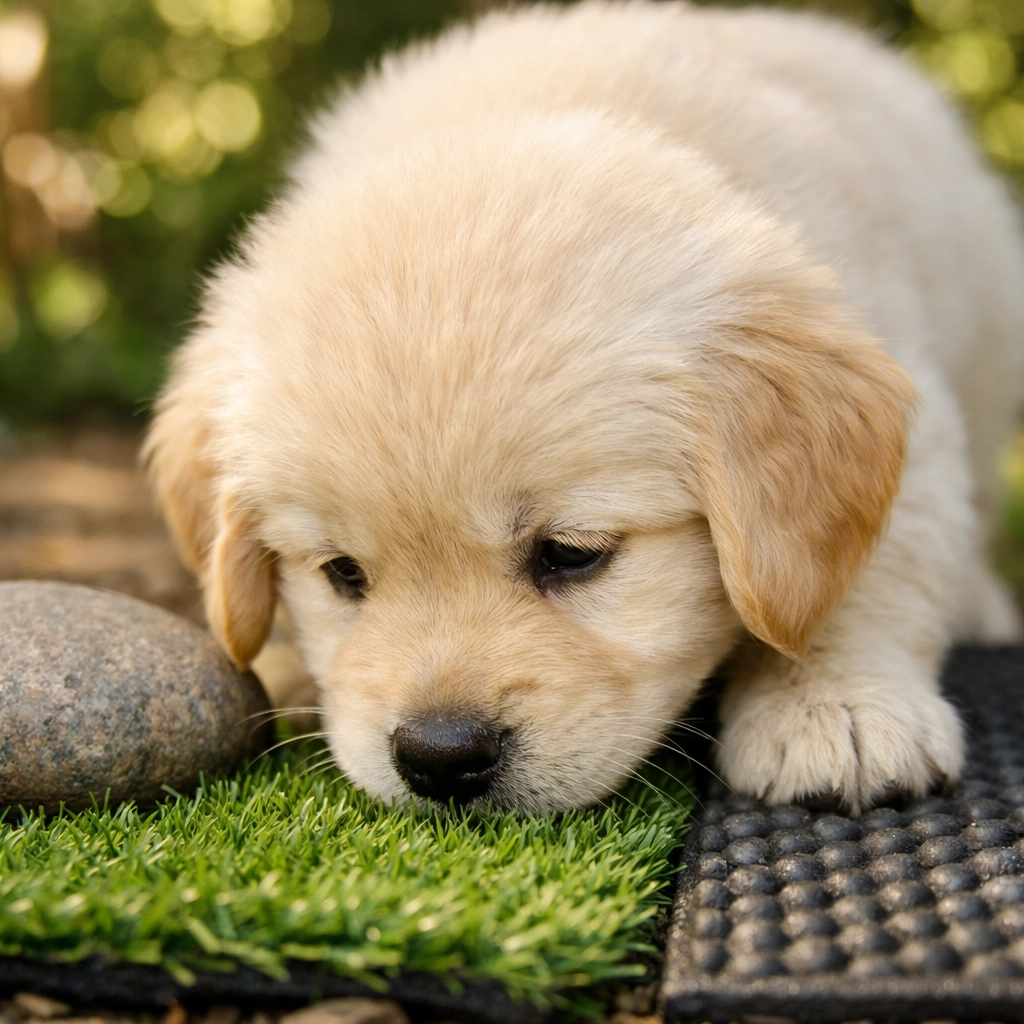
Walked on 7 different surfaces: Grass, gravel, wood, carpet, tile, linoleum, and even crinkly plastic tarps.
Heard 7 different loud noises: Vacuums, sirens (on recordings), farm equipment, children playing, thunder, doorbells, and clanging pans.
Met 7 different types of people: People with hats, people with glasses, children, and elderly individuals.
By exposing our socialized Golden Retriever puppies to these textures and sounds in a safe, controlled way, we are preventing "neophobia", the fear of new things. When a NextGen Golden walks into your home and feels a hardwood floor for the first time, their brain doesn't scream "Danger!" Instead, it says, "Oh, I’ve felt something like this before. No big deal."

Why Boring, Oregon is the Perfect Laboratory
Being a Golden Retriever breeder Oregon gives us a massive advantage. Our property in Boring allows us to integrate "farm socialization" into our curriculum. Our puppies grow up hearing the low rumble of tractors and the sounds of local wildlife.
This rural setting provides a rich tapestry of natural smells and sights that you just can't replicate in a suburban backyard. It’s this immersion in a diverse environment that makes our dogs such excellent candidates for therapy dog Golden Retrievers. A therapy dog needs to be unflappable, whether they are in a sterile hospital hallway or a noisy school classroom.
The Connection Between Health Testing and Behavior
You might wonder how being a health tested Golden Retriever breeder relates to socialization. The truth is, it’s all connected. A puppy that is in pain because of poor joint genetics or suffering from a hidden heart condition isn't going to socialize well. Chronic discomfort leads to irritability and fear.
By ensuring our parents are cleared for hips, elbows, heart, and eyes, we are giving each puppy a physical "clean slate." This allows them to focus entirely on learning and growing. When a puppy feels good in their body, they are much more curious and eager to engage with the world. You can learn more about our standards on our About Us page.
Preparing for the "NextGen" Life
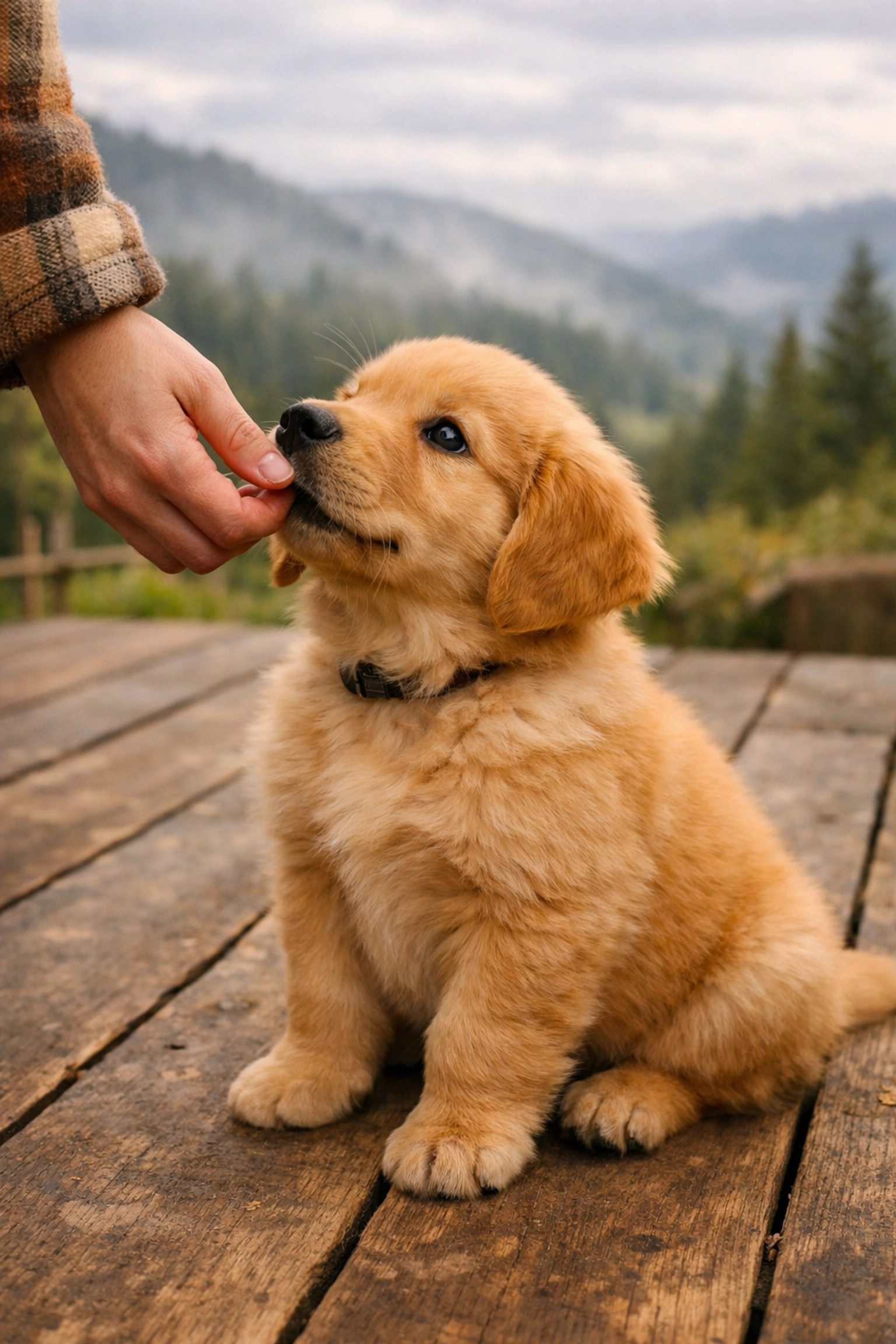
Our goal is that by the time you pick up your puppy, they have already "graduated" from a mini-university of life. We take the science of socialization seriously because we know we aren't just selling a pet: we are providing a new family member.
I always tell new owners that while we do the heavy lifting in the first 8 weeks, the journey continues with you! Keeping up with positive reinforcement and continued exposure is key. We offer resources and even puppy training tips to help you keep that "Better Brain" growing.
A Personal Note from the Team
As a helper here, I’ve spent countless hours sitting in the grass with these pups, watching them navigate a new "scary" object like a wobbling balance board. The moment their little tail starts wagging as they conquer the challenge: that’s the science of confidence in action. It’s why we do what we do.
If you are looking for Golden Retriever puppies Oregon, we invite you to see the difference that science-based socialization makes. Whether you need a service dog prospect, a therapy companion, or just the world’s best family pet, a NextGen Golden is built from the brain up to be your best friend.
Bibliography & Scientific References
Dietz, L., et al. (2018). "The importance of early life experiences for the development of behavioral traits in dogs." Scientific Reports.
Freedman, D. G., King, J. A., & Elliot, O. (1961). "Critical Period in the Social Development of Dogs." Science, 133(3457), 1016-1017.
Battaglia, C. L. (2009). "Periods of Early Development and the Effects of Stimulation and Socialization in the Dog." Journal of Veterinary Behavior, 4(5), 203-210.
Howell, T. J., King, T., & Bennett, P. C. (2015). "Puppy parties and beyond: the role of early age socialization and training in the development of adult dog behavior." Veterinary Medicine: Research and Reports, 6, 143–153.
Scott, J. P., & Fuller, J. L. (1965).Genetics and the Social Behavior of the Dog. University of Chicago Press.
Ready to find your future companion? Explore our upcoming litters and see why our science-backed approach makes all the difference.