
Early Neurological Stimulation: Building a Resilient Therapy Dog from Day 3
- Green Acres K-9 Resort
- Feb 13
- 5 min read

When you think about therapy dogs: those incredibly calm, intuitive Golden Retrievers who bring comfort to hospital patients, support students during exam stress, or help children learn to read: you might wonder: what makes them so special? The answer starts much earlier than you'd think. In fact, it begins when these puppies are just three days old.
As a breeder dedicated to producing NextGen Goldens with exceptional temperaments, I've discovered that the foundation for a resilient, emotionally stable therapy dog is laid during the earliest days of life. And one of the most powerful tools we use is something called Early Neurological Stimulation, or ENS.
What Exactly Is Early Neurological Stimulation?
Early Neurological Stimulation is a scientifically-developed protocol that involves five brief exercises performed once daily on puppies between days 3 and 16 of their lives. This window is no accident: it's a critical period of rapid neurological development when the puppy's nervous system is particularly responsive to gentle stressors.

The entire protocol takes just 30 seconds per puppy per day, but the potential benefits last a lifetime. Here's what we do with each tiny English Cream Golden Retriever puppy during this crucial two-week window:
Tactile Stimulation: Using a cotton swab, we gently stimulate the puppy between the toes on one foot for 3-5 seconds. This mild sensory experience helps prime the neurological system.
Head Held Erect: We hold the puppy upright so its head is directly above its tail, supporting it with both hands for 3-5 seconds. This position challenges the puppy's sense of orientation.
Head Pointed Down: We reverse the position, gently holding the puppy so its head points toward the ground for 3-5 seconds while fully supporting its body.
Supine Position: We cradle the puppy on its back in our palms, muzzle facing upward, for 3-5 seconds. This vulnerable position is a mild stressor that stimulates adaptation.
Thermal Stimulation: We place the puppy on a cool, damp towel (chilled in the refrigerator for at least five minutes) for 3-5 seconds. The temperature change provides another gentle stimulus.
That's it. Five simple exercises, each lasting just a few seconds, performed once daily for two weeks. But don't let the simplicity fool you: the science behind this protocol is fascinating.
The Science of Building Resilience
The theory behind ENS is that these controlled, mild stressors essentially "wake up" the neurological system earlier than it would naturally activate. Think of it as a gentle exercise program for a newborn puppy's nervous system: you're not overwhelming it, just giving it a nudge to start developing its capacity to handle stress.
Research suggests that puppies exposed to ENS show five notable benefits compared to their non-stimulated counterparts:
Improved cardiovascular performance, including more regulated heart rates
Stronger heartbeats that indicate better cardiac function
Stronger adrenal glands, which play a crucial role in stress response
Enhanced tolerance to stress when facing new or challenging situations
Greater resistance to disease, likely linked to improved physiological functioning
Additionally, studies have observed that ENS puppies tend to be more exploratory, active, and confident in competitive situations. They're not aggressive: they're just more willing to engage with their environment and investigate new experiences.

For those of us breeding therapy dog Golden Retrievers in Oregon and throughout the Pacific Northwest, these characteristics are gold. A therapy dog needs to remain calm in unpredictable hospital environments, comfortable with strangers touching them, and resilient enough to handle the emotional weight of their work without becoming stressed or anxious.
Why This Matters for Your Future Therapy Dog
If you're looking for a Golden Retriever puppy to train as a therapy or emotional support dog, understanding ENS can help you make an informed decision about your breeder. Not all breeders implement these protocols, but those who do are making a deliberate investment in your puppy's neurological foundation.
Let me be clear about what ENS is and isn't. It's not a magic formula that guarantees a perfect therapy dog: no single intervention can do that. What ENS does is potentially provide your puppy with a stronger neurological baseline, making them better equipped to handle the unique demands of therapy work.
Think about what therapy dogs face: sudden loud noises in hospitals, unpredictable movements from patients with mobility challenges, extended periods in stimulating environments, and the need to remain calm and focused despite distractions. A puppy with enhanced stress tolerance and cardiovascular resilience has a head start in developing these capacities.
Setting Realistic Expectations
I always believe in being transparent with families who are welcoming one of our socialized Golden Retriever puppies into their homes. While ENS has been widely adopted by breeders and trainers since its development by the U.S. military's canine program, recent peer-reviewed research has shown that the scientific evidence is still evolving.
A 2021 study examining ENS effectiveness found inconclusive results when measuring physical health outcomes and behavioral responses to stressors. Researchers noted no significant differences in illness rates between ENS and control groups, and limited measurable differences in how puppies responded to stress during the study period. However, they also pointed out that differences between groups might not emerge until puppies reach 10-12 months of age.

What does this mean for you? It means that ENS should be understood as one component of a comprehensive early development program, not a standalone solution. At NextGen Goldens, we combine ENS with extensive socialization, positive handling experiences, health testing of parent dogs, and careful attention to each puppy's individual temperament.
Our Approach at NextGen Goldens
When you reserve a therapy dog puppy from us, you're not just getting a puppy who received ENS: you're getting a puppy who has been carefully nurtured from conception through the critical early weeks of life.
We begin with health-tested parents who demonstrate the calm, stable temperaments that make Golden Retrievers ideal for therapy work. Then, during the ENS window from days 3-16, we perform the protocol exercises with precision and care. But we don't stop there.
Beyond ENS, our English Cream Golden Retriever puppies in the Pacific Northwest receive:
Daily gentle handling and cuddling to build positive associations with human touch
Exposure to various sounds, surfaces, and stimuli appropriate for their developmental stage
Early socialization experiences that continue beyond the ENS period
Regular health monitoring to ensure optimal physical development
Individual temperament assessment to match puppies with appropriate homes and roles
This comprehensive approach recognizes that building a resilient therapy dog requires attention to genetics, early neurological stimulation, socialization, health, and the ongoing commitment of the family who will raise and train the dog.
The Bottom Line for Therapy Dog Families
If you're searching for "therapy dog Golden Retrievers" or "socialized Golden Retriever puppies Oregon," you deserve to understand what separates exceptional breeding programs from the rest. ENS is one piece of that puzzle: a research-based protocol that potentially gives puppies a neurological advantage during a critical developmental window.
The exercises are brief, controlled, and performed during a specific timeframe when the benefits may be most pronounced. They're not stressful or harmful: quite the opposite. When done correctly, ENS provides gentle stimulation that may help puppies develop stronger physiological responses to stress throughout their lives.
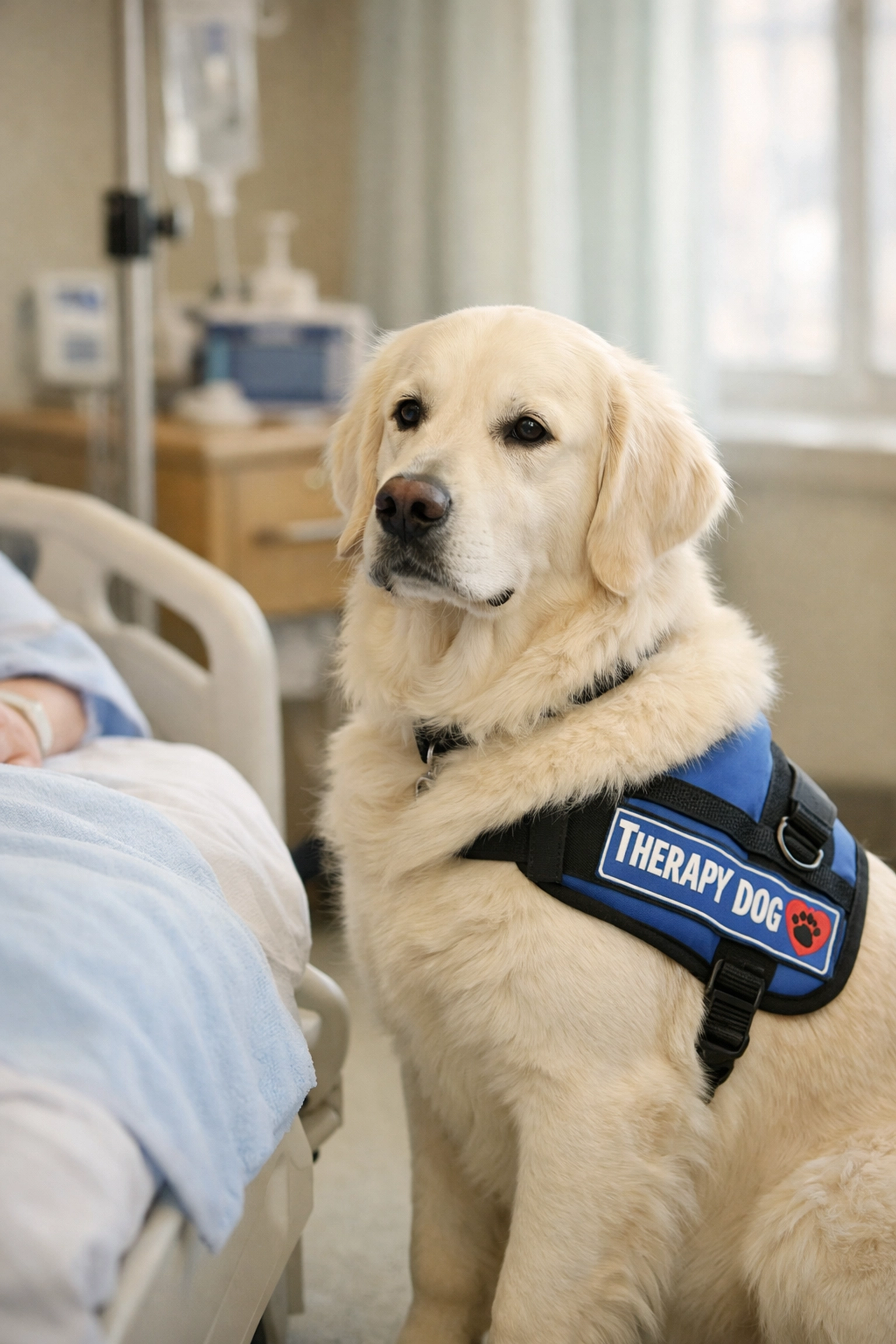
For therapy and emotional support work, this foundation matters. Your future therapy dog will face situations that require exceptional composure, adaptability, and stress resilience. Starting to build that capacity at three days old, when the neurological system is most responsive, makes sense from both a scientific and practical perspective.
At NextGen Goldens, we're committed to using evidence-based practices while staying honest about what we know and what we're still learning. ENS is part of our protocol because the potential benefits align perfectly with our goal: producing Golden Retriever puppies with the temperament, health, and resilience to excel as therapy dogs, emotional support animals, and beloved family companions.
If you're ready to welcome one of our NextGen Goldens into your life, you can explore our available therapy dog puppies and learn more about our comprehensive approach to breeding exceptional Golden Retrievers.
Scientific References