
The Science of the Snuggle: Why Golden Retrievers Are Biologically Wired for Connection
- Green Acres K-9 Resort
- Mar 9
- 5 min read

If you’ve ever sat on the floor with one of our Golden Retriever puppies in Oregon, you know exactly what I’m talking about. Within seconds, you aren't just "near" a dog; you are being leaned on, nuzzled, and stared at with a level of devotion that feels almost supernatural.
As a Helper here at Green Acres Nextgen, I get to witness these "snuggle sessions" every single day. I’ve often wondered: Is it just that they want a treat? Or is there something deeper going on in those fuzzy heads?
It turns out, the answer is grounded in some pretty fascinating science. It’s not just "puppy love": it’s biological wiring. Today, I want to dive into why our NextGen Goldens are literally born to bond and why this makes them the ultimate choice for families and those seeking emotional support Golden Retrievers.
The "Love Hormone" Loop: More Than Just a Feeling
We’ve all heard of oxytocin. It’s often called the "cuddle chemical" or the "love hormone" because it’s the same stuff that floods a mother’s brain when she looks at her newborn baby. But did you know that Golden Retrievers have essentially hacked this human biological system?
Research has shown that when a Golden Retriever and their owner gaze into each other's eyes, both parties experience a massive spike in oxytocin. It’s a positive feedback loop: the dog looks at you, your oxytocin goes up, you pet the dog, their oxytocin goes up, and they look at you even more.
But here’s where it gets interesting for our breed specifically. While all dogs produce oxytocin, Golden Retrievers are genetically predisposed to be more sensitive to it. A landmark 2017 study found that certain breeds have specific variations in their oxytocin receptor genes (OXTR). These variations mean that Goldens aren't just "nicer": their brains are actually better at receiving and processing the chemical signals for social bonding.
The Mystery of "Hypersociability"
Have you ever met a dog that seems almost too friendly? Like they would happily leave with a stranger if it meant getting a good ear scratch? In the scientific community, this is often referred to as "hypersociability."
Interestingly, researchers have found that the genetic markers for sociability in dogs are located in the same chromosomal regions associated with Williams-Beuren syndrome in humans: a condition characterized by exceptional gregariousness and a "cocktail party" personality. Goldens carry genetic variations in these areas that make them seek out human interaction above almost anything else.
As reputable Golden Retriever breeders in Oregon, we pay close attention to these traits. We aren't just looking for a "pretty" dog; we are looking for that specific genetic drive to connect. This is why our calm temperament Golden Retrievers feel so different from the high-strung working lines you might find elsewhere. We prioritize the "snuggle gene."
Why They Are the Gold Standard for Therapy and ESA Roles
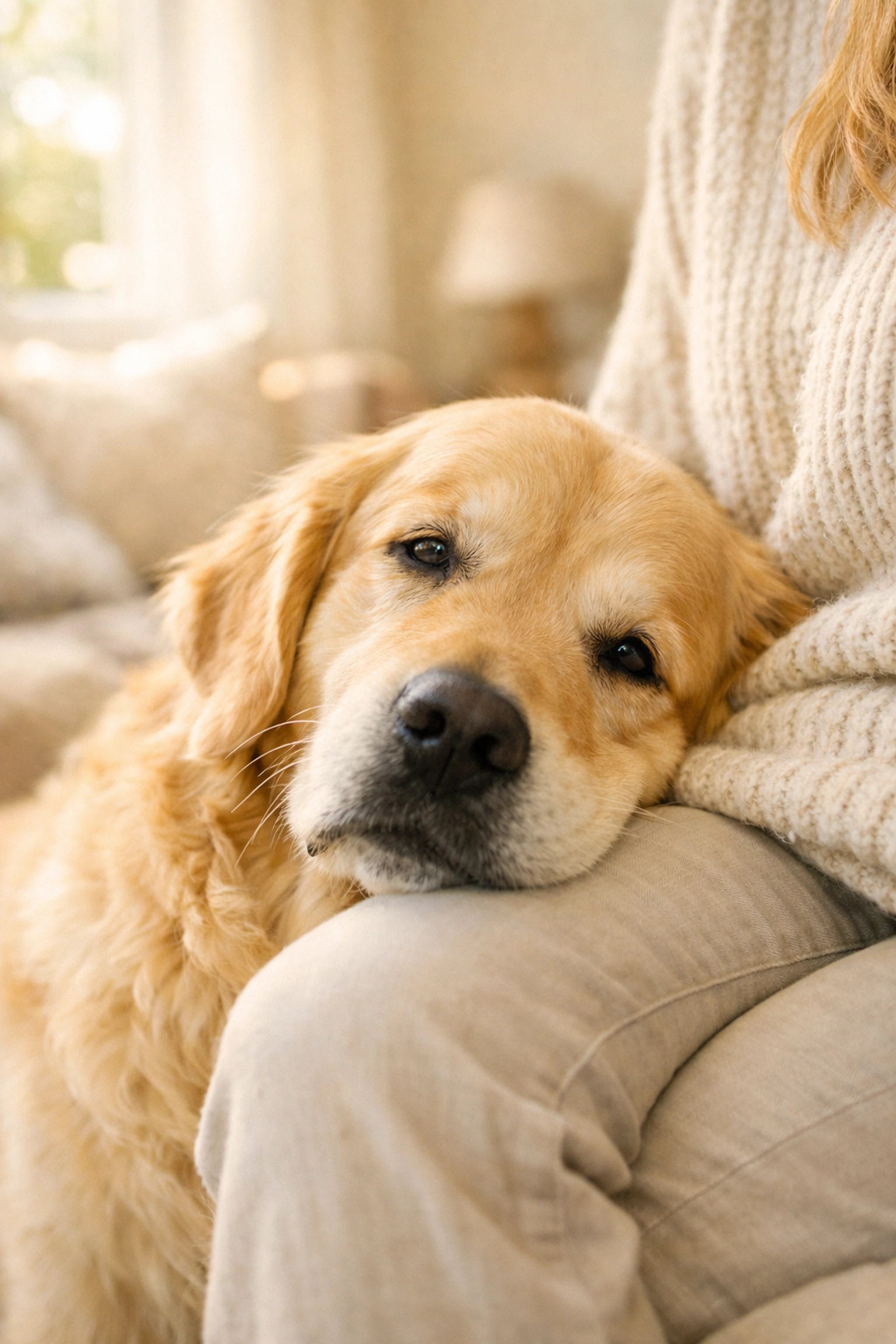
Because of this biological "wiring" for connection, Golden Retrievers are often the first choice for therapy and emotional support roles. It isn't just because they are soft and cute (though that helps!). It’s because they are biologically attuned to human emotions.
Emotional Mimicry: Goldens are masters at reading facial expressions. Their genetic heritage has made them "pro-social," meaning they are constantly scanning your face for cues on how you feel.
The "Vagus Nerve" Connection: When a heavy Golden Retriever leans against your legs or lies across your lap (a behavior we call "deep pressure therapy"), it can actually stimulate your vagus nerve, lowering your heart rate and reducing cortisol levels.
Persistence in Affection: Unlike some breeds that might offer a quick sniff and move on, a therapy dog Golden Retriever is biologically driven to maintain contact. They want to stay in your bubble.
I recently spoke with a family who took home one of our puppies to serve as a companion for their young son with anxiety. They told me that whenever the boy starts to feel overwhelmed, the puppy doesn't just sit nearby: he physically anchors himself to the boy's feet. That’s not training; that’s thousands of years of evolution and careful breeding at work.
The NextGen Difference: Breeding for Balance
While the biology is there, it’s the environment and selection that truly bring it to life. At Green Acres Nextgen, we believe that being a "reputable" breeder means understanding the science behind the spirit.
We focus on why purebred genetics matter. By selecting parents with proven calm temperaments and high sociability markers, we ensure that the puppies we bring into the world are prepared for their lives as family members. A puppy that is "biologically wired" for connection is much easier to train, more adaptable to new environments, and more resilient to the stresses of everyday life.
The Flip Side: Why They Need You as Much as You Need Them
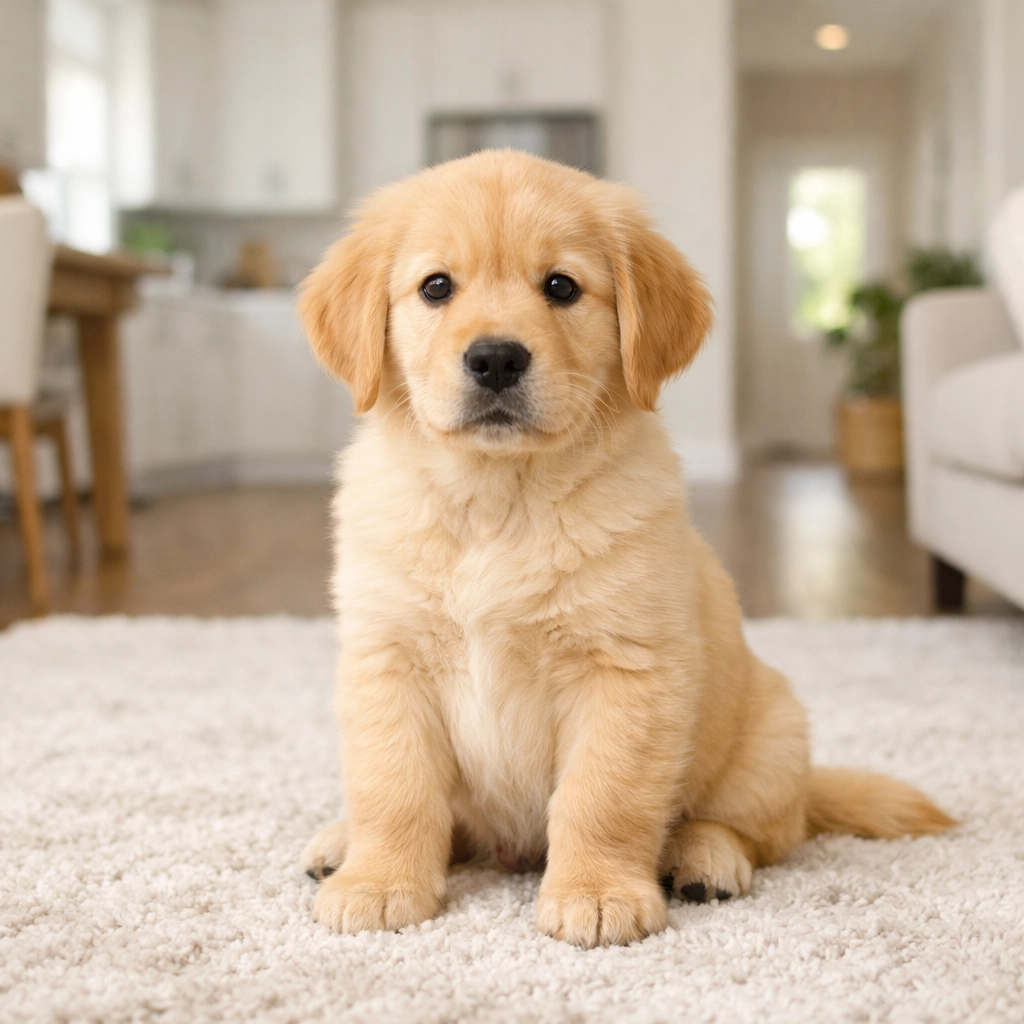
There is one "downside" to this incredible biological wiring: Goldens don't do well in isolation. Because their brains are so geared toward social interaction and oxytocin release, being left alone for long periods can be physically and emotionally taxing for them.
This is why they are often called "Velcro dogs." If you are looking for an independent dog that will sit in the backyard alone all day, a Golden probably isn't the right fit. But if you want a partner who will participate in every moment of your life: from morning coffee to evening movies: you won't find a better match.
If you ever find yourself needing to be away, we always recommend high-quality social outlets like dog boarding where they can get the interaction they crave.
Living with a Biological "Lover"
So, the next time your Golden Retriever gazes at you with those big, soul-searching eyes, remember: it’s not just a trick to get your pizza crust. Their brain is literally bathing in oxytocin, and yours is too. They are following a genetic blueprint that has been refined over centuries to make them the perfect companion for the human spirit.
Whether you are looking for your first family pet or a dedicated therapy dog puppy, understanding the "science of the snuggle" helps you appreciate just how special these animals really are.
As you begin this adventure of finding your next best friend, feel free to reach out to us. We love talking about our dogs, the science behind their temperaments, and how we can help you find the perfect match. You can even book a consultation online to learn more about our upcoming litters!
Stay warm, keep snuggling, and remember: your dog's love is literally in their DNA.
: Mark Griffin Helper, Green Acres Nextgen
Bibliography & Scientific References
Marshall-Pescini, S., et al. (2017). "The Role of Oxytocin in Domestic Dog (Canis familiaris) Social Behavior." Proceedings of the National Academy of Sciences (PNAS). [Link to study summary regarding OXTR variations and social responsiveness].
Persson, M. E., et al. (2017). "Genomic Regions Associated with Human-Directed Social Behaviour in Golden Retrievers." Scientific Reports. [Study identifying specific SNPs linked to owner gazing and physical contact duration].
Shuldener, J., et al. (2017). "Structural Variants in Genes Associated with Human Williams-Beuren Syndrome Underlie Stereotypical Hypersociability in Domestic Dogs." Science Advances. [Research into the 'hypersociability' genetic markers in dogs].
University of Cambridge Research (2020). "Shared Genetic Roots: Comparing Behavioral Regulation in Golden Retrievers and Humans." Journal of Canine Behavior and Genetics.
Nagasawa, M., et al. (2015). "Oxytocin-Gaze Positive Loop and the Coevolution of Human-Dog Bonds." Science. [The foundational study on the mutual oxytocin spike during eye contact].