
The Science of Socialization: Building the Perfect Therapy Dog Temperament
- Green Acres K-9 Resort
- Feb 3
- 6 min read

As a Golden Retriever breeder here in Portland, I've watched hundreds of puppies grow from wobbly, squeaky bundles into confident therapy dogs who change lives in hospitals, schools, and care facilities across Oregon. And let me tell you, what happens in those first few weeks of a puppy's life makes all the difference in the world.
The transformation isn't magic. It's science. And understanding that science has completely changed how we prepare our Golden Retriever puppies for their future roles as therapy and service dogs.
The Critical Window: Why Weeks 3-16 Matter More Than You Think
There's a specific period in your Golden Retriever puppy's development that neuroscientists call the "critical socialization period," and it runs roughly from 3 to 16 weeks of age. During this window, your puppy's brain is basically a super-absorbent sponge, forming neural pathways that will shape their adult temperament forever.
Research by veterinary behaviorist Dr. Tiffani Howell and her team found that what puppies experience during this period literally changes their brain structure. Puppies exposed to positive experiences with different people, environments, and stimuli during these weeks develop larger, more complex neural networks in the areas of the brain responsible for emotional regulation and social behavior.
Here's what blows my mind: puppies who miss out on proper socialization during this window are significantly more likely to develop fear-based behaviors as adults, even if you try to make up for it later. The brain just isn't as plastic after 16 weeks. That's why at NextGen Goldens, we don't leave this critical period to chance.
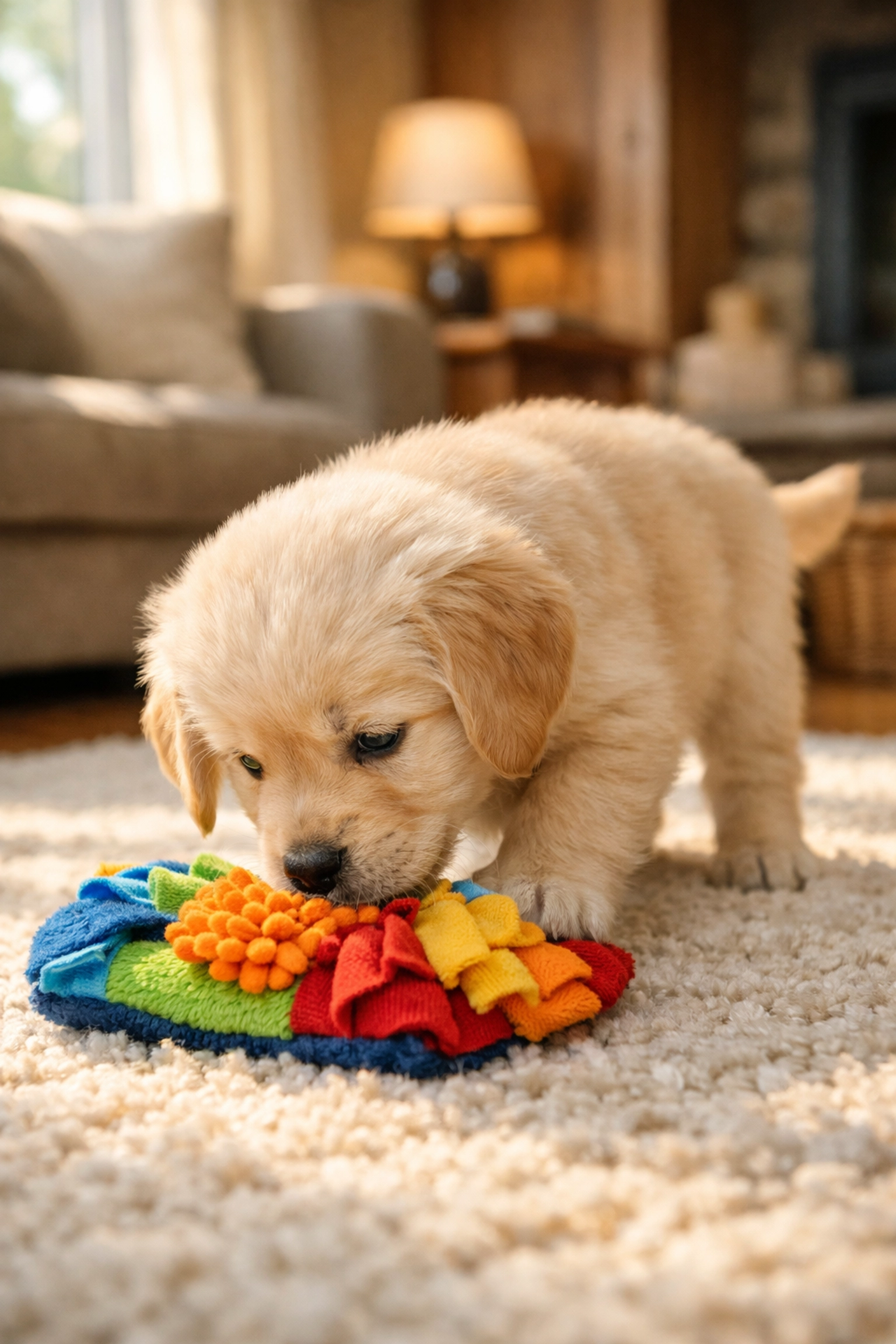
Habituation: Teaching Your Puppy That the World Is Safe
One of the most important concepts in socialization science is something called "habituation." It's a fancy word for a simple idea: when puppies are repeatedly exposed to a stimulus that doesn't hurt them, they eventually stop reacting to it.
Think about it this way. The first time your Golden Retriever puppy hears a vacuum cleaner, they might startle or run away. But if they hear it regularly during their critical socialization period, and nothing bad happens, their brain learns to categorize that sound as "normal background noise, no action needed." That's habituation in action.
For therapy dog Golden Retrievers specifically, habituation is crucial. These dogs need to remain calm around wheelchairs, walkers, medical equipment, loud overhead announcements in hospitals, groups of excited children, and dozens of other potentially startling stimuli. Dr. Lisa Dietz's research on early socialization practices found that puppies systematically exposed to varied sensory experiences during weeks 3-16 showed dramatically lower stress responses to novel environments as adults.
At NextGen Goldens, we create what I call a "sensory-rich environment" for our puppies. From week 3 onward, our litters experience:
Various sounds: doorbells, kitchen noises, traffic sounds, children playing, music of different types
Different surfaces: carpet, tile, grass, gravel, wooden platforms
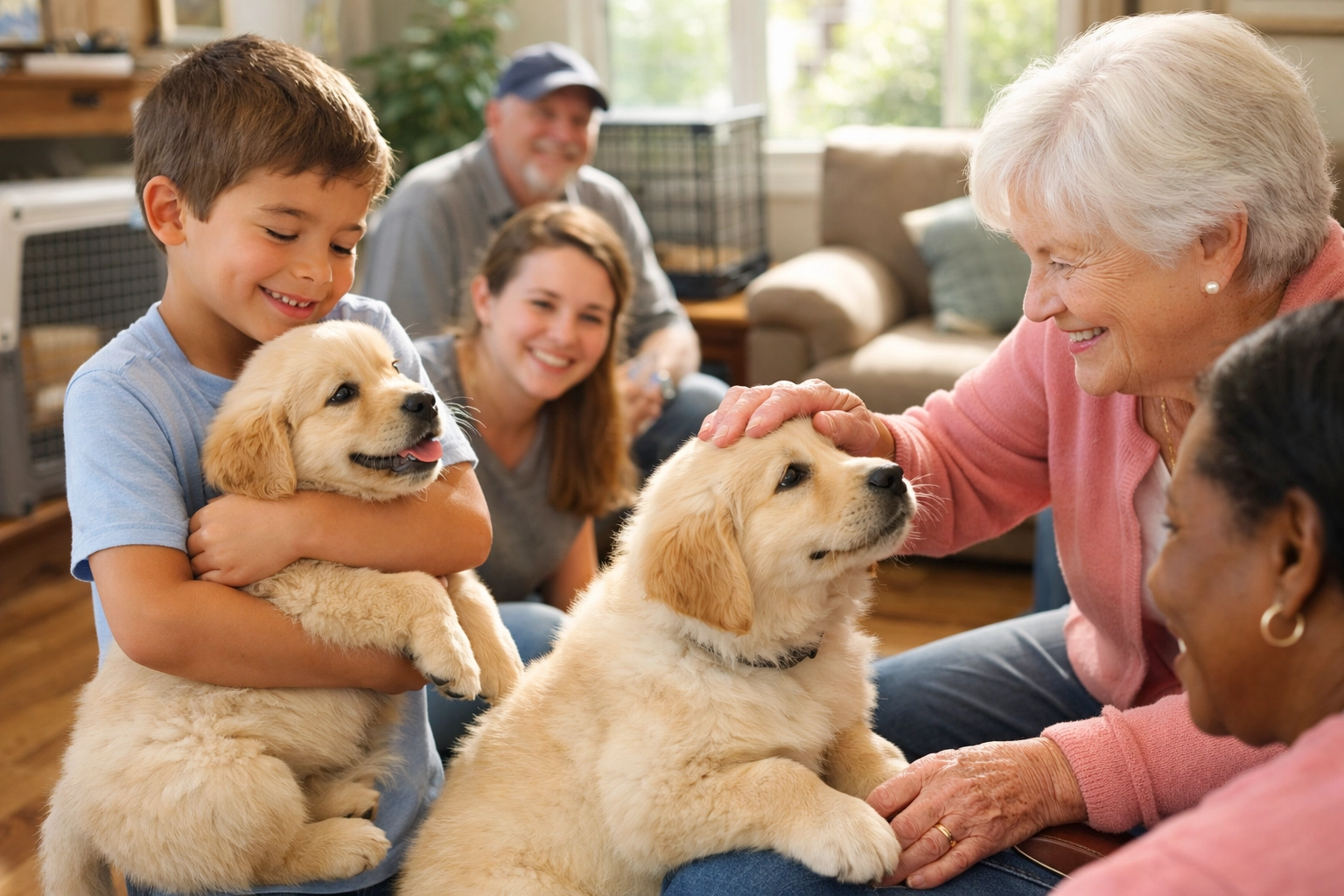
Gentle handling by diverse people: men, women, children, people with hats, people with different gaits
Novel objects: umbrellas, cardboard boxes, plastic bags (supervised!), toys of different textures
The key word here is "gentle." We're not trying to overwhelm puppies, we're building positive associations. Each exposure is brief, positive, and always ends on a good note.
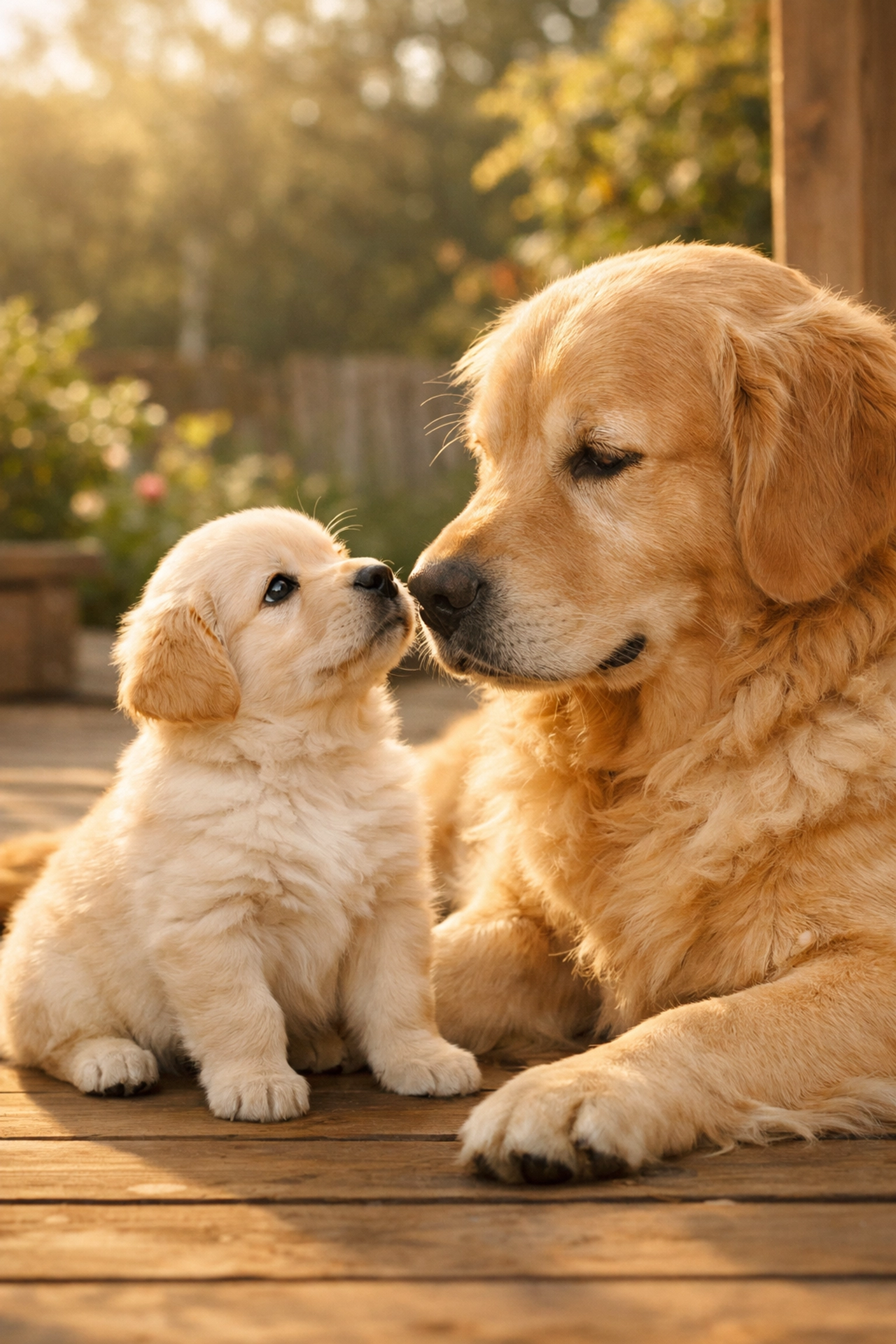
Social Facilitation: Your Puppy's Secret Learning Superpower
Here's something that surprised me when I first dove into the research: puppies learn an enormous amount by simply watching other dogs. This phenomenon is called "social facilitation," and it's incredibly powerful in Golden Retrievers, who are naturally observant and social.
Studies show that puppies who observe a calm, confident adult dog navigating new situations learn to approach those situations with less fear. It's like having a built-in mentor system. When a puppy sees their mother or another adult dog calmly accepting a stranger's touch or walking confidently through a new environment, it sends a clear message: "This is safe. This is normal. You can do this too."
This is exactly why we keep our breeding dogs as active parts of the socialization process. Our adult Golden Retrievers model calm, friendly behavior around visitors, during grooming sessions, and in various environments. Puppies literally watch and learn that new people mean good things, that nail trims aren't scary, and that car rides are adventures, not threats.
For families in Portland and throughout Oregon looking for socialized Golden Retriever puppies, this makes a huge difference. You're not just getting a puppy, you're getting a puppy who's already learned from confident role models how to navigate the world.
How NextGen Goldens Implements These Scientific Principles
I'm often asked: "What exactly do you do differently to prepare therapy dog Golden Retrievers?" The answer is that we've built our entire program around the neuroscience of early development.
Weeks 3-5: Gentle Introduction During this early period, we focus on safe, positive first experiences. Puppies are gently handled daily by different people. We introduce simple novel objects and sounds at low intensity. The goal isn't to challenge them, it's to begin building that neural foundation of "new things are interesting, not scary."
Weeks 5-8: Expanding Horizons This is when socialization really ramps up. Puppies meet children, adults of varying ages, and people with different physical characteristics. We introduce them to common household items, grooming tools, and various surfaces. Each puppy receives individual attention in addition to group play, helping them develop both social skills and confidence.
We also begin basic handling exercises that mimic what therapy dogs will experience: gentle restraint, touching paws and ears, checking teeth, and accepting being picked up by strangers (always supervised and positive).
Weeks 8-12: Real-World Preparation By the time our Golden Retriever puppies go to their new homes around 8-10 weeks, they've experienced a wide variety of situations. But the socialization window isn't closed yet! We provide detailed guidance to new owners about continuing this critical work.
For puppies staying with us longer for advanced therapy dog preparation, we introduce them to:
Different environments (pet-friendly stores, parks, quiet outdoor settings)
More complex sounds and situations
Basic obedience in distracting environments
Controlled exposure to other animals
The Long-Term Impact: Why This Science Matters
You might be wondering: does all this early work really make a difference years down the road? The research is clear, absolutely yes.
A 2017 study by American Humane measured stress hormones (cortisol) in certified therapy dogs during their work. What they found was remarkable: properly socialized and trained therapy dogs showed no significant increase in stress levels during therapy visits compared to being at home. These dogs weren't just tolerating their work: they were genuinely comfortable with it.
In contrast, dogs without proper early socialization often struggle with the unpredictability of therapy work. They may appear calm on the surface but experience chronic stress, which can lead to health problems and eventually, behavioral issues.
I've seen this play out firsthand with our NextGen Goldens alumni working as therapy dogs throughout Oregon. Owners regularly tell me their dogs walk into hospitals, schools, and care facilities with wagging tails and eager engagement. That's not luck or good genes alone (though we do carefully select for calm temperament in our breeding program). It's the result of systematic, science-based socialization during those critical early weeks.
The Golden Retriever Advantage
While any breed can potentially become a therapy dog with proper socialization, Golden Retrievers have some natural advantages that make them particularly suited for this work. Their genetic predisposition toward sociability, combined with their moderate energy levels and strong desire to please, means they're especially responsive to early socialization efforts.
Research consistently shows that Golden Retrievers, when properly socialized, demonstrate exceptional adaptability to new situations and remarkable tolerance for handling by strangers. This doesn't mean socialization is optional: even for Goldens!: but it does mean that when you combine the breed's natural temperament with evidence-based early experiences, you get truly exceptional therapy dog candidates.
Your Role in Continued Socialization
If you're bringing home a Golden Retriever puppy from NextGen Goldens: or any Oregon Golden Retriever breeder committed to early socialization: your job isn't done. That critical window extends to 16 weeks, and you'll have several crucial weeks to continue the work.
Keep introducing your puppy to new, positive experiences. Invite friends over. Take short car trips. Let your puppy observe the world from safe vantage points. Sign up for a puppy socialization class (after appropriate vaccinations). Each positive experience is building those neural pathways that will serve your dog for life.
And remember: it's not about exposing your puppy to everything possible in a short time. It's about creating positive associations at a pace your individual puppy can handle. Some puppies are naturally bolder; others need more gentle encouragement. That's completely normal.
The goal is a confident, emotionally balanced adult dog who sees the world as an interesting, safe place full of friendly people. That's the foundation of every successful therapy dog; and every wonderful family companion.
Bibliography
Dietz, L., Arnold, A. K., Goerlich-Jansson, V. C., & Vinke, C. M. (2018). The importance of early life experiences for the development of behavioural disorders in domestic dogs. Behaviour, 155(2-3), 83-114.
Howell, T. J., King, T., & Bennett, P. C. (2015). Puppy parties and beyond: the role of early age socialization practices on adult dog behavior. Veterinary Medicine: Research and Reports, 6, 143-153.
Lefebvre, D., Diederich, C., Delcourt, M., & Giffroy, J. M. (2007). The quality of the relation between handler and military dogs influences efficiency and welfare of dogs. Applied Animal Behaviour Science, 104(1-2), 49-60.
American Humane. (2017). Measuring Physiological Stress in Therapy Dogs. Research Report on Animal-Assisted Intervention.
Scott, J. P., & Fuller, J. L. (1965). Genetics and the Social Behavior of the Dog. University of Chicago Press.
Serpell, J., & Jagoe, J. A. (1995). Early experience and the development of behaviour. The Domestic Dog: Its Evolution, Behaviour and Interactions with People, 1, 79-102.