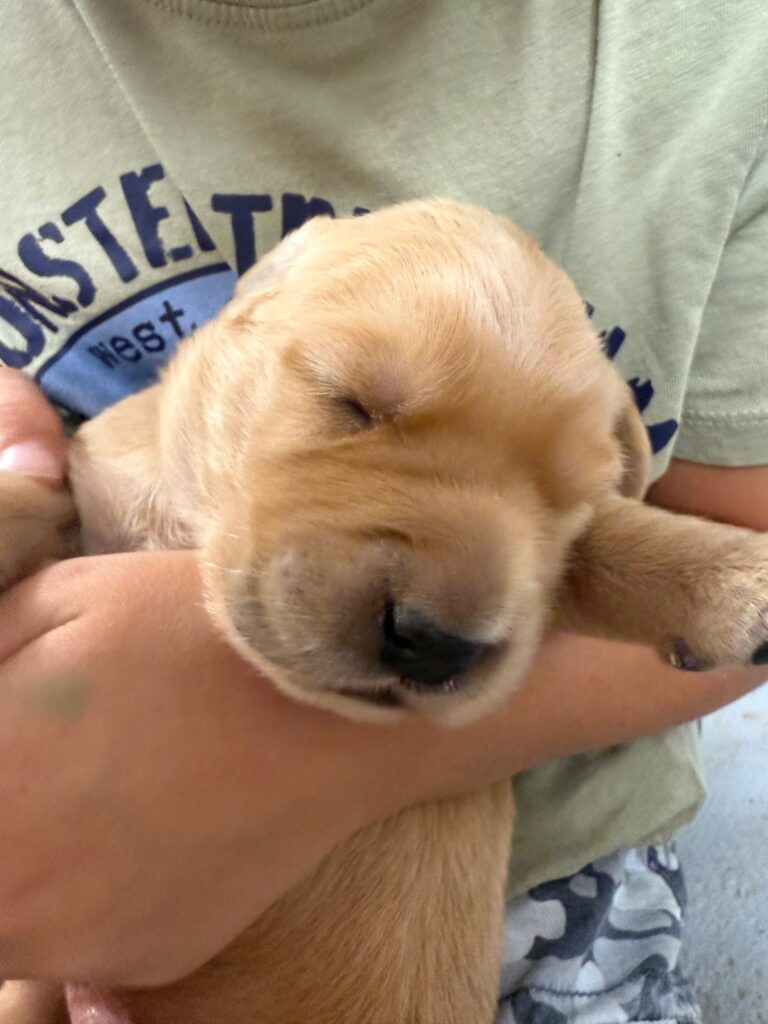
The Science of Socialization: Building the Foundation for the Perfect Therapy Golden Retriever
- Green Acres K-9 Resort
- 17 hours ago
- 5 min read
As a helper here at Green Acres Nextgen, I’ve had the incredible privilege of watching hundreds of tiny paws take their first steps toward becoming life-changing companions. There is something truly magical about the bond between a human and a dog, especially when that dog has the soul of a healer. If you’re looking for Golden Retriever puppies in Oregon, you’ve likely noticed that not all puppies are created equal. Some are bouncy and wild, while others possess a serene, almost intuitive "calm" that makes them perfect candidates for therapy work.
But here’s a secret I’ve learned during my time in Boring, Oregon: that "perfect" therapy temperament isn’t just a happy accident of nature. It’s a carefully crafted result of science, dedication, and early socialization. Whether you are searching for English Cream Golden Retriever puppies in Oregon to join your family or you’re specifically looking for therapy dog Golden Retrievers, understanding the science behind their development is the first step in your journey.
The Critical Window: Why the First 16 Weeks Matter
Science tells us that puppies go through a "critical socialization period" that begins around three weeks of age and begins to close by about 16 weeks. During this time, a puppy’s brain is like a sponge, it is incredibly plastic and ready to form permanent associations with the world around it.
As a Boring Oregon Golden Retriever breeder, we recognize that the first eight of those weeks happen right here with us. Research by Scott and Fuller (1965) established that experiences during this window largely determine a dog’s adult personality and their ability to handle stress. If a puppy isn't exposed to various sounds, sights, and smells early on, they may grow up to be fearful or reactive. For a dog intended for therapy work in busy hospitals or schools, fear is simply not an option.
We focus on creating a "world in miniature" for our puppies. Before they ever leave for their new homes in Portland or beyond, they’ve already encountered a symphony of experiences designed to build neural pathways for confidence.

The Magic of English Cream Temperament
You might be wondering, "Why English Creams?" While all Golden Retrievers are known for being friendly, calm temperament Golden Retrievers are a hallmark of the English Cream lines. Scientifically, temperament has a significant genetic component. By selecting parents with proven track records of gentleness and low reactivity, we give our socialized Golden Retriever puppies a head start.
When you look for Golden Retriever puppies in Portland, Oregon, you aren't just looking for a pet; you’re looking for a partner. The English Cream’s historical lineage often emphasizes a sturdier build and a slightly more "mellow" drive compared to some field-bred lines. This biological baseline makes them the gold standard for emotional support and therapy roles. You can learn more about our specific approach to the breed on our About Us page.
Our Socialization Protocol: Beyond the Basics
In Boring, Oregon, we don't just "play" with puppies, we engage in intentional, evidence-based socialization. We utilize principles from programs like Early Neurological Stimulation (ENS), which involves specific handling exercises during the first two weeks of life. These tiny "stressors" actually help the puppy’s cardiovascular and immune systems develop more robustly, creating a dog that is literally "hardwired" to handle the pressures of therapy work.
Systematic Exposure to the World
To develop therapy dog Golden Retrievers, we systematically introduce:
Diverse People: We ensure puppies meet people of all ages, sizes, and outfits (yes, even hats and umbrellas!).
Sensory Input: From the sound of a vacuum cleaner to the feeling of different floor textures (grass, tile, carpet), we want nothing to be a surprise later in life.
Gentle Handling: Therapy dogs must be comfortable with being touched everywhere: ears, paws, and tails. We start this "desensitization" from day one.

The Role of Positive Reinforcement
One thing I found very early on in my journey as a helper is that you can't force a dog to be confident. Confidence is built through a series of "wins." Research consistently shows that non-aversive, positive reinforcement training is the most effective way to build a resilient dog.
When our puppies explore a new object: like a wobbly balance board or a crinkly tunnel: we reward that curiosity. This creates a dopamine hit in the puppy’s brain, associating "new and scary things" with "good things happen to me." This is the foundation of the socialized Golden Retriever puppies we provide to families across the Pacific Northwest. If you’re interested in the gear we use for these early wins, check out our supplies category.

Calm Coexistence: The Therapy Dog’s Superpower
A common mistake many owners make is thinking socialization means "meeting everyone and every dog." Actually, the science of therapy work suggests the opposite: calm coexistence. A therapy dog needs to be able to walk through a crowded room and not feel the need to jump on everyone.
We teach our puppies that they can be near excitement without being part of the excitement. This self-regulation is what separates a standard pet from a high-level therapy candidate. We focus on "neutrality" training, where the puppy learns to focus on their handler even when the world is busy around them. This is a skill we highly recommend continuing once you bring your puppy home, perhaps through professional training services.
Why Choosing the Right Breeder Matters
Choosing a Boring Oregon Golden Retriever breeder who understands the science of the brain is the best gift you can give your future self. When you bring home one of our English Cream Golden Retriever puppies in Oregon, you aren't starting from scratch. You’re taking over a project that has already had weeks of professional "foundation pouring."
I know it can feel overwhelming to choose the right puppy. You want a dog that will sit quietly by your side while you work, or one that will offer a gentle head on a lap during a tough day. By focusing on early socialization and genetic temperament, we take the guesswork out of the process. You can see our current and upcoming litters on our puppies page.

Final Thoughts: Your Adventure Begins
Starting the journey with a new puppy is a thrilling adventure! It’s full of joy, tiny tail wags, and the occasional chewed-up slipper. But when you start with a puppy that has been scientifically socialized for success, those challenges feel much smaller.
As you look for Golden Retriever puppies in Oregon, remember that you are looking for a companion who will be with you for the next decade or more. Investing in a dog with a solid foundation is an investment in your own peace of mind. We are so excited to help you find your perfect match and welcome you into the Green Acres Nextgen community.
If you’re ready to take the next step, feel free to book a consultation or browse our blog for more tips on raising the dog of your dreams.
Bibliography & Scientific Sources
Scott, J.P. & Fuller, J.L. (1965).Genetics and the Social Behavior of the Dog. University of Chicago Press. (The seminal study on the critical socialization periods in canines).
Battaglia, C. L. (2009). "Periods of Early Development and the Effects of Early Stimulation." Journal of Veterinary Behavior. (Details the benefits of Early Neurological Stimulation/Bio-Sensor programs).
Dietz, L. S., et al. (2018). "The importance of early life experiences for the development of behavioural disorders in domestic dogs." Behavioural Processes.
Howell, T. J., et al. (2015). "Puppy parties and beyond: the role of early age socialization practices on adult dog behavior." Veterinary Medicine: Research and Reports.
Gaultier, E., et al. (2005). "Comparison of the efficacy of a synthetic dog-appeasing pheromone with chlomipramine for the treatment of separation-related disorders in dogs." Veterinary Record. (Researching stress reduction in developing puppies).