
The Oxytocin Connection: The Science Behind the Golden Retriever Bond
- Green Acres K-9 Resort
- Feb 22
- 6 min read

I've witnessed countless magical moments over the years, watching a Golden Retriever rest its head gently on someone's lap, observing the immediate calm that washes over a stressed individual when those soft golden eyes meet theirs. There's something profoundly special about the connection between humans and Golden Retrievers, and it turns out there's genuine science behind what we've all felt intuitively.
As someone deeply invested in breeding exceptional therapy dog Golden Retrievers here in Oregon, I've learned that this bond isn't just emotional, it's biochemical, measurable, and absolutely fascinating.
The Oxytocin Loop: A Beautiful Biochemical Dance
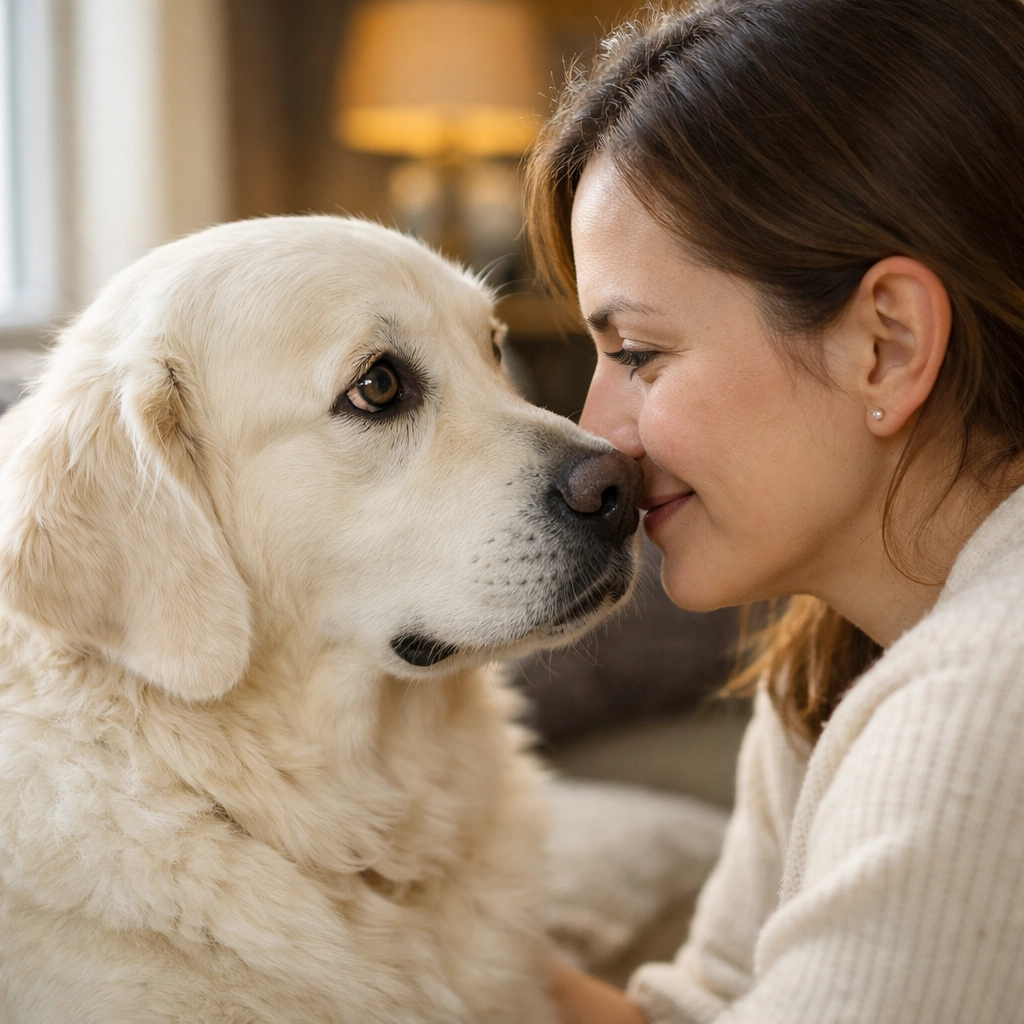
Let me explain what happens when you lock eyes with your Golden Retriever or run your fingers through that silky coat. Both of you experience a surge of oxytocin, the same powerful hormone that creates the bond between mothers and their newborns. Yes, you read that right! The connection you share with your Golden engages the exact same neurochemical systems that facilitate human parent-child attachment.
This creates what scientists call a "positive feedback loop." When you gaze at your dog, your oxytocin levels rise. This makes you want to pet them, talk to them, and engage with them more. That increased interaction then triggers oxytocin release in your Golden, which makes them more likely to maintain eye contact and seek your affection. And around and around it goes: a self-reinforcing cycle of bonding that strengthens every single day.
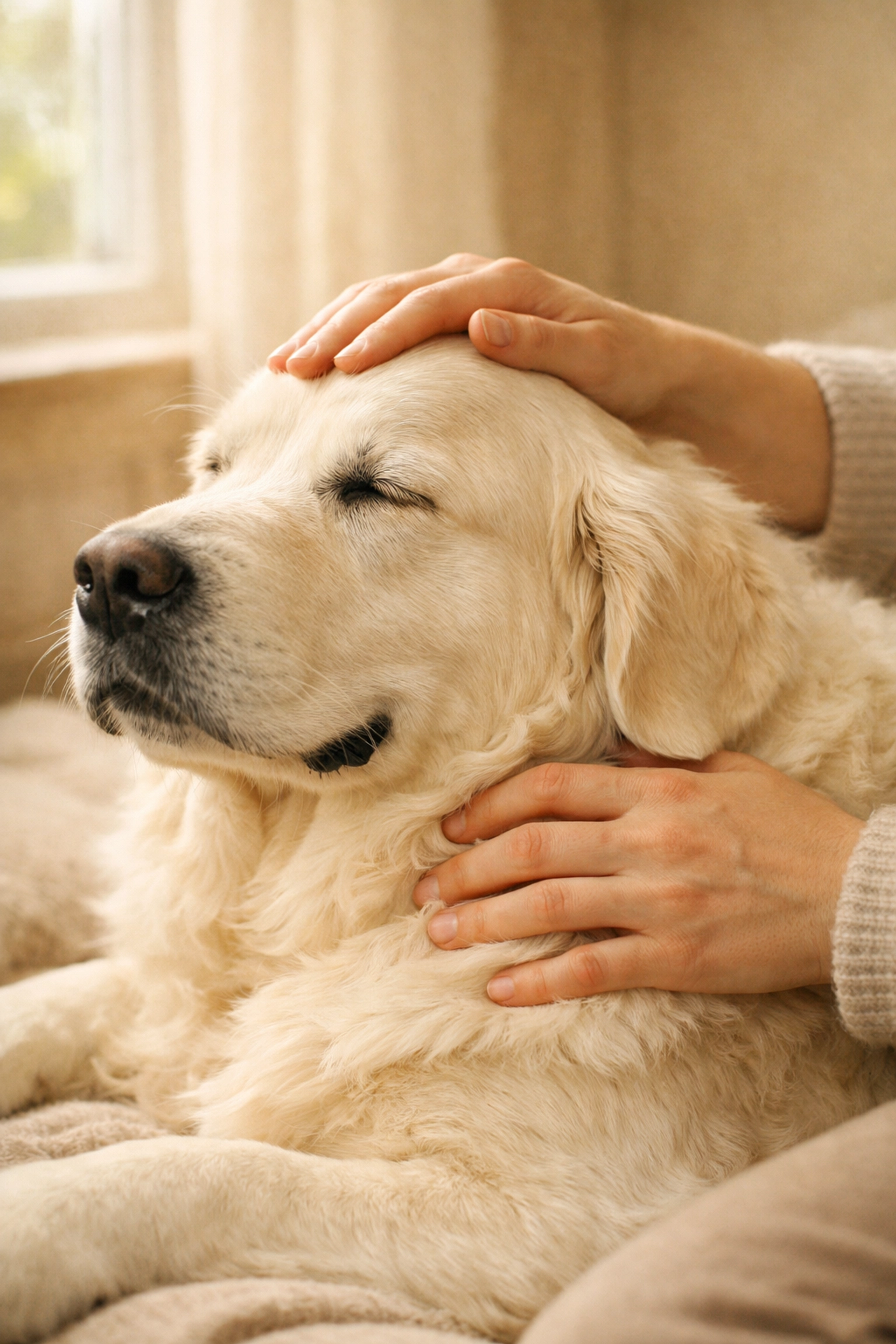
The Power of the Mutual Gaze
A groundbreaking 2015 study revealed something remarkable: dogs who maintained longer eye contact with their guardians showed significantly higher oxytocin levels. This wasn't just coincidental: the research demonstrated a clear cause-and-effect relationship. The longer the gaze, the stronger the biochemical bond.
What makes Golden Retrievers particularly exceptional in this regard is their natural inclination toward sustained, gentle eye contact. While some breeds are more independently minded or easily distracted, Goldens have been selectively bred for generations to work closely with humans, read our emotional states, and maintain that crucial connection. This isn't accidental: it's the result of careful breeding focused on temperament and cooperativeness.
I've observed this countless times with our NextGen Goldens. Even as puppies, they demonstrate an unusual ability to maintain calm, focused attention on their human companions. This trait makes them naturals for therapy and emotional support work.
The Magic of Touch
Here's something that always amazes people: petting alone triggers oxytocin increases in both you and your Golden Retriever. You don't even need the eye contact (though it certainly amplifies the effect). Simply stroking your dog's soft coat creates a mutual biochemical response that deepens your bond.
This is why emotional support Golden Retrievers are so effective. The physical act of petting a calm temperament Golden Retriever during moments of anxiety or stress literally changes your brain chemistry. It's not just comfort: it's measurable biological stress reduction.
For individuals dealing with PTSD, anxiety disorders, or depression, this physical connection can be genuinely therapeutic. The consistent, reliable oxytocin response provides a natural mechanism for emotional regulation that doesn't require medication or complex interventions.
Why Golden Retrievers Excel as Therapy Dogs
Not all dogs respond equally to the oxytocin system, and this is where genetics becomes crucial. Research has shown that breed genetics significantly influence oxytocin sensitivity and response. Studies comparing different breeds found that dogs bred for cooperative work with humans: like Golden Retrievers: show stronger behavioral responses to oxytocin than more independent breeds.
Even more fascinating, variations in oxytocin receptor genes have been linked to individual differences in how friendly dogs are toward people. This means that through careful selective breeding and health testing, we can actually enhance these bonding capabilities.
At NextGen Goldens, this scientific understanding guides everything we do. We don't just breed for beautiful English Cream coloring or excellent physical health (though those matter too!). We specifically select for:
Calm, stable temperament under various conditions
Natural empathy and responsiveness to human emotions
Gentle, intuitive interaction styles
Strong desire for human connection and cooperation
Our comprehensive health testing ensures that these wonderful temperamental traits are built on a foundation of physical wellness. After all, a therapy dog needs to be comfortable in their own body to provide comfort to others.
Individual Differences Matter
It's worth noting that even within the Golden Retriever breed, individual differences exist. Research has revealed some interesting patterns: for instance, female dogs administered oxytocin showed stronger behavioral responses than males in certain studies. However, what matters most is the individual dog's upbringing, socialization, and the quality of their early experiences.
This is why we invest so much time in early puppy development. From the moment Golden Retriever puppies Oregon are born in our program, they receive constant gentle handling, exposure to various stimuli, and positive human interaction. We're literally shaping their oxytocin response patterns during those critical early weeks.
Real-World Applications
Understanding the oxytocin connection has transformed how we prepare therapy dog Golden Retrievers for their important work. We know that:
Regular positive interactions during puppyhood strengthen the oxytocin response system
Gentle handling and mutual gazing build the neurological pathways for bonding
Calm, consistent environments help puppies develop the stable temperaments needed for therapy work
Early socialization with diverse people enhances their ability to form quick, genuine connections
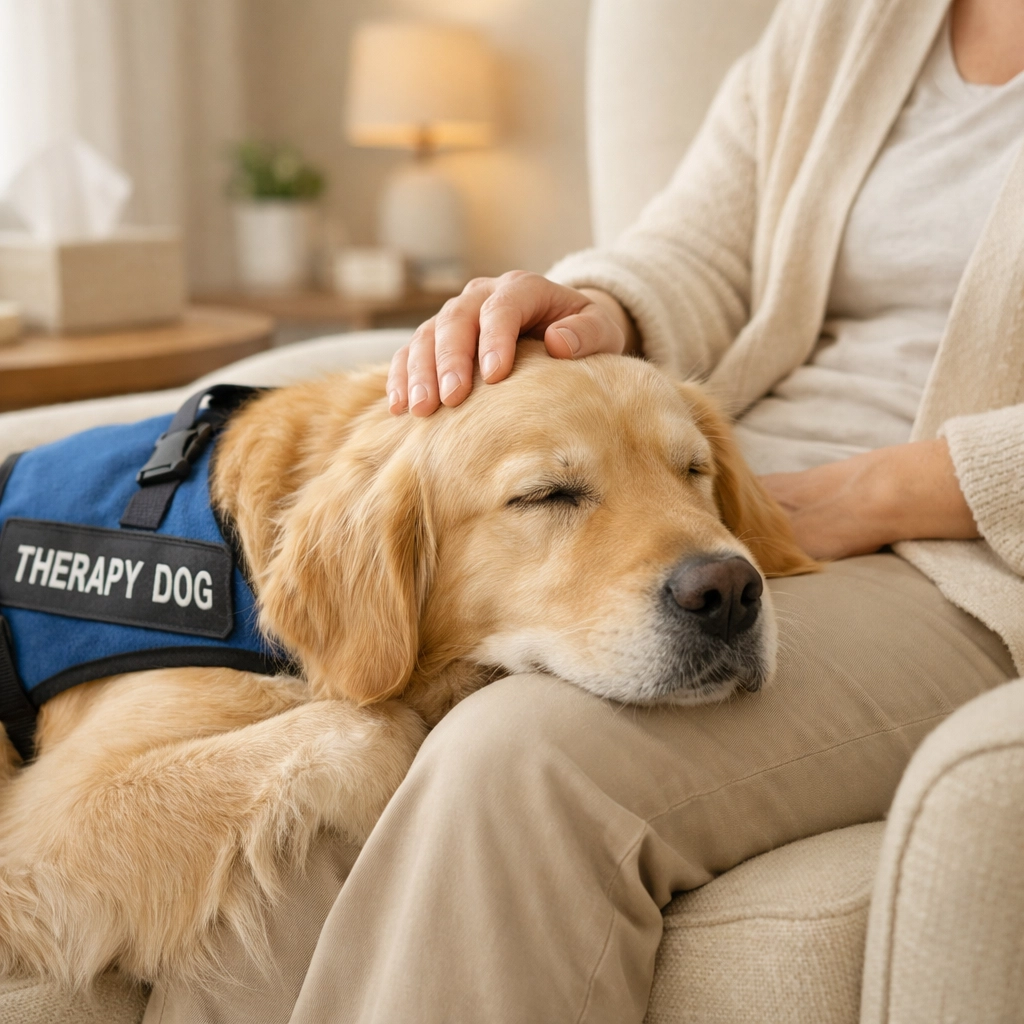
I've seen our Goldens go on to work in hospitals, schools, nursing homes, and private therapy practices throughout the Pacific Northwest. The feedback is consistently the same: these dogs have an almost uncanny ability to sense what people need and provide exactly the right kind of comfort.
One family shared with me how their NextGen Golden, trained as an emotional support animal, helped their teenage daughter navigate severe anxiety. The simple routine of petting the dog during stressful moments: activating that oxytocin loop: gave her a tool for self-regulation that changed her life.
The Future of Canine-Assisted Therapy
As our scientific understanding of the oxytocin connection deepens, I believe we'll see even more sophisticated applications of therapy dog Golden Retrievers in healthcare settings. We're already seeing promising research on their use in treating various conditions, and the biochemical basis for their effectiveness is now undeniable.
For families considering bringing a Golden Retriever into their lives: whether specifically for therapy work or simply as a beloved companion: understanding this oxytocin connection helps explain why these dogs bring such profound joy and comfort. It's not just that they're cute and friendly (though they certainly are!). It's that they're literally wired to bond with us on a deep biological level.
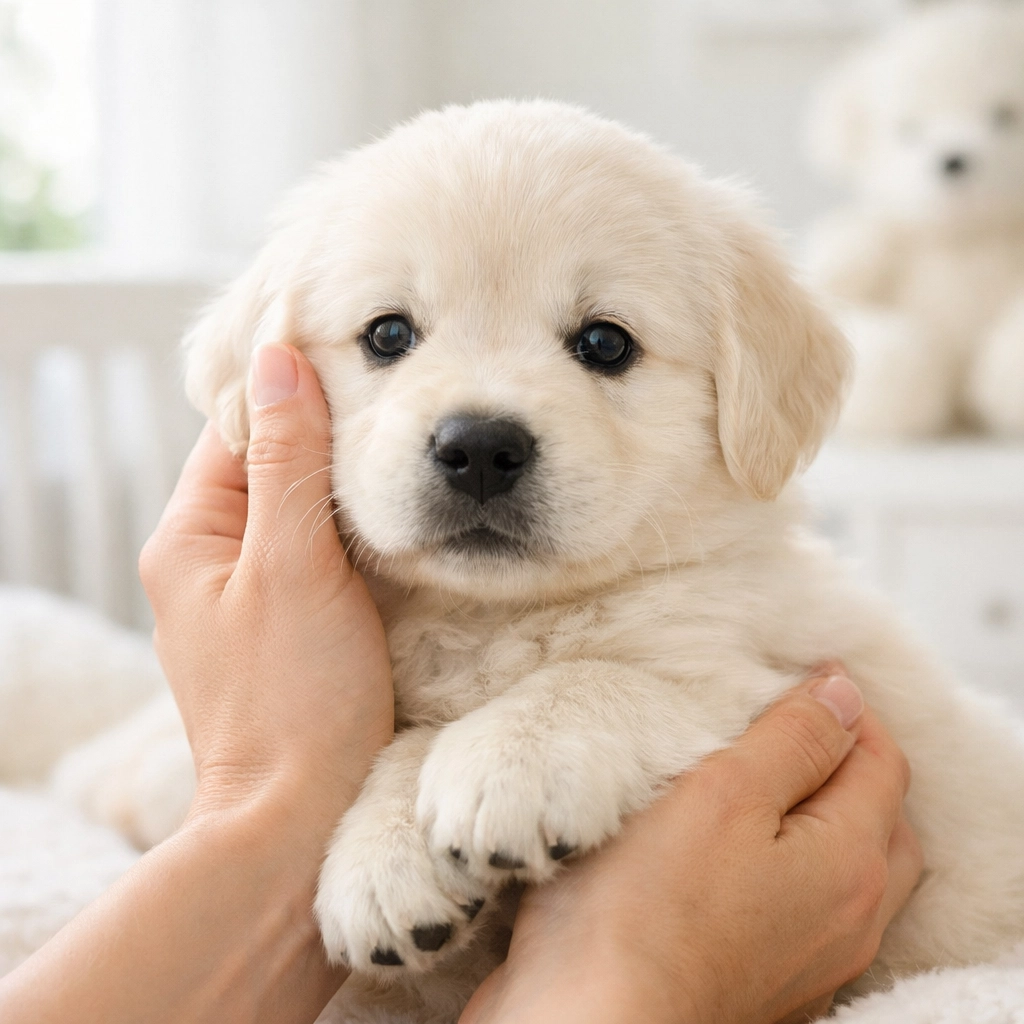
The selective breeding practices we use at NextGen Goldens honor this scientific reality. Every decision we make: from which dogs we breed to how we raise puppies: is informed by what we know about creating optimal conditions for this beautiful human-canine bond to flourish.
When you welcome one of our Golden Retriever puppies into your home, you're not just getting a pet. You're entering into a biochemical partnership that will quite literally change your brain chemistry for the better. You're gaining a companion whose very genetics have been shaped over generations to connect with you, understand you, and provide comfort when you need it most.
That's the magic of the oxytocin connection. That's the science behind why a Golden Retriever's gentle gaze can calm a racing heart, why their warm presence can ease loneliness, and why these remarkable dogs continue to be among the most effective therapy animals in the world.
Scientific Bibliography
Nagasawa, M., Mitsui, S., En, S., Ohtani, N., Ohta, M., Sakuma, Y., Onaka, T., Mogi, K., & Kikusui, T. (2015). Oxytocin-gaze positive loop and the coevolution of human-dog bonds. Science, 348(6232), 333-336.
Romero, T., Nagasawa, M., Mogi, K., Hasegawa, T., & Kikusui, T. (2014). Oxytocin promotes social bonding in dogs. Proceedings of the National Academy of Sciences, 111(25), 9085-9090.
Oliva, J. L., Rault, J. L., Appleton, B., & Lill, A. (2015). Oxytocin enhances the appropriate use of human social cues by the domestic dog (Canis familiaris) in an object choice task. Animal Cognition, 18(3), 767-775.
Kis, A., Hernádi, A., Kanizsár, O., Gácsi, M., & Topál, J. (2015). Oxytocin induces positive expectations about ambivalent stimuli (cognitive bias) in dogs. Hormones and Behavior, 69, 1-7.
MacLean, E. L., & Hare, B. (2015). Dogs hijack the human bonding pathway. Science, 348(6232), 280-281.
Handlin, L., Nilsson, A., Ejdebäck, M., Hydbring-Sandberg, E., & Uvnäs-Moberg, K. (2012). Associations between the psychological characteristics of the human-dog relationship and oxytocin and cortisol levels. Anthrozoös, 25(2), 215-228.