
The DNA Blueprint: Why Early Genetic Testing is a Game-Changer for Puppy Health
- Green Acres K-9 Resort
- Feb 4
- 6 min read

As a breeder here in Boring, Oregon, I've seen firsthand how genetic testing has completely transformed the way we approach puppy health. It's not just about hoping for the best anymore, it's about knowing exactly what we're working with from day one. And honestly? That changes everything.
When you're searching for health tested Golden Retriever puppies in Oregon, you're making one of the smartest decisions you can make as a future dog parent. But let's talk about what that really means and why it matters so much for your future furry family member.
The Science Behind the Scenes
Here's the thing about genetics: your puppy's DNA is like a detailed instruction manual that's been passed down through generations. Every single cell in their body contains this complete blueprint, and modern genetic testing allows us to read it with incredible accuracy, over 95% in fact.
At NextGen Goldens, we conduct comprehensive genetic screenings shortly after birth, before puppies even open their eyes. This isn't just a box we check for marketing purposes. We're actively looking for specific genetic mutations that could impact your puppy's quality of life years down the road.

The technology we use can identify over 260 genetic health conditions. For Golden Retrievers specifically, we focus heavily on conditions that are particularly prevalent in the breed. These include Progressive Retinal Atrophy (PRCD-PRA), which can lead to blindness, various forms of Muscular Dystrophy, hip and elbow dysplasia, and certain cardiac conditions.
Why We Test So Early
You might wonder why we test puppies at just a few days old. The answer is simple: knowledge is power, and early knowledge is transformative power.
When we identify a potential genetic concern early, we can make informed decisions about that puppy's future. For example, a puppy carrying two copies of a recessive disease gene might not be suitable as a breeding dog down the line, but could still be an absolutely phenomenal family companion or therapy dog with proper care and monitoring.
More importantly, it allows us, and eventually you, to create a personalized wellness plan from day one. If we know your puppy carries a mutation for the MDR1 gene, which causes severe reactions to common medications like ivermectin, we can alert your veterinarian before your pup ever needs surgery or treatment. This single piece of information could literally save your dog's life.
Understanding Heritability: It's Not Just About One Puppy
Here's where genetics gets really fascinating. When we talk about heritability, we're discussing how likely a trait is to be passed from parent to offspring. Some conditions are caused by a single gene mutation (like PRCD-PRA), while others are polygenic, meaning multiple genes contribute to the condition (like hip dysplasia).
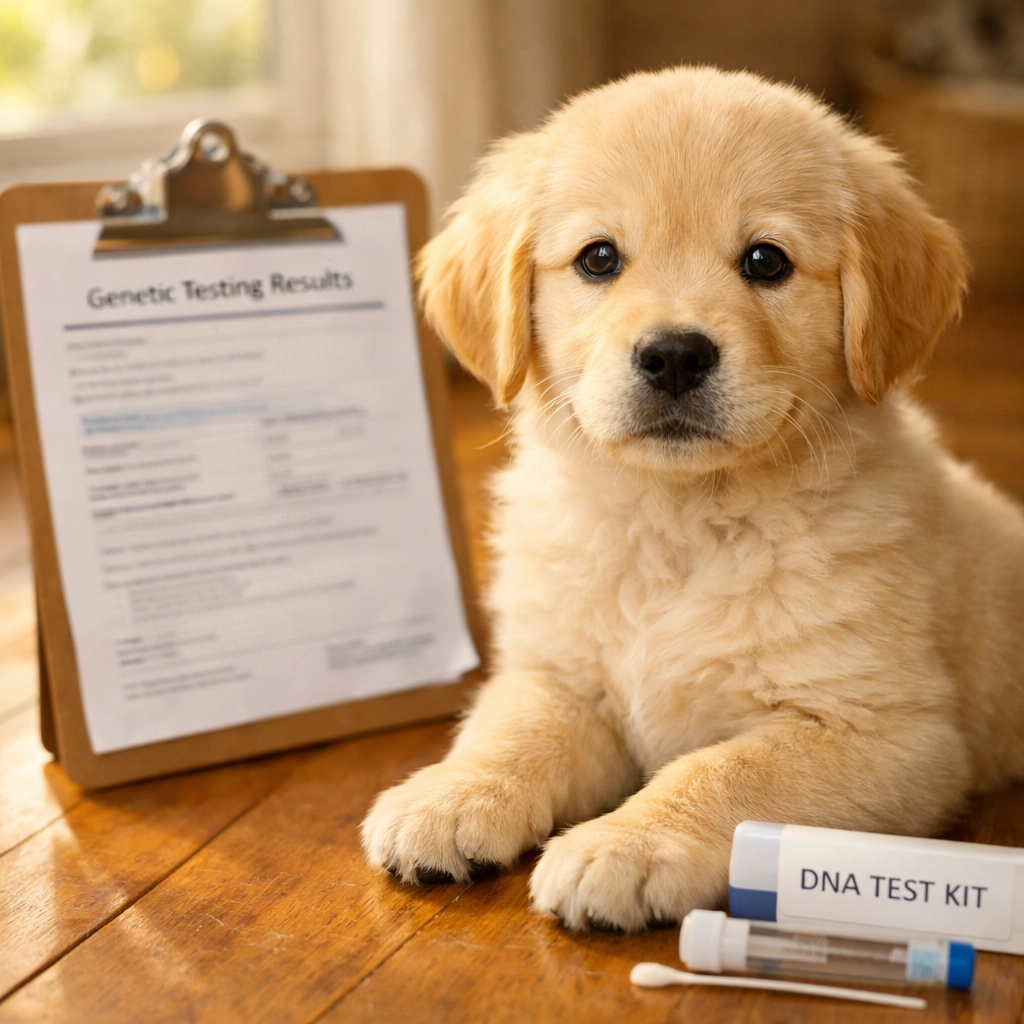
For single-gene conditions, the math is relatively straightforward. If both parents are "clear" (they don't carry the mutation), their puppies will also be clear. If one parent is a carrier and one is clear, approximately 50% of puppies will be carriers (but won't develop the disease). This is why genetic tested Golden Retriever puppies from ethical breeders are so valuable, we're using science to stack the deck in your favor.
For polygenic conditions like hip dysplasia, it's more complex. These conditions have heritability estimates ranging from 20-60%, meaning genetics play a significant role, but environmental factors like nutrition, exercise, and growth rate also matter tremendously. This is why we provide comprehensive care guidelines for each puppy we place.
The NextGen Goldens Approach to Selective Breeding
As a Golden Retriever breeder in Portland's metro area, we take our responsibility seriously. Genetic testing isn't the end of our process, it's the foundation. Every breeding decision we make is informed by comprehensive genetic profiles of both parents.
We maintain detailed pedigrees going back multiple generations, tracking not just genetic test results but also longevity, temperament, working ability, and overall health outcomes. When we select breeding pairs, we're looking at the complete picture: genetic compatibility, temperament match, structural soundness, and proven health histories.
This level of scrutiny might seem excessive to some, but here's what it means for you: when you bring home a NextGen Goldens puppy, you're getting a dog whose family tree has been carefully evaluated for generations. We're not just hoping your puppy will be healthy, we have scientific data supporting that expectation.

What This Means for Therapy and Service Work
If you're considering a Golden Retriever for therapy work or as a service dog, genetic health testing becomes even more critical. These working dogs need to be physically and mentally sound for many years, ideally their entire working life of 8-10 years or more.
A therapy dog with undiagnosed Progressive Retinal Atrophy might perform beautifully for several years before vision problems emerge. By testing early, we can ensure that the puppies we recommend for therapy work have the genetic foundation to support a long, successful career bringing joy to others.
The same principle applies to family companions. Your Golden Retriever isn't just a pet, they're a family member who'll be part of your life for hopefully 12-15 years. Knowing their genetic predispositions allows you to be proactive rather than reactive with their healthcare.
Creating Your Puppy's Personalized Health Roadmap
Once you bring your genetically tested puppy home, you'll receive a comprehensive health report. This isn't just a piece of paper to file away, it's a living document that should guide conversations with your veterinarian.
For example, if your puppy carries one copy of a mutation for Ichthyosis (a skin condition), you'll want to monitor skin health carefully and discuss preventive care with your vet. If tests show predisposition to obesity (yes, there are genetic markers for this!), you can implement nutrition and exercise strategies from puppyhood.
Your veterinarian can use this genetic information to:
Adjust medication protocols to avoid adverse reactions
Schedule more frequent screenings for at-risk conditions
Recommend specific supplements or preventive treatments
Design exercise programs that protect developing joints
Create nutrition plans tailored to your puppy's metabolic needs
Beyond Disease: Understanding Your Puppy's Traits
Genetic testing doesn't just tell us about disease risk. Modern testing can also provide insights into coat color genetics, size predictions, and even some behavioral tendencies. While no test can predict personality perfectly, understanding your puppy's genetic background helps set realistic expectations.
As an ethical Golden Retriever breeder in Oregon, I can tell you that educated puppy buyers make the best dog owners. When you understand why your Golden has such an intense retrieve drive (it's literally in their genes!), you're better prepared to channel that energy positively.
The Investment That Keeps Giving
Some people ask whether genetic testing is worth the investment. Here's my perspective: a comprehensive genetic screening panel costs several hundred dollars. A single emergency surgery can cost thousands. Early detection of a condition like dilated cardiomyopathy, caught during routine screening recommended by genetic risk factors, could add years to your dog's life.
But beyond the financial calculation, there's peace of mind. When you know your puppy's genetic status, you're empowered to make informed decisions throughout their life. You're not wondering "what if": you're working with facts.

Looking Toward the Future
Genetic research in canine health is advancing rapidly. New mutations are being identified regularly, and our understanding of polygenic conditions is becoming more sophisticated. At NextGen Goldens, we stay current with the latest research and adjust our testing protocols accordingly.
The future of responsible breeding is undoubtedly scientific. As more data becomes available and testing becomes even more comprehensive, we'll continue to see healthier puppies with longer lifespans and better quality of life.
Your Role as a Puppy Parent
Once you bring home your genetically tested Golden Retriever puppy, your job is to protect that genetic potential. Feed high-quality nutrition, maintain appropriate exercise levels (not too much for growing joints!), keep up with veterinary care, and use the genetic information you've been given.
Remember, genes load the gun, but environment pulls the trigger. Even a puppy with perfect genetic testing needs proper care to thrive. That means regular vet visits, mental stimulation, socialization, and lots of love.
If you're searching for health tested Golden Retriever puppies in the Portland area, I encourage you to ask breeders detailed questions about their testing protocols. What specific conditions do they test for? When do they test? Can they provide documentation? Are both parents tested?
These questions aren't rude: they're responsible. Ethical breeders will be thrilled to discuss their health testing programs in detail because we're proud of the work we do to produce healthy, happy puppies.
The Bottom Line
Genetic testing has revolutionized how we breed Golden Retrievers. It's transformed us from hopeful optimists into informed scientists who can make data-driven decisions that benefit every puppy we bring into the world.
When you choose a genetically tested puppy from NextGen Goldens, you're not just getting a dog: you're getting a comprehensive health profile, a personalized care roadmap, and the peace of mind that comes from knowing you've started your journey together on the strongest possible foundation.
Your future Golden Retriever deserves nothing less than the best start in life. And in 2026, the best start includes genetic testing, period.
References