
The Cognitive Science of Learning: Why Golden Retrievers are Highly Trainable
- Green Acres K-9 Resort
- Feb 20
- 6 min read

As someone who's spent years working with Golden Retriever puppies here in Oregon, I can tell you there's something truly special about watching these dogs learn. That focused gaze, the eager anticipation, the way they seem to genuinely want to understand what you're asking: it's not just your imagination. There's fascinating science behind why Golden Retrievers consistently rank among the most trainable dog breeds in the world.
Let me share what we've learned about the cognitive psychology and neurobiology that makes these remarkable dogs such incredible learners.
The Science Behind "Biddability"
You've probably heard the term "biddability" if you've researched Golden Retrievers. But what does it actually mean from a scientific perspective? Biddability refers to a dog's inherent desire to cooperate with humans and respond to direction. It's not just obedience: it's a genuine drive to work with you rather than simply comply.
In Golden Retrievers, this trait is remarkably pronounced. While many breeds were developed to work independently (think of livestock guardian dogs who make decisions on their own), Golden Retrievers were specifically bred to work in close partnership with hunters. This selective breeding didn't just shape their physical abilities; it fundamentally influenced their cognitive development and social intelligence.

Research in canine cognition has shown that Golden Retrievers possess exceptional social cognition: the ability to read human cues, understand pointing gestures, and interpret facial expressions. This isn't just learned behavior; it's hardwired into their cognitive architecture. When your Golden puppy looks up at you with those soulful eyes during a training session, they're actually processing complex social information about your intentions and emotional state.
The Genetic Foundations of Intelligence
Here's where things get really exciting. Recent genome-wide association studies have identified specific genetic markers associated with trainability in Golden Retrievers. One particularly significant discovery involves the ROMO1 gene, which researchers have linked to both intelligence and emotional sensitivity in dogs: and interestingly, similar genetic patterns exist in humans related to cognitive function.
When scientists analyzed nearly 1,300 Golden Retrievers, they found that genetic variation in this gene significantly influences how readily dogs can be trained. This means that the exceptional trainability we see in Golden Retrievers isn't just about good breeding practices in the traditional sense: it's rooted in identifiable, heritable genetic factors that we can now test for and track.
At NextGen Goldens, this is precisely why we invest so heavily in genetic health testing. We're not just screening for physical health markers; we're ensuring that our breeding program selects for the cognitive traits that make Golden Retrievers such outstanding companions, therapy dogs, and service animals.
The Emotional Learning Connection
But intelligence alone doesn't explain the full picture of Golden Retriever trainability. One of the most fascinating aspects of recent research is the connection between emotional sensitivity and learning capacity. The ROMO1 gene doesn't just influence cognitive ability: it's also associated with emotional responsiveness.
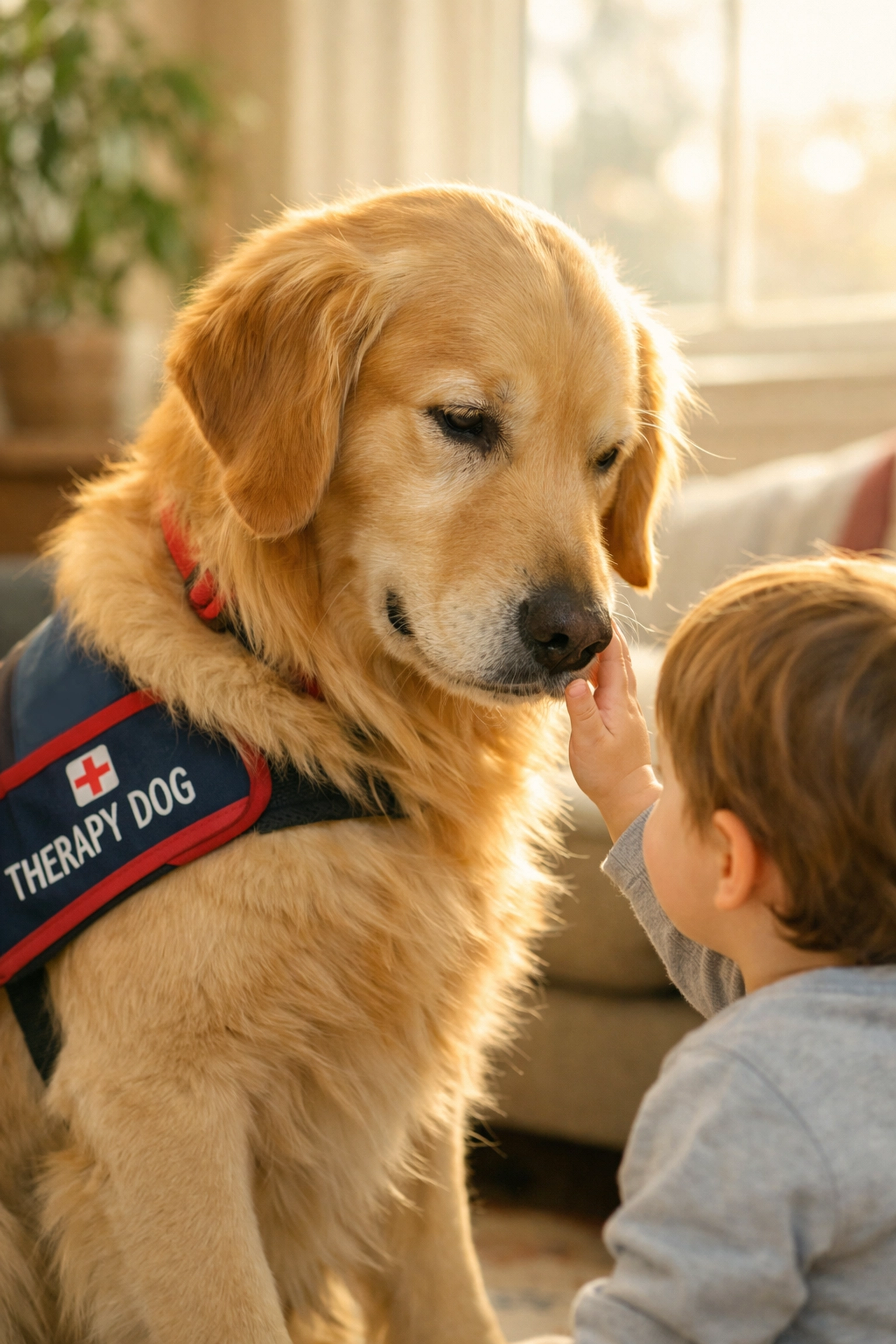
This has profound implications for how we train these dogs. Your Golden Retriever isn't just processing "if I sit, I get a treat." They're experiencing genuine emotional investment in the training relationship. They feel pride when they succeed, disappointment when they don't quite get it right, and joy in your approval that goes beyond simple reward-seeking behavior.
I've witnessed this countless times with our Golden Retriever puppies in Oregon. During early training sessions, you can see it in their body language: the tail wag isn't just about the treat; it's about the connection. This emotional dimension means that positive reinforcement training isn't just effective for Golden Retrievers; it's essential. Their emotional sensitivity makes them incredibly responsive to praise and encouragement, but it also means harsh corrections can be particularly damaging to both their learning and their wellbeing.
Beyond Food Rewards: Flexible Cognitive Strengths
Traditional service dog training programs have historically relied heavily on food-reward-driven selection processes. But emerging research suggests this approach may actually overlook some of Golden Retrievers' most impressive cognitive capabilities.
Studies indicate that Golden Retrievers possess broader problem-solving abilities that enable flexible learning without heavy dependence on treats. This adaptive cognitive capacity means they can learn to perform complex tasks through understanding the broader context and purpose, not just through simple stimulus-response conditioning.
This is why Golden Retrievers excel as therapy dogs and service animals in ways that go beyond basic obedience. A therapy dog working with children in a hospital isn't just following commands: they're reading the emotional states of multiple people simultaneously, adapting their behavior to provide appropriate comfort, and making independent decisions about when to move closer or give space. That level of cognitive flexibility requires intelligence that transcends basic trainability.
Why This Matters for Service and Therapy Work
The combination of high intelligence, emotional sensitivity, and strong biddability makes Golden Retrievers uniquely suited for specialized roles. When I connect families with our Golden Retriever puppies, I often discuss their potential not just as family pets but as working dogs.
The cognitive traits that make them trainable for basic obedience are the same traits that allow them to excel in:
Guide work for the visually impaired - requiring spatial intelligence, problem-solving, and the ability to make independent decisions while maintaining cooperation with their handler
Psychiatric service dogs - where emotional sensitivity becomes a strength, allowing them to detect and respond to their handler's emotional states
Search and rescue - demanding focus, persistence, and the ability to work through distractions while maintaining task orientation
Therapy work - requiring social cognition to interact appropriately with diverse individuals in varying emotional states
At NextGen Goldens, we recognize that these capabilities don't emerge from training alone. They're built on a foundation of genetic predisposition, early neurological development, and appropriate socialization during critical developmental windows.
Building the Foundation: NextGen Goldens' Approach
This is why our comprehensive genetic and health testing program is so crucial. When you bring home a Golden Retriever puppy from NextGen Goldens, you're not just getting a dog with clear hips and elbows (though we absolutely ensure that too). You're getting a puppy whose genetic background has been carefully evaluated to support cognitive development and trainability.
Our early puppy protocols are designed with cognitive science in mind. From the moment they're born, our puppies experience early neurological stimulation exercises that research has shown can enhance learning capacity and stress resilience throughout their lives. We expose them to varied experiences during their critical socialization period, building neural pathways that support flexible, adaptive learning.

For families here in Oregon looking for Golden Retriever puppies, this foundation makes an enormous difference. Whether you're planning to train your dog for therapy work or simply want a responsive, eager-to-learn family companion, starting with the right genetic and developmental foundation sets the stage for success.
Practical Implications for Training Your Golden
Understanding the cognitive science behind your Golden Retriever's trainability helps you become a more effective trainer. Here's what this research means for your daily training:
Leverage their emotional intelligence - Training isn't just about commands and corrections; it's about building a relationship. Your Golden is reading your emotional state, so bringing patience and positive energy to training sessions matters more than you might think.
Recognize individual variation - Even with genetic predispositions toward trainability, each dog is an individual. Some may be more food-motivated, others more praise-motivated. The cognitive flexibility that makes Golden Retrievers trainable also means they can learn through various methods: find what resonates with your specific dog.
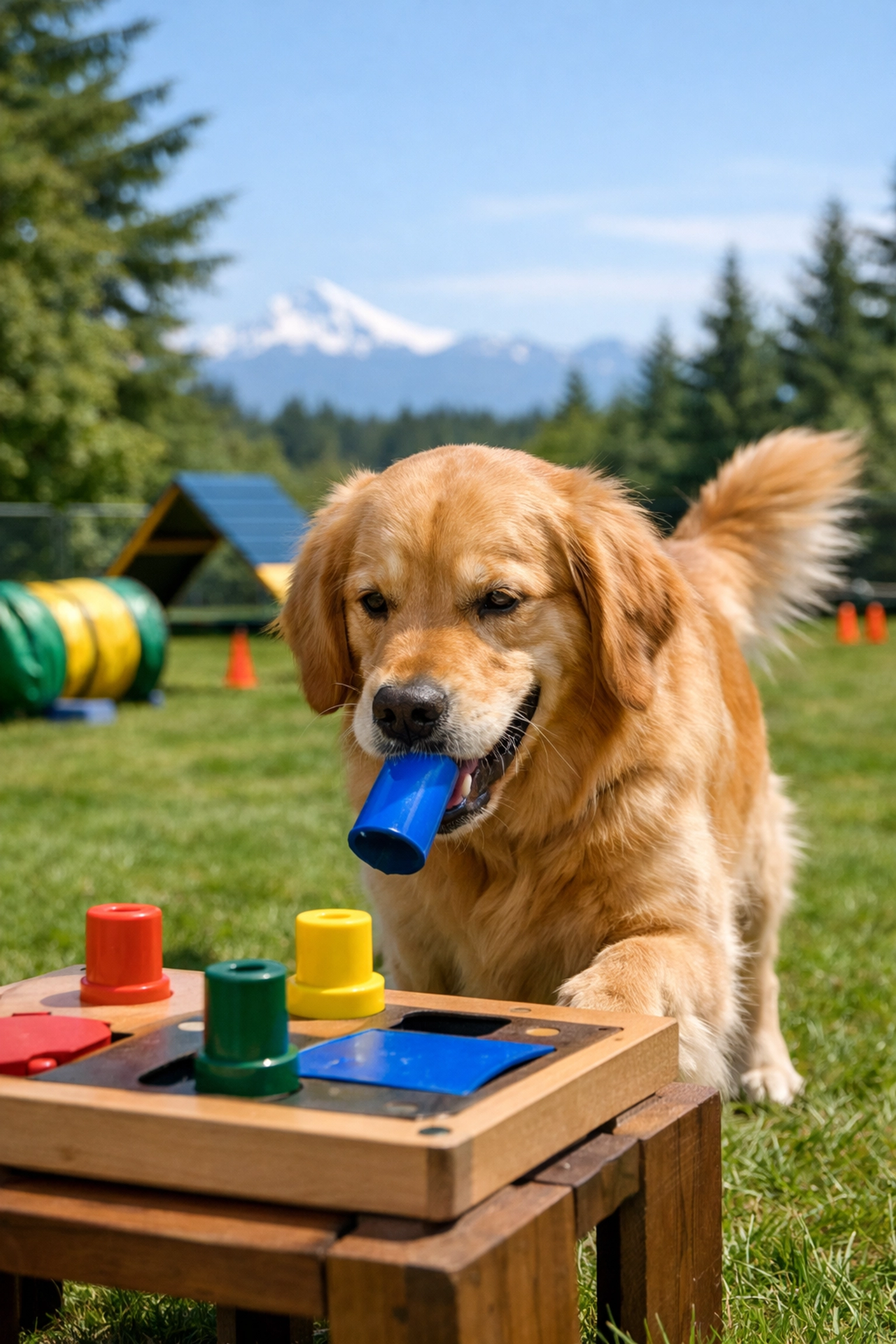
Provide mental challenges - High intelligence needs outlets. Incorporate puzzle toys, scent work, and varied training exercises. A cognitively engaged Golden Retriever is a well-behaved Golden Retriever.
Understand the emotional component - If your dog seems sensitive to corrections or slow to recover from mistakes, that's not weakness: it's part of their emotional wiring. Adjust your approach accordingly, focusing on positive reinforcement and patient, consistent guidance.
Start early, but be realistic - While Golden Retrievers are highly trainable, they're still puppies with developing brains. The same cognitive traits that will make them brilliant adult dogs mean they need appropriate developmental stages for learning.
The Joy of Training a Golden Retriever
What makes Golden Retrievers truly special isn't just that they're smart: plenty of breeds are intelligent. It's the combination of intelligence, emotional sensitivity, and that remarkable desire to work with humans. When you're training a Golden Retriever, you're not imposing your will on a reluctant student. You're engaging in a collaborative learning process with a partner who genuinely wants to understand and succeed.
For those of us breeding and raising Golden Retriever puppies here in Oregon, understanding the science behind these traits helps us do our job better. At NextGen Goldens, we're committed to producing puppies who embody not just the physical standards of the breed, but the cognitive and temperamental qualities that make Golden Retrievers such exceptional companions.
If you're considering adding a Golden Retriever puppy to your family, I encourage you to think beyond basic obedience. These dogs have the cognitive capacity for so much more: whether that's therapy work, service training, dog sports, or simply being an incredibly attuned family companion who seems to understand you on a deeper level.
That's not anthropomorphism or wishful thinking. That's cognitive science.
Scientific Bibliography