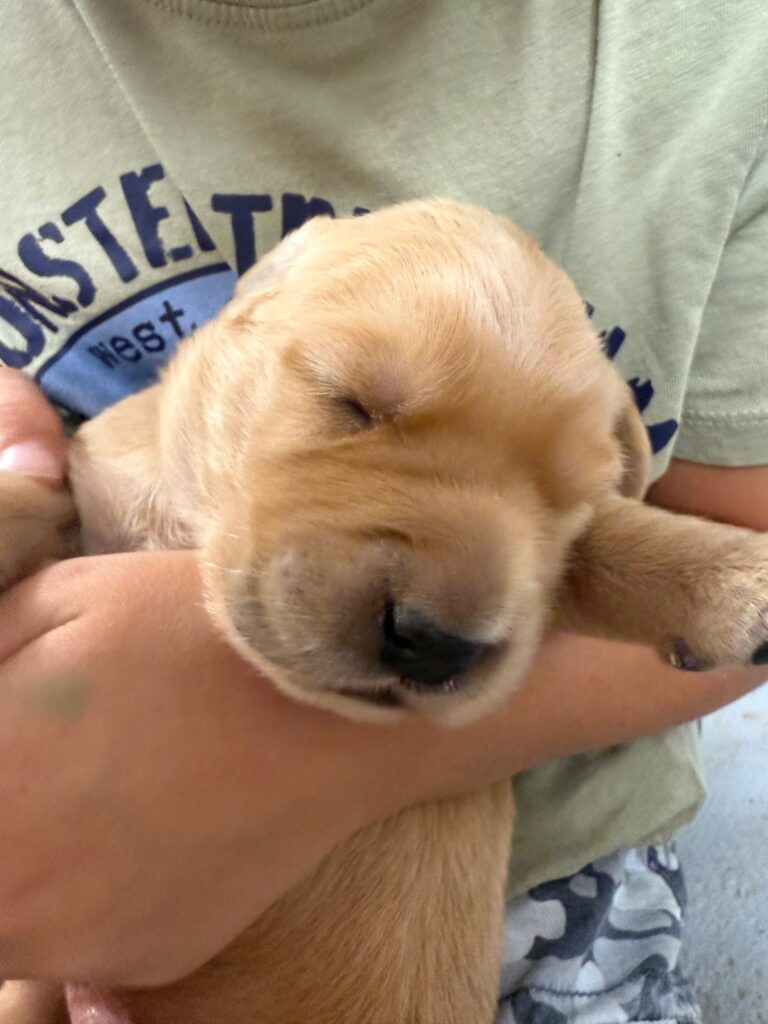
The Science of Sleep: Why Your Golden Retriever Puppy Needs 18+ Hours of Rest
- Green Acres K-9 Resort
- Apr 14
- 5 min read
Bringing home one of our Golden Retriever puppies Oregon is a thrilling adventure, filled with soft ears, wagging tails, and that unmistakable puppy breath. But if you’re like many new pet parents, you might find yourself staring at your sleeping puppy and wondering: Is it normal for them to sleep this much?
As a specialist who spends every day with these beautiful animals, I can tell you that the answer isn't just "yes": it’s a vital "absolutely!" In fact, your new family member needs anywhere from 18 to 20 hours of shut-eye every single day. While it might seem like they’re missing out on the fun, that sleep is actually where the "magic" happens.
In this post, we’re going to dive into the fascinating science of puppy sleep. We’ll look at how rest shapes their brains, why a lack of sleep leads to the dreaded "land shark" behavior, and how we at NextGen Goldens prioritize calm temperament Golden Retrievers through both genetics and proper rest management.
The Biological Powerhouse: What Happens During Puppy Sleep?
When your puppy is curled up in a fluffy ball, their body is working harder than it does when they’re awake. Puppies grow at an incredible rate: especially Golden Retrievers, who transform from 10-pound balls of fluff to 60-pound companions in less than a year.
1. Physical Growth and Repair
During deep sleep, a puppy’s pituitary gland releases growth hormones. These hormones are the building blocks for strong muscles, sturdy bones, and healthy internal organs. Without enough rest, this physical development can be hindered. I always tell our families at our Boring Oregon Golden Retriever breeder facility that "sleep is the fuel for their growing bones."
2. Brain Development and Memory Consolidation
This is where the science gets really cool. Have you noticed how your puppy seems to "get" a new command better the morning after a training session? That’s because of memory consolidation. During sleep, particularly REM (Rapid Eye Movement) sleep, the brain processes the day's experiences. It moves information from short-term memory to long-term storage.
When you engage in Golden Retriever puppy training Oregon, the real learning actually finishes while the dog is asleep!

3. Immune System Support
Just like humans, a puppy’s immune system relies on rest to stay strong. Sleep allows the body to produce cytokines, which are proteins that help the immune system respond to threats and inflammation. Given that puppies are still building their immunity and going through vaccination cycles, those 18+ hours of rest are their best defense against getting sick.
The "Overtired Puppy" Phenomenon: When "Naughty" is Actually "Sleepy"
We’ve all seen it: the "witching hour." Suddenly, your sweet, cuddly Golden starts racing around the room, nipping at your ankles, and ignoring every command they’ve ever learned. Many owners mistake this for a surge of energy or a "bad temperament."
In reality, this is often the "overtired puppy" phenomenon.
When a puppy stays awake too long, their body begins to produce cortisol (the stress hormone) and adrenaline to keep them going. This leads to hyperactive, irritable, and "mouthy" behavior. They literally lose the ability to regulate their emotions. If your puppy starts acting like a "land shark," they probably don't need a longer walk: they need a nap!
At NextGen Goldens, we pride ourselves on breeding for calm temperament Golden Retrievers. However, even the most genetically chill puppy can become a whirlwind of chaos if they aren't getting their 18+ hours of rest. Proper sleep management is the "secret sauce" to maintaining that signature calm in their new homes.
Practical Advice: Creating the Ultimate "Nap Zone"
So, how do you ensure your puppy actually gets those 20 hours of rest? It doesn't always happen naturally, especially in a busy household with kids or other pets. You have to be the "sleep architect" for your puppy.
Crate Training: The Safe Sanctuary
I’m a huge advocate for crate training. When used correctly, a crate isn’t a "jail": it’s a den. It provides a quiet, dark space where the puppy can switch off their brain without worrying about missing out on the action. Placing the crate in a low-traffic area helps them settle much faster.
Designated "Nap Zones"
If you prefer not to use a crate, establish a specific "nap zone" using an exercise pen or a quiet corner of the room. I’ve found that placing a soft blanket and perhaps a "snuggle puppy" (a toy with a heartbeat) can provide the comfort they need to drift off.
The "1-Hour Up, 2-Hours Down" Rule
A great rule of thumb for Golden Retriever puppy training Oregon is the 1-on-2-off schedule. For every hour your puppy is awake playing and learning, they should have two hours of quiet time/sleep. This prevents them from ever reaching that "overtired" breaking point.

The NextGen Goldens Difference: Breeding for Balance
As a Boring Oregon Golden Retriever breeder, our mission at NextGen Goldens is to provide families with lifelong companions that are healthy, happy, and easy to live with. We start this process long before you pick up your puppy.
We choose parent dogs with stable, gentle dispositions and perform rigorous health testing. However, we also emphasize to every new owner that the environment they provide is just as important as genetics. By respecting your puppy’s need for sleep, you are supporting the genetic potential for calmness that we’ve worked so hard to cultivate.
If you’re feeling overwhelmed, remember that we offer puppy training services and even dog boarding where we maintain these healthy sleep structures for your furry friends.
A Sample "Science-Backed" Sleep Schedule
To help you get started, here is a simple schedule I often recommend to our NextGen Goldens families:
7:00 AM: Wake up, potty, breakfast, and a short training session.
8:00 AM – 10:00 AM:NAP TIME (Crate or nap zone).
10:00 AM: Potty, light play, exploration in the yard.
11:00 AM – 1:00 PM:NAP TIME.
1:00 PM: Potty, lunch, socialization (meeting a new object or person).
2:00 PM – 4:00 PM:NAP TIME.
4:00 PM: Potty, short walk or backyard zoomies.
5:00 PM – 7:00 PM:NAP TIME.
7:00 PM: Potty, dinner, family cuddle time.
8:00 PM – 9:30 PM:NAP TIME.
9:30 PM: Last potty break and bed for the night.
Following a routine like this ensures your puppy hits that 18-20 hour mark, keeping them growing, learning, and: most importantly: calm.
Final Thoughts: Be Patient with the Journey
As you begin this adventure with your Golden Retriever, remember to be patient. There will be days when they don't want to nap, and there will be moments of "puppy crazies." That’s okay! It’s all part of the journey. By prioritizing their sleep, you aren't just being a "strict" owner; you’re being a loving one who understands their biological needs.
Watching a Golden Retriever puppy sleep is one of life’s greatest joys. It’s a moment of peace and a reminder of the beautiful, loyal adult dog they are becoming. Enjoy those quiet moments: they are the foundation of a lifetime of love.

Bibliography & References
American Kennel Club (AKC):Puppy Sleep: How Much Do Puppies Sleep? (Guidelines on developmental rest requirements).
Canine Cognitive Science:The Role of Sleep in Memory Consolidation in Dogs (Study on how sleep affects learning and task retention).
Journal of Veterinary Behavior:Impact of Sleep Deprivation on Canine Behavior (Research regarding irritability and hyper-arousal in young dogs).
University of British Columbia:Canine Sleep Cycles: REM vs. Non-REM in Puppies.
For more tips on raising a healthy Golden, check out our full blog or browse our training guides. Happy napping!